NCERT Has a New Syllabus Panel. Here's What JEE and NEET Students Actually Need to Know
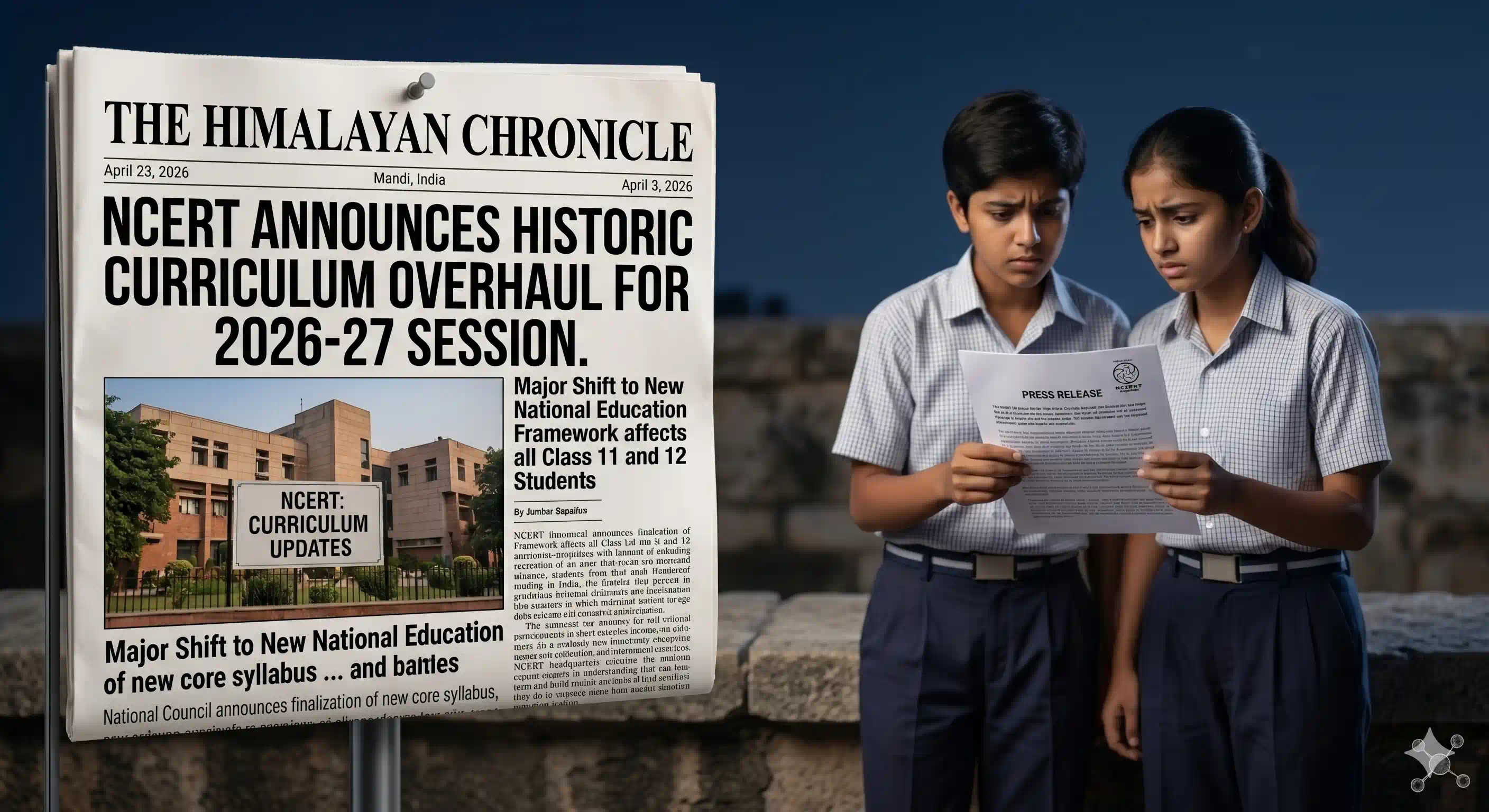
Source: The Hindu — "Inside NCERT's new syllabus panel: Who's in and what they bring"
Every time NCERT announces a new syllabus committee, a particular kind of dread spreads through student WhatsApp groups. "Will the syllabus change?" "Is my NCERT textbook going to become useless?" "Should I buy the new editions now?"
Let me cut through the noise.
NEEDS_REVIEW: [The Hindu article (April 16, 2026) reports on the constitution of a new NCERT panel but specific panel members, their affiliations, and the declared scope of revision were not available in the source summary. Verify panel composition and stated mandate before publishing this section.]
Why NCERT Revisions Happen — and Why They Usually Don't Derail Your Prep
NCERT has been undergoing a structured revision process tied to the National Education Policy 2020. The NEP called for new textbooks at every level — from primary to senior secondary — built around a competency-based framework rather than the older content-heavy model.
For Classes 3 and 6, new NCERT textbooks were introduced in 2024. The revision cascade is working its way upward. A new panel being constituted in 2026 is part of this ongoing, multi-year process — not an emergency overhaul.
Here is the critical distinction that most panic posts miss: the JEE and NEET syllabi are defined and controlled by NTA, not NCERT. NCERT textbooks are the primary reference material — NTA expects students to have read them — but NTA publishes its own syllabus document. Changes to NCERT textbooks do not automatically rewrite the exam syllabus.
In practice, NTA gives significant advance notice before any syllabus change takes effect in an exam. The last major NTA-level syllabus adjustment for NEET was announced months in advance and came with a dedicated cut-off date. No credible revision happens overnight.
What Has Actually Changed in Recent NCERT Rounds
The revisions that have rolled out so far have been mostly structural rather than content-destroying. Some chapters were condensed. Some outdated examples were updated. The NEP framing added more "application" sections. But the fundamental chemistry, physics, and biology content — the iron core that JEE and NEET test — remained stable.
The chapters that were deleted in the 2023 round were deleted from the Class 12 assessment context but the underlying concepts still appear in JEE and NEET. Students who read only the revised NCERT and skipped the "deleted" sections got caught off guard. The exam does not care what NCERT decided to remove from its Class 12 exam scope.
This is the trap: NCERT revision ≠ exam syllabus revision. They are related but not identical.
The Practical Playbook While the Panel Does Its Work
While a new committee is seated, the answer is always the same: study from the current edition of NCERT.
New textbooks from a freshly formed panel will take 12 to 24 months to reach classrooms after the panel finalizes drafts, puts them through review cycles, gets approval, and completes printing and distribution. If you are appearing for JEE or NEET in 2026 or 2027, the textbooks on your desk right now are the textbooks that matter.
Here is what to actually track:
Watch NTA's official notifications, not social media leaks. NTA publishes an information bulletin and official syllabus document for both JEE Mains and NEET before each exam cycle. That document is your single source of truth. If NTA does not update the syllabus document, nothing has changed for your exam.
Do not pre-emptively buy "new edition" textbooks. Until NTA formally revises the JEE/NEET syllabus and links it to a new NCERT edition, buying new textbooks while midway through preparation creates confusion and wastes money.
Monitor the Chapter-Level Detail. When new textbooks eventually do arrive, the risk is not that everything changes — it is that one or two chapters get reorganized or a concept gets split across chapters. The way to stay on top of this is to cross-reference your NCERT chapter list with the official NTA syllabus topic list once a year.
What This Means for the Long Game
If you are in Class 11 right now, there is a non-zero chance you will be taught from revised NCERT textbooks before your JEE/NEET cycle concludes. That is not a catastrophe — it is just information to track.
The right posture is not panic. It is the same thing it always is: build your concepts deeply from the current NCERT, practice hard on real past papers, and monitor the official NTA syllabus once per semester. A new panel being formed is a headline, not an emergency.
Focus on what is in front of you. The panel will do its work. NTA will communicate what it means for your exam when it matters.