Part II — Ability Beyond Disability
The firsts, the doubters, and how sport breaks down stereotypes
Part II — Firsts, challenges, and a new way of seeing
The interviewer notes Dr. Malik's astonishing list of 'firsts' — India's first woman to win an Asian Games athletics medal, India's first female Paralympics medallist. She is asked what these mean to her, what challenges she faced, and how sport can change society.
I truly appreciate these that have been showered on me. These achievements are a to my belief that physical limitations don't define one's . Moreover, I'm a of the school of thought, 'ability beyond disability'.
One of the significant challenges for me was societal perceptions. People often my abilities. Overcoming this required not only physical strength but also mental . I challenges as opportunities to prove my capabilities. The support of my family, coupled with my , allowed me to turn obstacles into stepping stones.
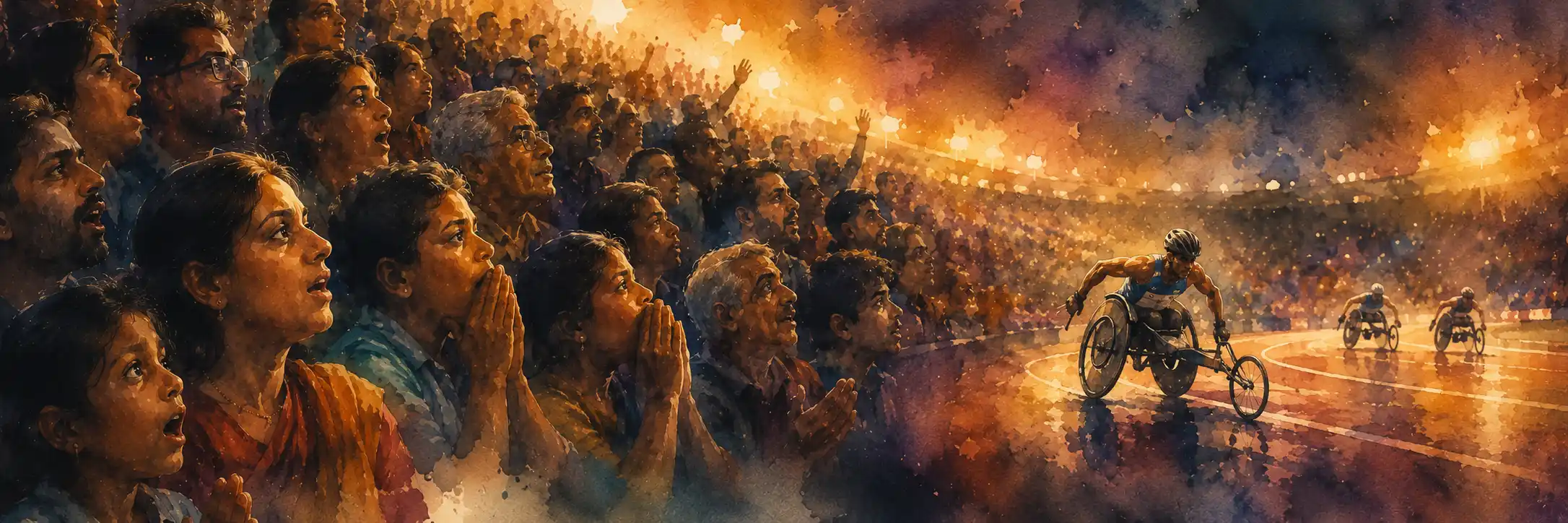
Honestly, I feel sports, especially Paralympics, have the extraordinary ability to challenge and change attitudes towards disability. When people witness the strength, skill, and competitive spirit of para-athletes, it breaks down . It has made me realise that individuals with disabilities can be as capable, if not more than their able-bodied .
Dr. Malik says her biggest challenge was not physical — it was societal perceptions: 'people often underestimated my abilities.' Why might the attitudes of others be a harder obstacle to overcome than a physical disability itself?
Take a moment to form your answer before reading further.
Q1.What does Dr. Malik mean by 'ability beyond disability'?
Part II — Firsts, challenges, and a new way of seeing
The interviewer notes Dr. Malik's astonishing list of 'firsts' — India's first woman to win an Asian Games athletics medal, India's first female Paralympics medallist. She is asked what these mean to her, what challenges she faced, and how sport can change society.
I truly appreciate these that have been showered on me. These achievements are a to my belief that physical limitations don't define one's . Moreover, I'm a of the school of thought, 'ability beyond disability'.
One of the significant challenges for me was societal perceptions. People often my abilities. Overcoming this required not only physical strength but also mental . I challenges as opportunities to prove my capabilities. The support of my family, coupled with my , allowed me to turn obstacles into stepping stones.
Honestly, I feel sports, especially Paralympics, have the extraordinary ability to challenge and change attitudes towards disability. When people witness the strength, skill, and competitive spirit of para-athletes, it breaks down . It has made me realise that individuals with disabilities can be as capable, if not more than their able-bodied .
Dr. Malik says her biggest challenge was not physical — it was societal perceptions: 'people often underestimated my abilities.' Why might the attitudes of others be a harder obstacle to overcome than a physical disability itself?
Take a moment to form your answer before reading further.
Q1.What does Dr. Malik mean by 'ability beyond disability'?