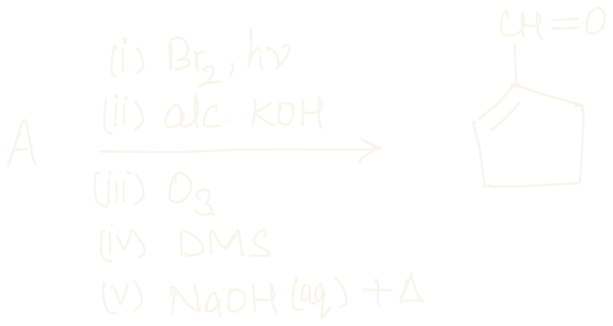
In the following reaction A is:
Aldehydes, Ketones & Carboxylic Acids · Class 12 · JEE Main Previous Year Question
In the following reaction A is:
- a✓

- b

- c

- d

Step 1: Identify the reaction The reaction shown involves a cyclic compound A undergoing reactions that ultimately identify the ring structure. The reactions include free radical bromination, dehydrohalogenation, ozonolysis and likely aldol condensation in the last step.
Step 2: Work backward from the product
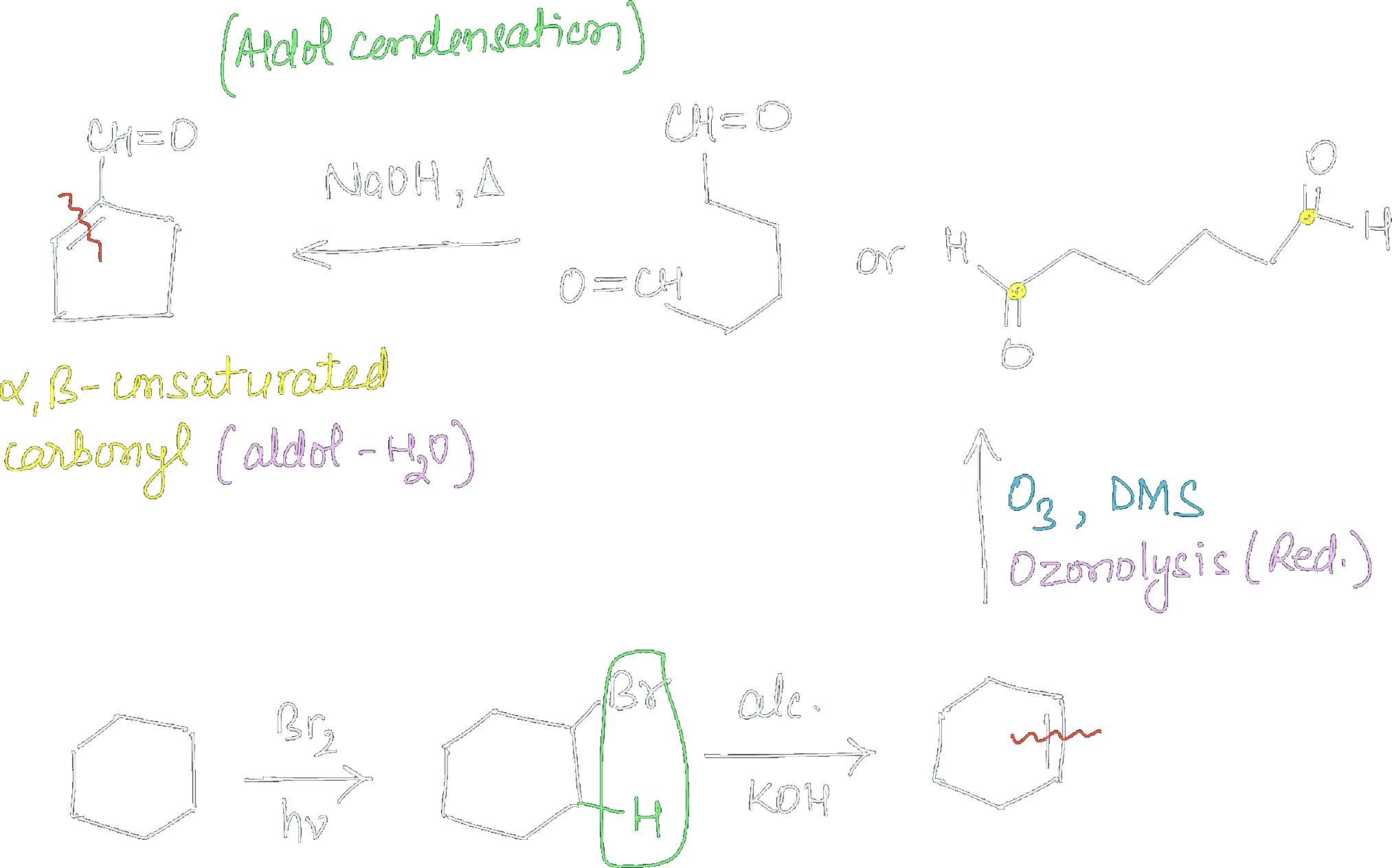 Answer: Option (a) — Cyclohexane
Key Points to Remember:
- Cyclohexane is the most stable cycloalkane (no angle or torsional strain in chair form)
- Ring-opening reactions of cycloalkanes produce linear dicarboxylic acids
- Identification of ring size from ozonolysis: count carbons in product
Practice this question with progress tracking
Want timed practice with adaptive difficulty? Solve this question (and hundreds more from Aldehydes, Ketones & Carboxylic Acids) inside The Crucible, our adaptive practice platform.
More JEE Main Aldehydes, Ketones & Carboxylic Acids PYQs
When the following compound: undergoes intramolecular aldol condensation, the major product formed is:
Which among the following compounds give yellow solid when reacted with NaOI/NaOH?
Aldol condensation is a popular and classical method to prepare ,-unsaturated carbonyl compounds. This reaction can be both intermolecular and intramolecular. Predict which one of the following is…
The major product (P) in the following reaction is:
Number of molecules from below which cannot give iodoform reaction is: Ethanol, Isopropyl alcohol, Bromoacetone, 2-Butanol, 2-Butanone, Butanal, 2-Pentanone, 3-Pentanone, Pentanal and 3-Pentanol