Given below are two statements, one is labelled as Assertion (A) and the other is labelled as Reason (R). Assertion…
Hydrocarbons · Class 11 · JEE Main Previous Year Question
Given below are two statements, one is labelled as Assertion (A) and the other is labelled as Reason (R). Assertion (A): Benzene is more stable than hypothetical cyclohexatriene. Reason (R): The delocalized electron cloud is attracted more strongly by nuclei of carbon atoms.
In the light of the above statements, choose the correct answer from the options given below:
- a
(A) is true but (R) is false.
- b
(A) is false but (R) is true.
- c✓
Both (A) and (R) are correct and (R) is the correct explanation of (A).
- d
Both (A) and (R) are correct but (R) is NOT the correct explanation of (A).
Both (A) and (R) are correct and (R) is the correct explanation of (A).
Direct from NCERT
 Step 1: Evaluate Assertion (A)
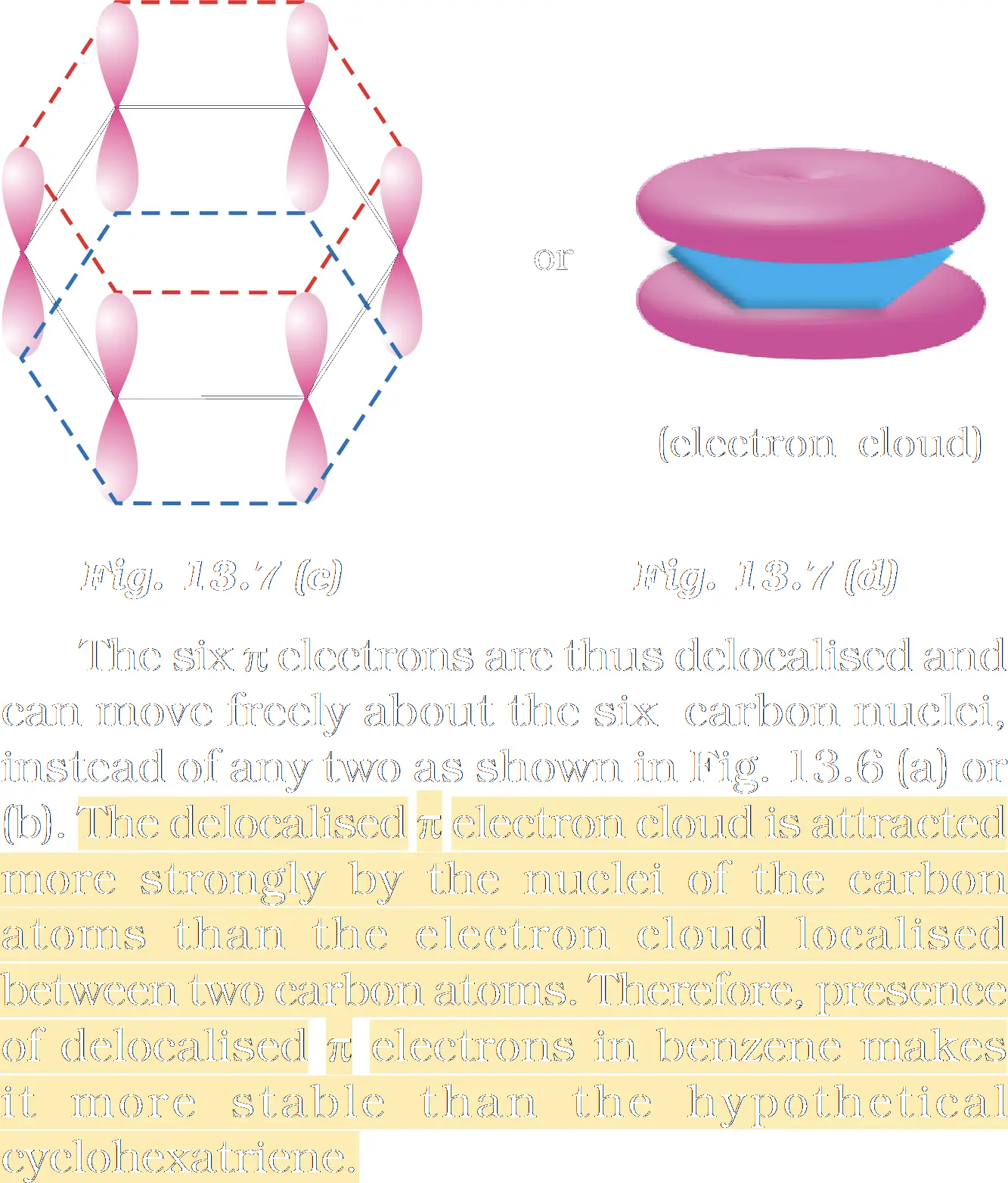
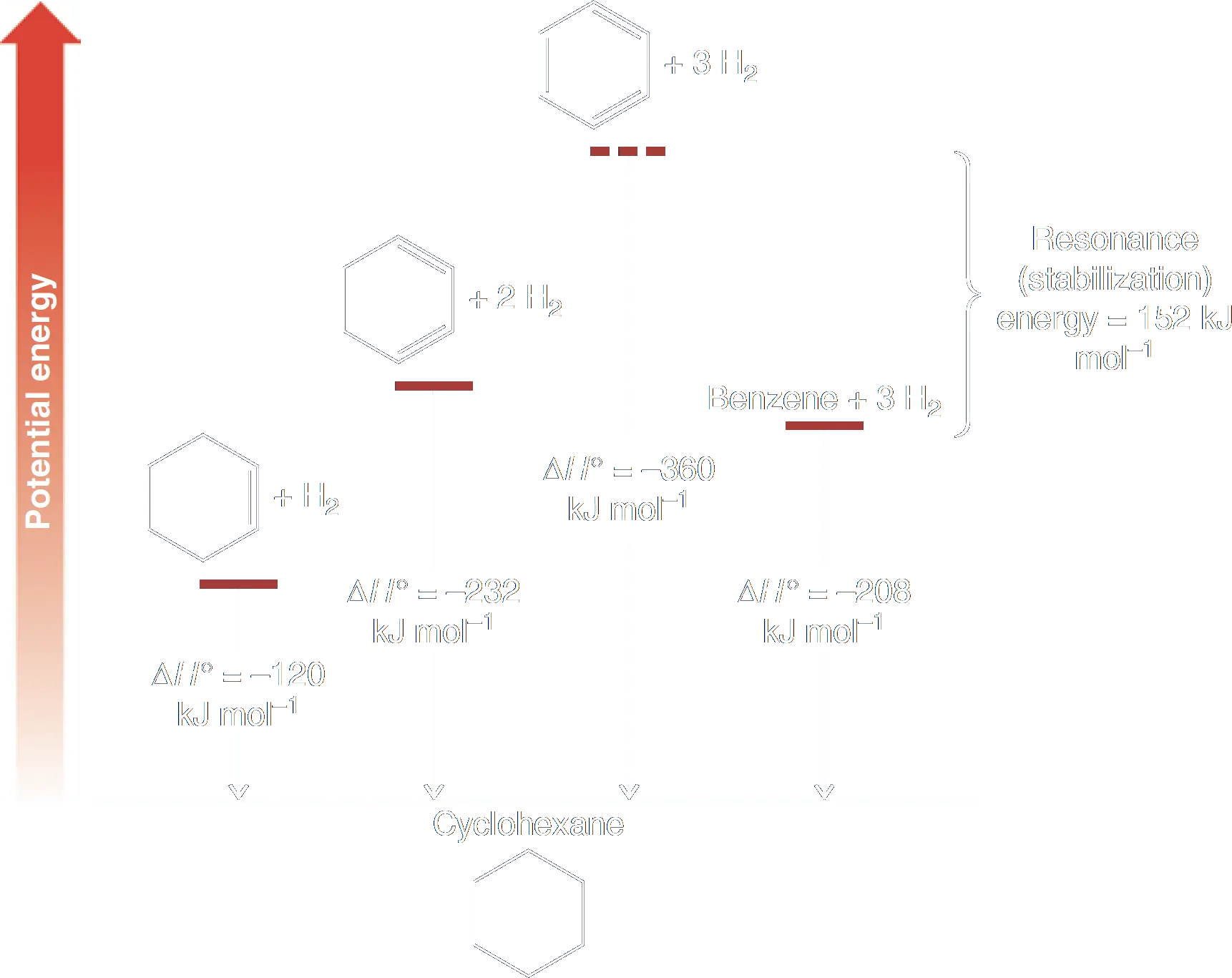
Benzene is more stable than the hypothetical cyclohexatriene (Kekule structure) by ~150 kJ/mol (resonance energy / delocalization energy). This extra stability is the resonance stabilization due to delocalization of 6 pi electrons over the ring.
Assertion (A) is TRUE.
Step 1: Evaluate Assertion (A)
Benzene is more stable than the hypothetical cyclohexatriene (Kekule structure) by ~150 kJ/mol (resonance energy / delocalization energy). This extra stability is the resonance stabilization due to delocalization of 6 pi electrons over the ring.
Assertion (A) is TRUE.
 Step 2: Evaluate Reason (R)
The delocalized pi electron cloud is attracted by all 6 carbon nuclei (not just 2 as in a localized double bond). Delocalization spreads electrons over a larger region, reducing electron-electron repulsion and increasing attractive interactions with carbon nuclei.
This delocalization is responsible for the extra stability of benzene.
Reason (R) is TRUE and correctly explains (A).
Step 2: Evaluate Reason (R)
The delocalized pi electron cloud is attracted by all 6 carbon nuclei (not just 2 as in a localized double bond). Delocalization spreads electrons over a larger region, reducing electron-electron repulsion and increasing attractive interactions with carbon nuclei.
This delocalization is responsible for the extra stability of benzene.
Reason (R) is TRUE and correctly explains (A).
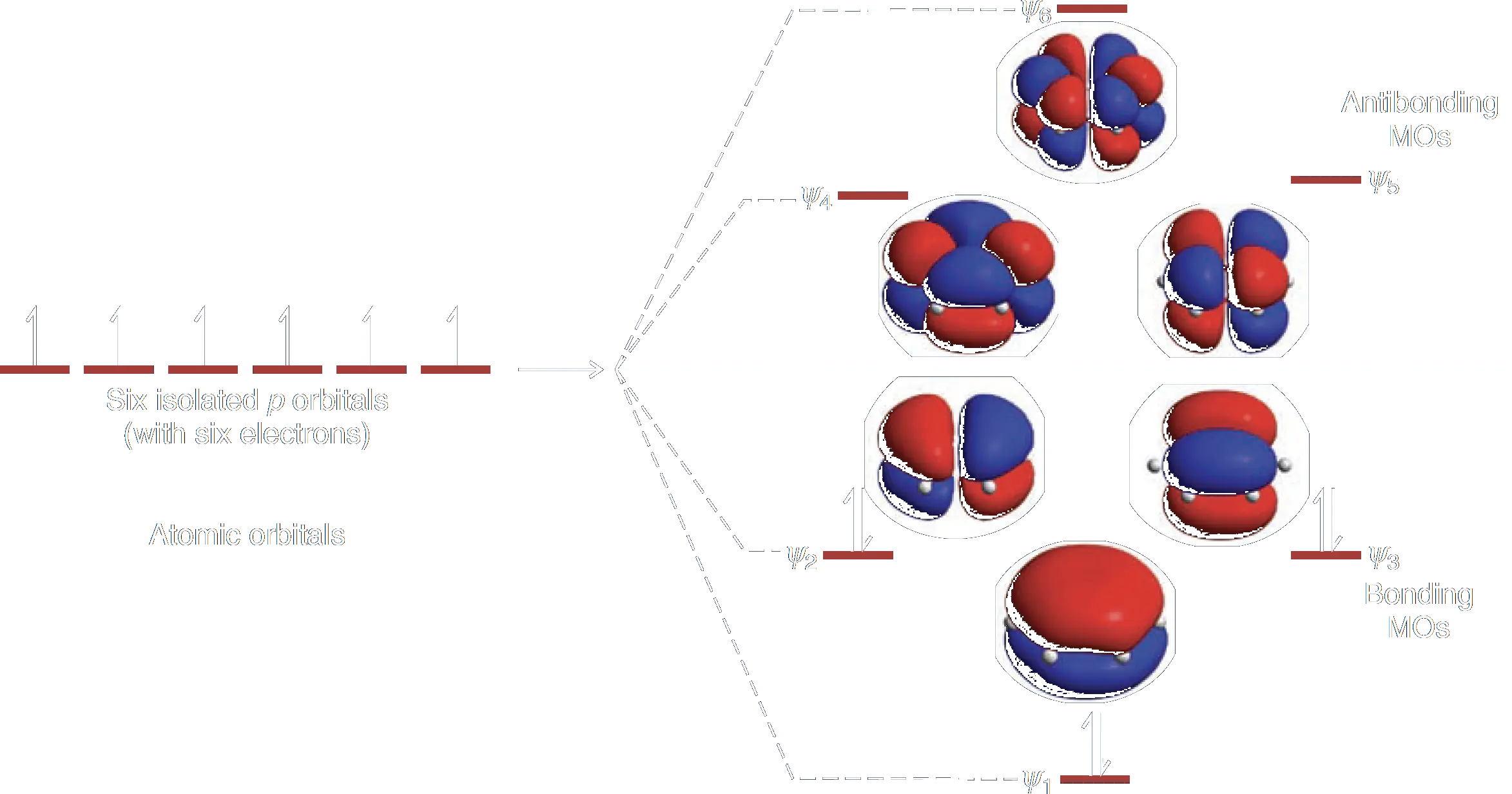
Step 3: Check Explanation The delocalization of pi electrons across all 6 carbons = each C nucleus attracts the pi electron cloud = lower energy = more stable than localized cyclohexatriene. R correctly explains A.
Key Points:
- Benzene resonance energy ~150 kJ/mol (extra stability from delocalization)
- Delocalized pi cloud: all 6 C nuclei attract electrons = greater stabilization
- This explains why benzene does not undergo addition reactions (unlike cyclohexatriene)
Practice this question with progress tracking
Want timed practice with adaptive difficulty? Solve this question (and hundreds more from Hydrocarbons) inside The Crucible, our adaptive practice platform.
More JEE Main Hydrocarbons PYQs
The major product P formed in the given reaction is:
For the given reaction: What is A (major product)?
For the following sequence of reactions, the correct products are:
Considering the above chemical reaction, identify the product X:
For the given reaction: What is A?