Part I — A Lawyer in a Rocking Chair
Seventy-five years of looking after himself — and now told he cannot go out alone
Part I — The old man and the new rules
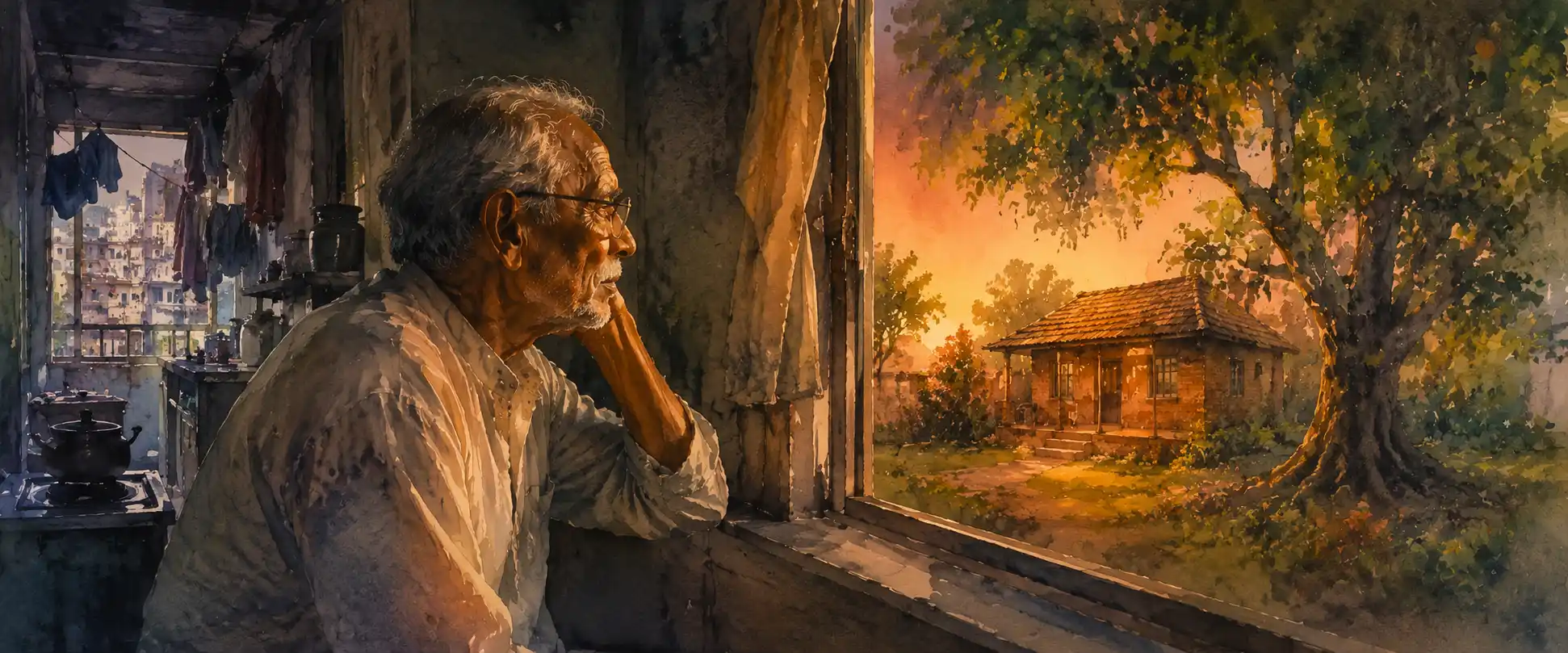
Grandpa, seventy-five, a retired lawyer, has just come to live with his daughter Vidya and grandson Ravi in their small city flat. His memory seems to be failing — but listen closely to how he speaks, and you may start to doubt that.
"I wish," said Ravi's mother, hurriedly putting some green, red and orange tablets on a saucer, "that somebody would invent a memory — Vitamin-M, they could call it, and we could give it to old people to help them improve their memories." "Shh … Grandpa'll hear you," said Ravi, pointing to the old figure sitting in the rocking chair, holding the newspaper inches from his nose to read it. "Don't worry, I doubt whether Grandpa can hear me. He doesn't hear too well, or see too well, or even remember too well these days."
It was only last month that Ravi's Grandpa had come to live with them because he was getting too old to live on his own. It had been a difficult month with Grandpa having to be admitted to the hospital because he absent-mindedly took a double dose of his medicines, and then gave them several anxious moments when he got lost on one occasion he went for a walk and forgot the way back home. "I'll have you know, Vidya, my dear," he had told his daughter with a trace of the firmness that had been a natural part of his job as a lawyer, "that I've been looking after myself for the better part of my seventy-five years." "First you force me to come and live with you in this little flat, in this horrible, crowded city and then you think you have the right to me to go out on my own!"
Grandpa hated the noise and of city life and when they were on their own, he often spoke, , of his small brick house in town. "Such a wonderful place…! With that big mango tree in the garden! It is so quiet that at dusk you can even hear a leaf fall!" But then Grandpa had slipped and fallen in the garden late one evening while he was around and lain outside all night because there was no one at home to help him up. That was a month ago and it made Ravi's mother lock up the tiny brick house and bring Grandpa to live with them.
Ravi at the over-loud tone his mother used when speaking to Grandpa, as though she were speaking to a child who couldn't hear or understand too well. Grandpa played a great game of chess, very cool and , and Ravi found that his own game had improved greatly ever since Grandpa had come to live with them. "How can he remember all those thousands of chess games and still forget the names of people he meets often!" Ravi wondered. "I hope you're not going to be as tiresome as your mother, Ravi. Treating me like a baby!" He picked up his beautiful shiny-black mahogany walking stick with a brass handle carved in the shape of an eagle's head, put on his bright-yellow cap and declared, "I'll be back home before you can set up the board, Ravi."
Pause and check.
Why did Vidya bring Grandpa to live with her in the city?
What clue makes us doubt that Grandpa's memory is really 'failing'?
Grandpa says he has 'been looking after myself for the better part of my seventy-five years.' His daughter says he isn't safe alone. Both are telling the truth. When an old person's need for safety collides with their need for dignity and freedom, how should a family decide? Is there a 'right' answer here?
Take a moment to form your answer before reading further.
Q1.What was Grandpa's profession, and how do we know?
Part I — The old man and the new rules
Grandpa, seventy-five, a retired lawyer, has just come to live with his daughter Vidya and grandson Ravi in their small city flat. His memory seems to be failing — but listen closely to how he speaks, and you may start to doubt that.
"I wish," said Ravi's mother, hurriedly putting some green, red and orange tablets on a saucer, "that somebody would invent a memory — Vitamin-M, they could call it, and we could give it to old people to help them improve their memories." "Shh … Grandpa'll hear you," said Ravi, pointing to the old figure sitting in the rocking chair, holding the newspaper inches from his nose to read it. "Don't worry, I doubt whether Grandpa can hear me. He doesn't hear too well, or see too well, or even remember too well these days."
It was only last month that Ravi's Grandpa had come to live with them because he was getting too old to live on his own. It had been a difficult month with Grandpa having to be admitted to the hospital because he absent-mindedly took a double dose of his medicines, and then gave them several anxious moments when he got lost on one occasion he went for a walk and forgot the way back home. "I'll have you know, Vidya, my dear," he had told his daughter with a trace of the firmness that had been a natural part of his job as a lawyer, "that I've been looking after myself for the better part of my seventy-five years." "First you force me to come and live with you in this little flat, in this horrible, crowded city and then you think you have the right to me to go out on my own!"
Grandpa hated the noise and of city life and when they were on their own, he often spoke, , of his small brick house in town. "Such a wonderful place…! With that big mango tree in the garden! It is so quiet that at dusk you can even hear a leaf fall!" But then Grandpa had slipped and fallen in the garden late one evening while he was around and lain outside all night because there was no one at home to help him up. That was a month ago and it made Ravi's mother lock up the tiny brick house and bring Grandpa to live with them.
Ravi at the over-loud tone his mother used when speaking to Grandpa, as though she were speaking to a child who couldn't hear or understand too well. Grandpa played a great game of chess, very cool and , and Ravi found that his own game had improved greatly ever since Grandpa had come to live with them. "How can he remember all those thousands of chess games and still forget the names of people he meets often!" Ravi wondered. "I hope you're not going to be as tiresome as your mother, Ravi. Treating me like a baby!" He picked up his beautiful shiny-black mahogany walking stick with a brass handle carved in the shape of an eagle's head, put on his bright-yellow cap and declared, "I'll be back home before you can set up the board, Ravi."
Pause and check.
Why did Vidya bring Grandpa to live with her in the city?
What clue makes us doubt that Grandpa's memory is really 'failing'?
Grandpa says he has 'been looking after myself for the better part of my seventy-five years.' His daughter says he isn't safe alone. Both are telling the truth. When an old person's need for safety collides with their need for dignity and freedom, how should a family decide? Is there a 'right' answer here?
Take a moment to form your answer before reading further.
Q1.What was Grandpa's profession, and how do we know?