The Bond Thread: A Child Lost at the Fair
A companion story — when everything you wanted means nothing without them
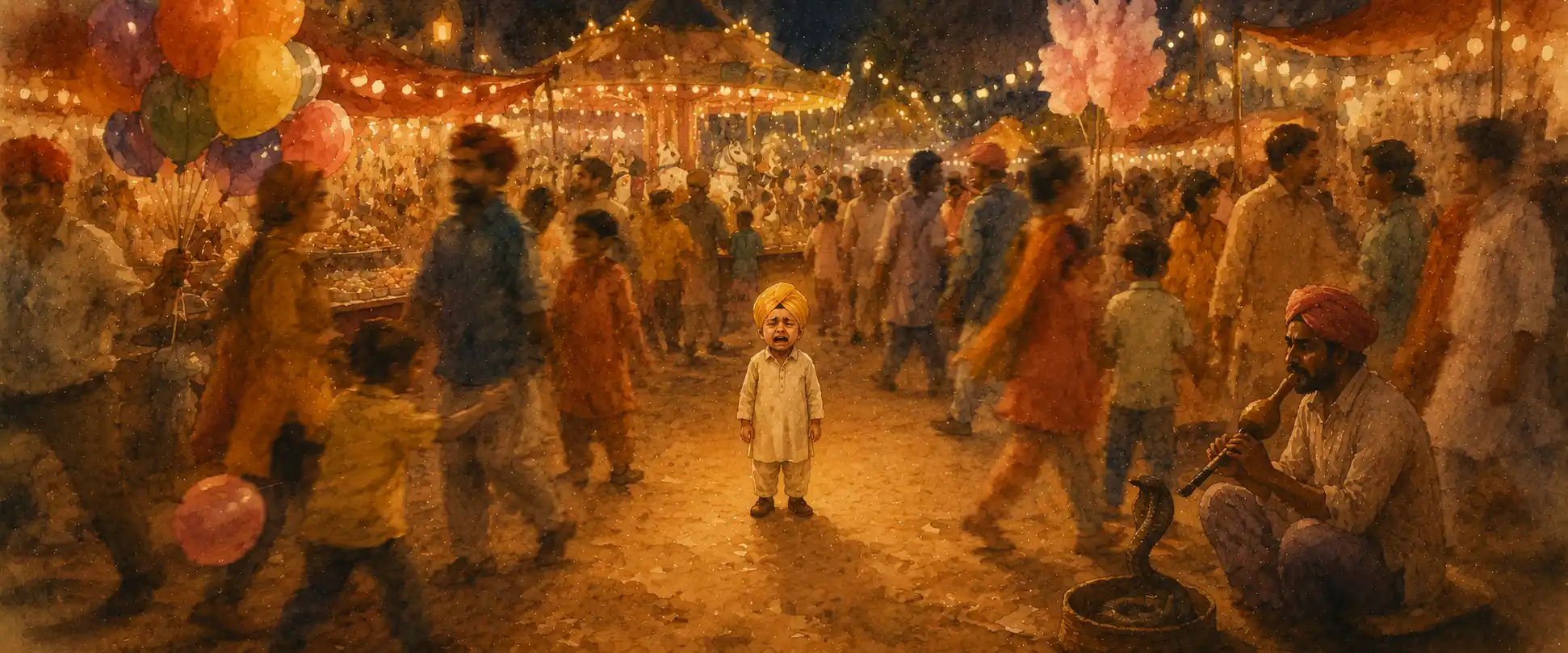
Kaveri pairs this unit with a famous story: The Lost Child by Mulk Raj Anand. In Vitamin-M, a family underestimates the bond between an old man and his grandson. The Lost Child shows that bond from the other end of life — a small child who learns, in one terrifying moment, that nothing in the world matters more than his parents.
At a spring fair, a child who kept begging his parents for toys and sweets gets separated from them — and suddenly wants only one thing.
The man tried to him by taking him to the roundabout. "Will you have a ride on the horse?" he gently asked as he approached the ring. The child's throat tore into a thousand shrill sobs and he only shouted, "I want my mother, I want my father!" The man took him near the balloons, thinking the bright colours of the balloons would distract the child's attention and quieten him. The child turned his eyes from the flying balloons and just sobbed, "I want my mother, I want my father!" Thinking to humour his charge by a gift of sweets, the man took him to the counter of the sweet shop. The child turned his face from the sweet shop and only sobbed, "I want my mother, I want my father!"
Anand could have ended the story by reuniting the child with his parents — a happy ending. Instead he stops on the child still lost, still sobbing 'I want my mother, I want my father!' Why might he leave the ending open like this? And what does the structure — first the child wanting everything, then wanting only his parents — reveal about how the story is built?
Take a moment to form your answer before reading further.
Q1.What does the lost child say, over and over, when offered all the things he had wanted?
Kaveri pairs this unit with a famous story: The Lost Child by Mulk Raj Anand. In Vitamin-M, a family underestimates the bond between an old man and his grandson. The Lost Child shows that bond from the other end of life — a small child who learns, in one terrifying moment, that nothing in the world matters more than his parents.
At a spring fair, a child who kept begging his parents for toys and sweets gets separated from them — and suddenly wants only one thing.
The man tried to him by taking him to the roundabout. "Will you have a ride on the horse?" he gently asked as he approached the ring. The child's throat tore into a thousand shrill sobs and he only shouted, "I want my mother, I want my father!" The man took him near the balloons, thinking the bright colours of the balloons would distract the child's attention and quieten him. The child turned his eyes from the flying balloons and just sobbed, "I want my mother, I want my father!" Thinking to humour his charge by a gift of sweets, the man took him to the counter of the sweet shop. The child turned his face from the sweet shop and only sobbed, "I want my mother, I want my father!"
Anand could have ended the story by reuniting the child with his parents — a happy ending. Instead he stops on the child still lost, still sobbing 'I want my mother, I want my father!' Why might he leave the ending open like this? And what does the structure — first the child wanting everything, then wanting only his parents — reveal about how the story is built?
Take a moment to form your answer before reading further.
Q1.What does the lost child say, over and over, when offered all the things he had wanted?