Say It, Play It, Write It
Tricky words, a grandfather–grandson scene, and a memory worth keeping
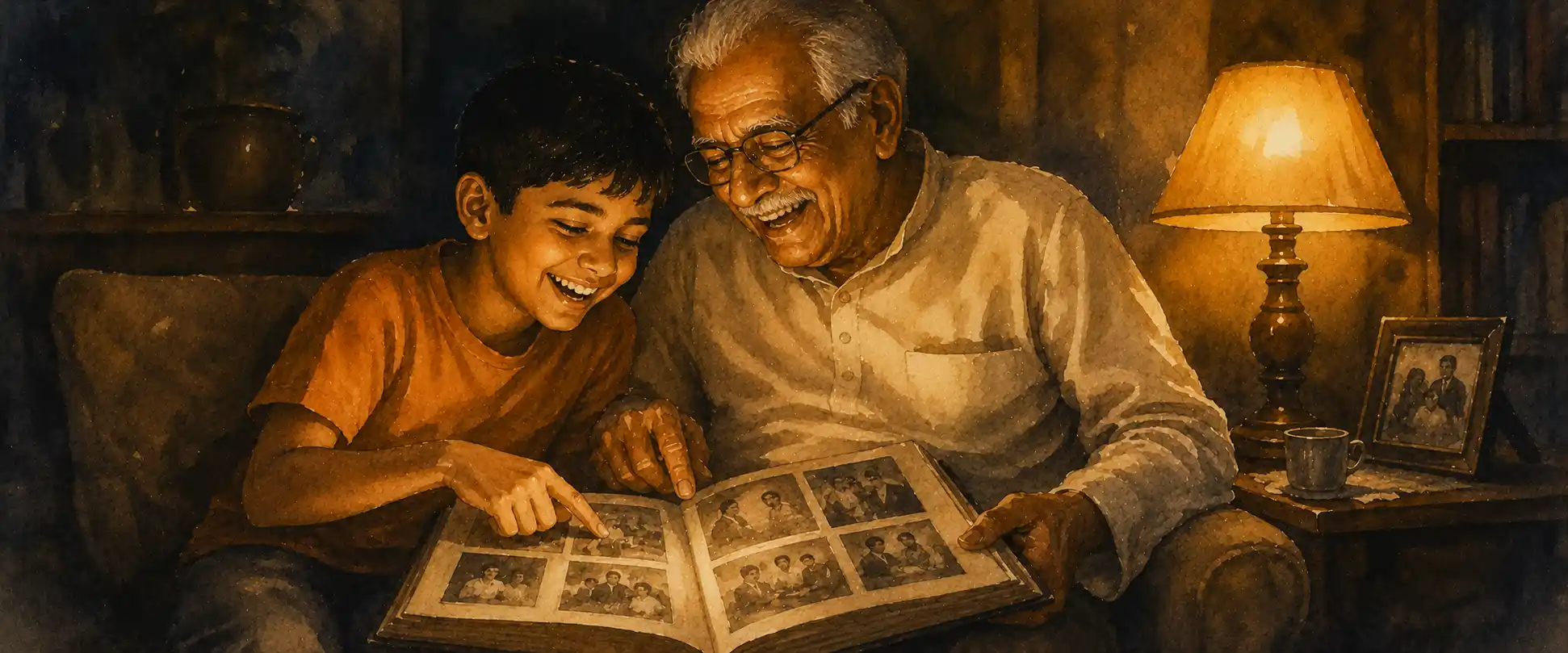
Master a few of the story's trickier words, step into a scene between Ravi and Grandpa, then write a memory of your own — connecting to this unit's heart: family and remembering.
Six words from the story. Tap to hear; read aloud twice.
A picture is worth a thousand words. Choose one memorable photograph of yourself with a family member — especially an older relative — and write a short piece about it (or about a tradition, story, or recipe passed down to you). Say when and where it was taken, who is in it, and why it is memorable.
- ▸Anchor the memory in a specific time and place — a date, an occasion, a named spot.
- ▸Choose details that reveal feeling and character, not just facts ('his walking stick leaned against the wall').
- ▸End with WHY it matters to you — that's the heart of memory-writing.
- ▸It's fine to feel sad as well as happy. Honest memory holds both.
Q1.In solemnly, which letter is silent?
Master a few of the story's trickier words, step into a scene between Ravi and Grandpa, then write a memory of your own — connecting to this unit's heart: family and remembering.
Six words from the story. Tap to hear; read aloud twice.
A picture is worth a thousand words. Choose one memorable photograph of yourself with a family member — especially an older relative — and write a short piece about it (or about a tradition, story, or recipe passed down to you). Say when and where it was taken, who is in it, and why it is memorable.
- ▸Anchor the memory in a specific time and place — a date, an occasion, a named spot.
- ▸Choose details that reveal feeling and character, not just facts ('his walking stick leaned against the wall').
- ▸End with WHY it matters to you — that's the heart of memory-writing.
- ▸It's fine to feel sad as well as happy. Honest memory holds both.
Q1.In solemnly, which letter is silent?