The correct order of electronegativity for given elements is:
Classification of Elements & Periodicity · Class 11 · JEE Main Previous Year Question
The correct order of electronegativity for given elements is:
- a
- b
- c✓
- d
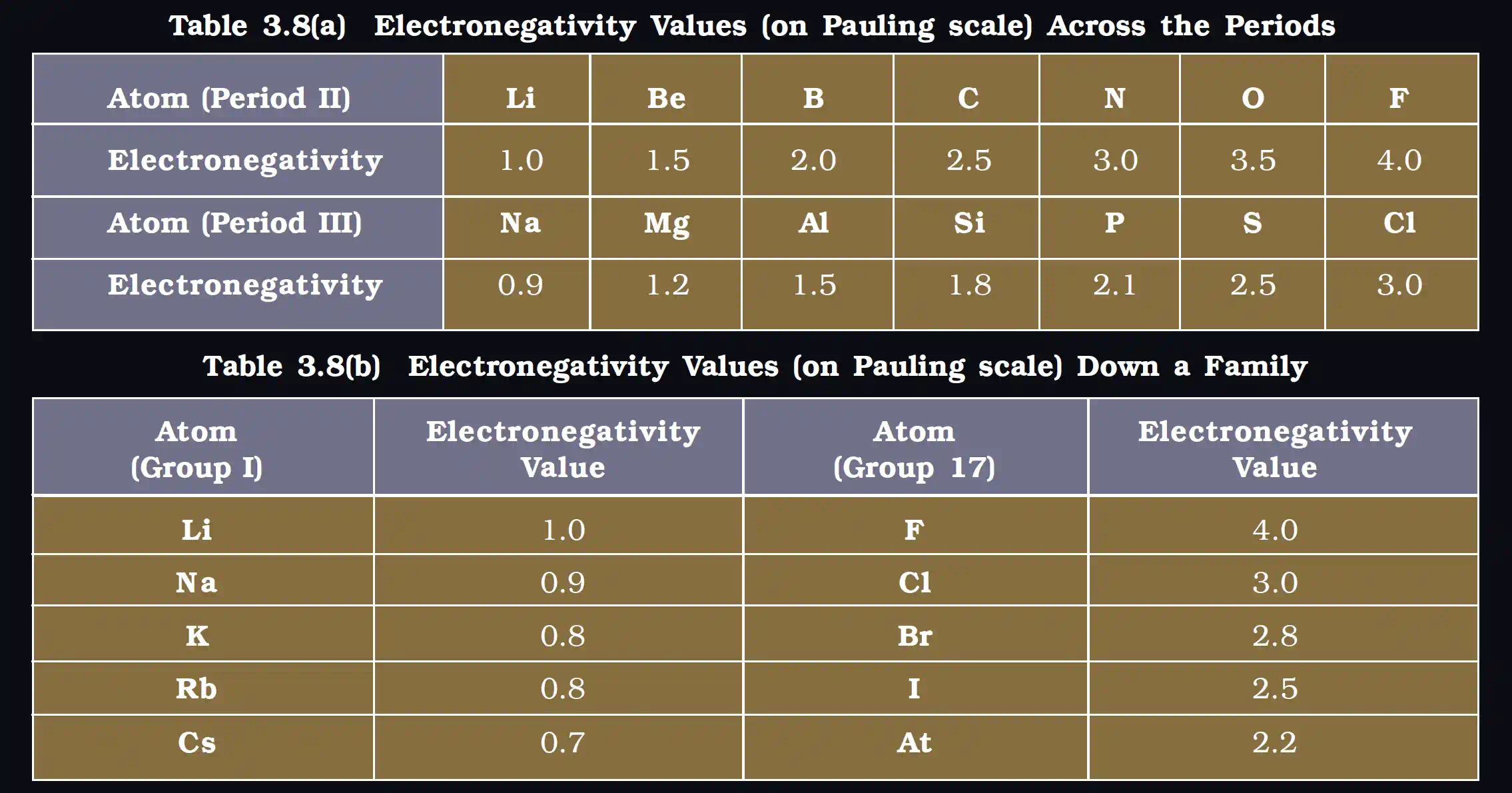
🧠 Use Pauling electronegativity values: Br (2.96) > C (2.55) > At (~2.2) > P (2.19) Electronegativity decreases down a group and generally increases across a period. With elements from different groups and periods, compare actual numbers.
🗺️ Place each element Br (Group 17, Period 4): halogen, EN = 2.96. High but below F and Cl. C (Group 14, Period 2): EN = 2.55. Period 2 helps it stay relatively high. At (Group 17, Period 6): heaviest halogen — EN drops sharply down Group 17 to about 2.2. P (Group 15, Period 3): EN = 2.19. Just below At.
Order: Br > C > At > P.
⚠️ The trap Many students assume any halogen beats any non-halogen in electronegativity. But At is so far down Group 17 that its EN is barely above Phosphorus. So C (a Period 2 element from Group 14) edges out At. Halogen ≠ automatically high EN. Always check actual numbers when comparing across groups and periods.
Practice this question with progress tracking
Want timed practice with adaptive difficulty? Solve this question (and hundreds more from Classification of Elements & Periodicity) inside The Crucible, our adaptive practice platform.
More JEE Main Classification of Elements & Periodicity PYQs
The property/properties that show irregularity in first four elements of group-17 is/are: (A) Covalent radius (B) Electron affinity (C) Ionic radius (D) First ionization energy Choose the correct…
Electronic configuration of four elements A, B, C and D are given below: (A) 1s2 2s2 2p3 (B) 1s2 2s2 2p4 (C) 1s2 2s2 2p5 (D) 1s2 2s2 2p2 Which of the following is the correct order of increasing…
The atomic number of the element from the following with lowest 1st ionisation enthalpy is:
The correct order of the first ionization enthalpy is:
The element having the highest first ionization enthalpy among Si, Al, N and C is: