The Two Women in the Story
A 12-year-old and her 62-year-old grandmother — and how their roles flip
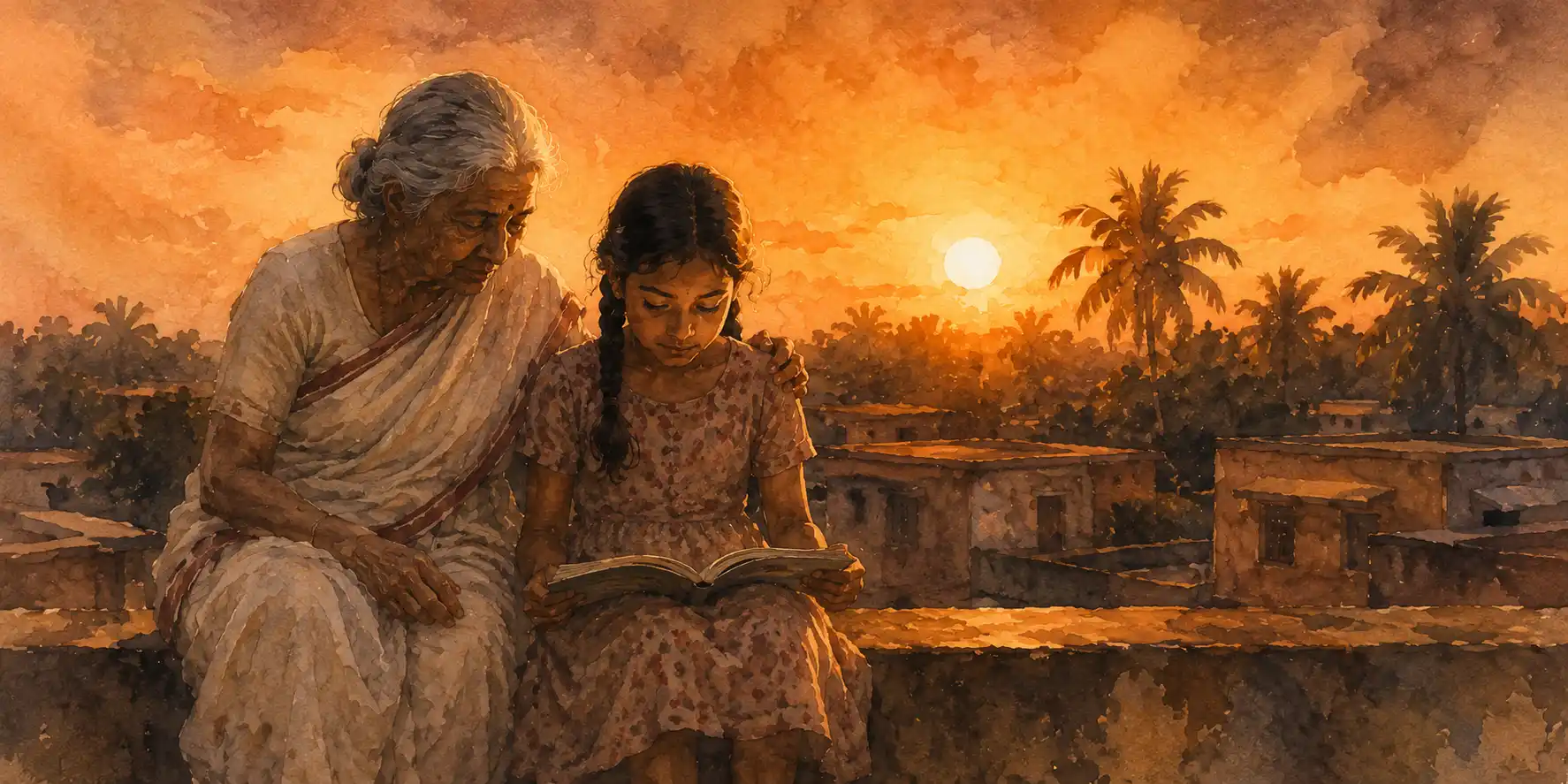
There are only two main people in this story — the narrator and her grandmother. But what happens between them is a quiet complete shift in roles. Tap each character to see who they are at the start. Then read on to see who they become.
How their roles change across the story
At the start
- Narrator: the reader. She reads Triveni's serial aloud each Wednesday.
- Grandmother: the listener. She knows every chapter by heart but cannot read.
- Roles defined by age and tradition.
By the end
- Narrator: the teacher. The grandmother calls her first student hers.
- Grandmother: the student — and a graduate. Reads Kashi Yatre the day she receives it.
- Roles defined by who taught whom, not by age.
At the start
- Narrator: the reader. She reads Triveni's serial aloud each Wednesday.
- Grandmother: the listener. She knows every chapter by heart but cannot read.
- Roles defined by age and tradition.
By the end
- Narrator: the teacher. The grandmother calls her first student hers.
- Grandmother: the student — and a graduate. Reads Kashi Yatre the day she receives it.
- Roles defined by who taught whom, not by age.
The narrator says: 'I was her only teacher and she was my first student.' The grandmother, by the end, calls the narrator a teacher. Across this story, what does the narrator learn from her grandmother — even though the narrator is the one giving the alphabet lessons?
Take a moment to form your answer before reading further.
Q1.Who is Krishtakka, in one phrase?
There are only two main people in this story — the narrator and her grandmother. But what happens between them is a quiet complete shift in roles. Tap each character to see who they are at the start. Then read on to see who they become.
How their roles change across the story
At the start
- Narrator: the reader. She reads Triveni's serial aloud each Wednesday.
- Grandmother: the listener. She knows every chapter by heart but cannot read.
- Roles defined by age and tradition.
By the end
- Narrator: the teacher. The grandmother calls her first student hers.
- Grandmother: the student — and a graduate. Reads Kashi Yatre the day she receives it.
- Roles defined by who taught whom, not by age.
At the start
- Narrator: the reader. She reads Triveni's serial aloud each Wednesday.
- Grandmother: the listener. She knows every chapter by heart but cannot read.
- Roles defined by age and tradition.
By the end
- Narrator: the teacher. The grandmother calls her first student hers.
- Grandmother: the student — and a graduate. Reads Kashi Yatre the day she receives it.
- Roles defined by who taught whom, not by age.
The narrator says: 'I was her only teacher and she was my first student.' The grandmother, by the end, calls the narrator a teacher. Across this story, what does the narrator learn from her grandmother — even though the narrator is the one giving the alphabet lessons?
Take a moment to form your answer before reading further.
Q1.Who is Krishtakka, in one phrase?