Before You Read: Voices We Almost Lost
A door into Sudha Murty's village
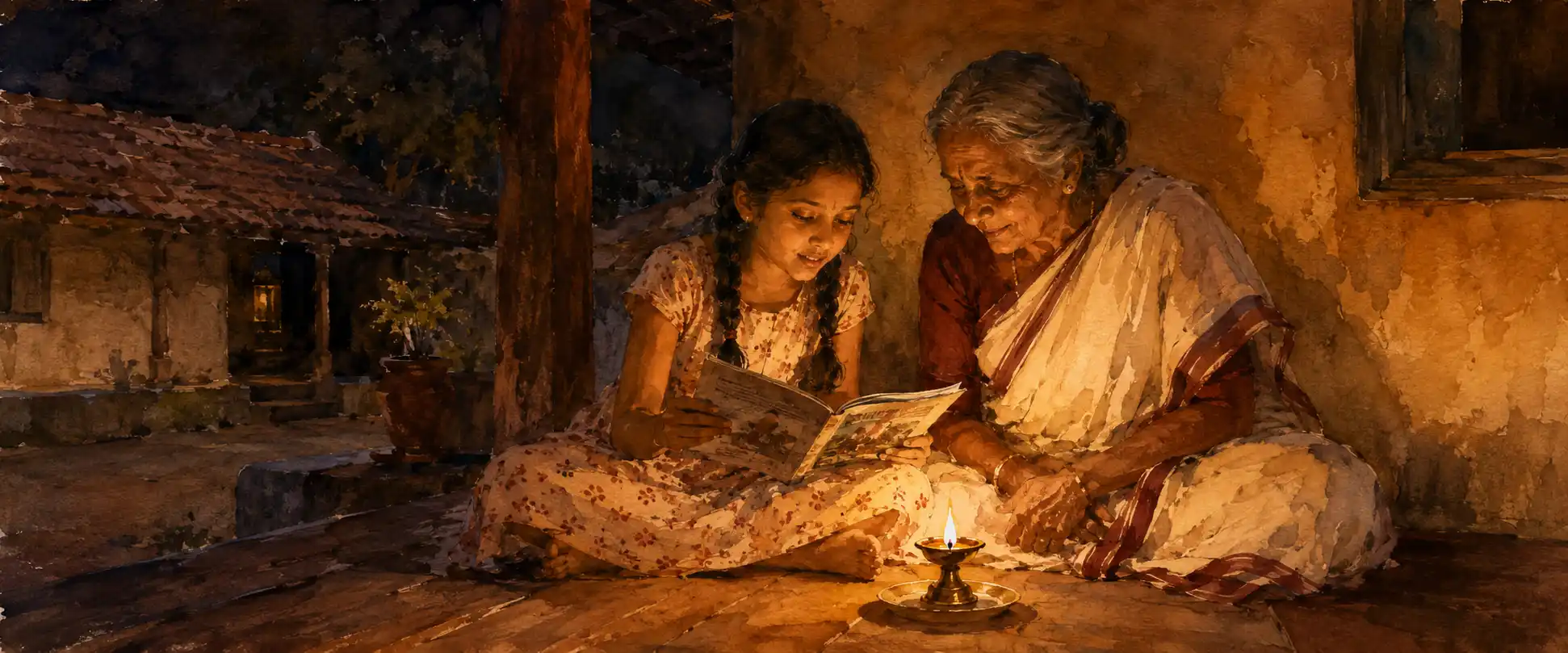
Have you ever taught someone older than you how to do something — even something small, like sending a voice message or using a new app? What was that moment like, for both of you? Did the roles between you change, just for a few minutes?
Think of a grandparent, a parent, an aunt or uncle. Try to remember how they felt being the learner, and how you felt being the one explaining.
Triveni was a pen-name. Her real name was Anasuya Shankar. She was a Kannada novelist in the 1950s and 60s who wrote about the inner lives of ordinary women — at a time when Indian publishing barely took women writers seriously. So she chose a male-sounding pen-name. Her stories sold out of every weekly magazine they appeared in. She died young, at 35.
In the story you'll read on the next page, an old village grandmother waits all week to hear Triveni's latest chapter read aloud to her. The grandmother does not know Triveni was a woman writing under a hidden name. She just knows the stories feel true.
Sudha Murty is one of India's most-read living authors. She writes the way good teachers talk — clearly, warmly, one idea per sentence. The story you'll read in this unit is not a piece of fiction she imagined. It is from her own childhood, in a small village in north Karnataka, when she was twelve years old. The grandmother in it is real. The magazine on the bus is real. The lamp on the verandah is real.
Before you meet them, here are the first words you'll need.
Tap each card to see what the word means. These eight words appear in the very first paragraphs of the story — knowing them now means you won't have to stop and look them up later.
Q1.Which sentence uses the word eagerly correctly?
Q1.What was Triveni's real name?
Have you ever taught someone older than you how to do something — even something small, like sending a voice message or using a new app? What was that moment like, for both of you? Did the roles between you change, just for a few minutes?
Think of a grandparent, a parent, an aunt or uncle. Try to remember how they felt being the learner, and how you felt being the one explaining.
Triveni was a pen-name. Her real name was Anasuya Shankar. She was a Kannada novelist in the 1950s and 60s who wrote about the inner lives of ordinary women — at a time when Indian publishing barely took women writers seriously. So she chose a male-sounding pen-name. Her stories sold out of every weekly magazine they appeared in. She died young, at 35.
In the story you'll read on the next page, an old village grandmother waits all week to hear Triveni's latest chapter read aloud to her. The grandmother does not know Triveni was a woman writing under a hidden name. She just knows the stories feel true.
Sudha Murty is one of India's most-read living authors. She writes the way good teachers talk — clearly, warmly, one idea per sentence. The story you'll read in this unit is not a piece of fiction she imagined. It is from her own childhood, in a small village in north Karnataka, when she was twelve years old. The grandmother in it is real. The magazine on the bus is real. The lamp on the verandah is real.
Before you meet them, here are the first words you'll need.
Tap each card to see what the word means. These eight words appear in the very first paragraphs of the story — knowing them now means you won't have to stop and look them up later.
Q1.Which sentence uses the word eagerly correctly?
Q1.What was Triveni's real name?