Part II — Tears and a Resolve
A wedding away from home, and what the narrator finds when she returns
Part II — The grandmother decides
The narrator goes away to a cousin's wedding. When she returns, she finds her grandmother weeping silently — holding the magazine she cannot read. The story shifts here. The grandmother is no longer just a listener. She is about to ask for something she has never asked for before.
When I came back to my village, I saw my grandmother in tears. I was surprised, for I had never seen her cry even in the most difficult situations. What had happened? I was worried. "Avva, is everything all right? Are you okay?" I used to call her , which means mother in the Kannada spoken in north Karnataka. She nodded but did not reply. I did not understand and forgot about it.
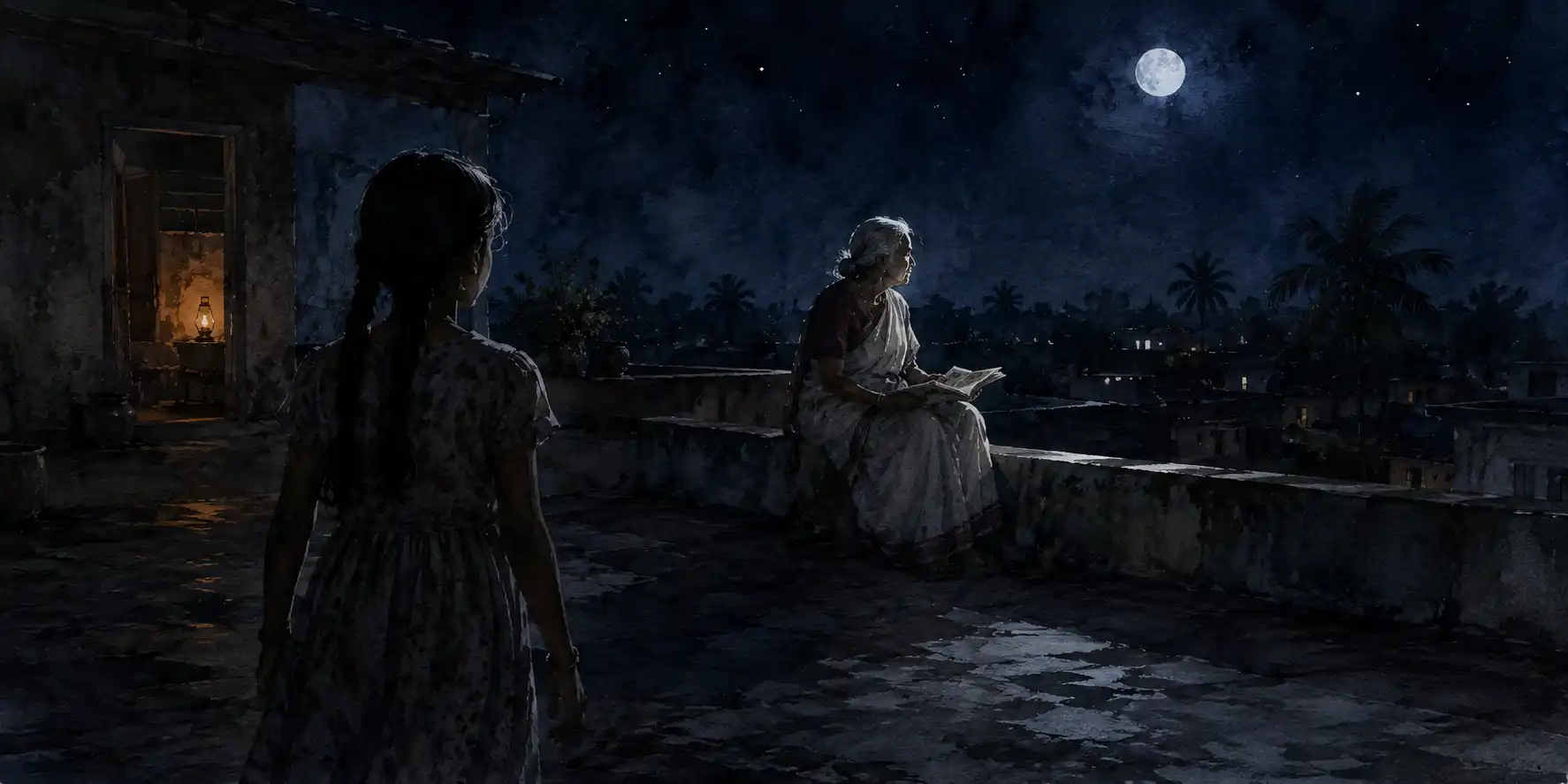
In the night, after dinner, we were sleeping in the open terrace of our house. It was a summer night and there was a full moon. Avva came and sat next to me. Her hands touched my forehead. I realised she wanted to speak. I asked her, "What is the matter?"
'When I was a young girl, I lost my mother.' 'There was nobody to look after and guide me.' 'My father was a busy man and got married again.' 'In those days people never considered education essential for girls, so I never went to school.' 'I got married very young and had children.' 'I became very busy.' 'Later I had grandchildren and always felt so much happiness in cooking and feeding all of you.' 'At times I used to not going to school, so I made sure that my children and grandchildren studied well...'
I could not understand why my sixty-two-year-old grandmother was telling me, a twelve-year-old, the story of her life in the middle of the night. But I knew I loved her and there had to be some reason why she was talking to me. I looked at her face. It was unhappy and her eyes were filled with tears. She was a good-looking lady who was usually always smiling. Even today, I cannot forget the worried expression on her face. I leaned forward and held her hand.
'Avva, don't cry. What is the matter? Can I help you in any way?' 'Yes, I need your help. You know when you were away, Karmaveera came as usual.' 'I opened the magazine. I saw the picture that accompanies the story of Kashi Yatre and I could not understand anything that was written.' 'Many times I rubbed my hands over the pages wishing they could understand what was written.' 'But I knew it was not possible.' 'If only I was educated enough.' 'I waited eagerly for you to return. I felt you would come early and read for me.' 'I even thought of going to the village and asking you to read for me.' 'I could have asked somebody in this village but I was too to do so.' 'I felt very dependent and helpless.' 'We are well-off, but what use is money when I cannot be independent?'
An Indian tradition where a younger person bows and touches the feet of an elder or teacher as a mark of respect.
Pause and check before reading the ending.
Why does the grandmother stop attending her usual temple-courtyard gathering with her friends?
What does Krishtakka mean when she says, 'We are well-off, but what use is money when I cannot be independent?'
I did not know what to answer. Avva continued. 'I have decided I want to learn the Kannada alphabet from tomorrow onwards.' 'I will work very hard.' 'I will keep day during Dassara as the .' 'That day I should be able to read a novel on my own.' 'I want to be independent.'
I saw the on her face. Yet I laughed at her. 'Avva, at this age of sixty-two you want to learn the alphabet? All your hair is grey, your hands are wrinkled, you wear spectacles and you work so much in the kitchen...' Childishly I made fun of the old lady. But she just smiled. 'For a good cause if you are determined, you can overcome any obstacle.' 'I will work harder than anybody but I will do it.' 'For learning there is .'
The next day onwards I started my tuition. Avva was a wonderful student. The amount of homework she did was amazing. She would read, repeat, write, and recite. I was her only teacher and she was my first student. Little did I know then that one day I would become a teacher in Computer Science and teach hundreds of students.
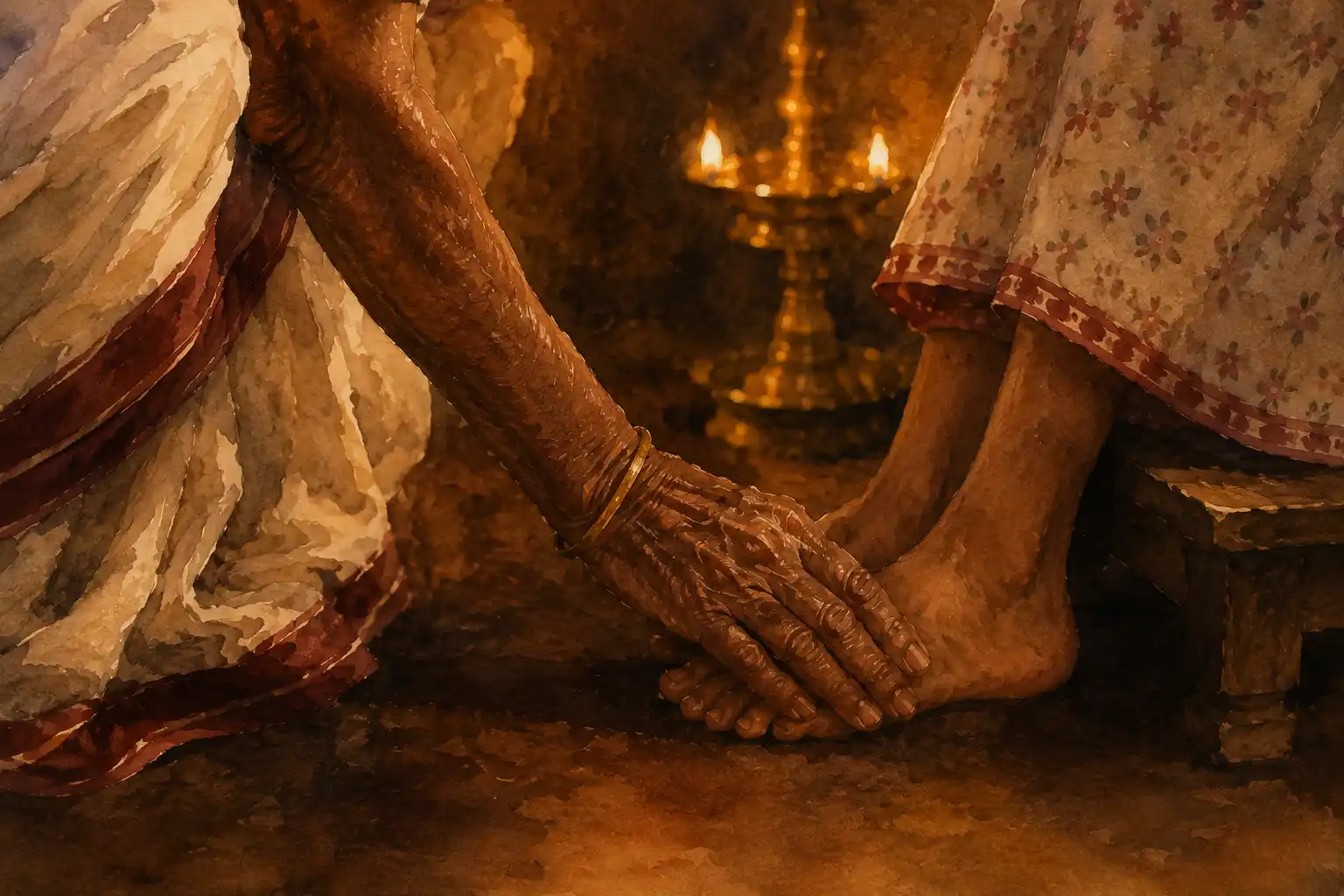
The Dassara festival came as usual. Secretly I bought Kashi Yatre which had been published as a novel by that time. My grandmother called me to the puja place and made me sit down on a stool. She gave me a gift of frock material. Then she did something unusual. She bent down and touched my feet. I was surprised and . Elders never touch the feet of youngsters. We have always touched the feet of God, elders, and teachers. We consider that as a mark of respect. It is a great tradition but today the reverse had happened. It was not correct.
She said, 'I am touching the feet of a teacher, not my granddaughter; a teacher who taught me so well, with so much of affection that I can read any novel confidently in such a short period.' 'Now I am independent.' 'It is my duty to respect a teacher.' 'Is it not written in our that a teacher should be respected, the gender and age?' I did return her namaskara to her by touching her feet and gave my gift to my first student. She opened it and read immediately the title Kashi Yatre by Triveni and the publisher's name. I knew then that my student had .
Sudha Murty writes: 'I saw the determination on her face. Yet I laughed at her.' Why does the narrator laugh? What is she laughing at — and what does that laughter reveal about her, not her grandmother?
Take a moment to form your answer before reading further.
Q1.What deadline does Krishtakka set for herself to learn to read?
Part II — The grandmother decides
The narrator goes away to a cousin's wedding. When she returns, she finds her grandmother weeping silently — holding the magazine she cannot read. The story shifts here. The grandmother is no longer just a listener. She is about to ask for something she has never asked for before.
When I came back to my village, I saw my grandmother in tears. I was surprised, for I had never seen her cry even in the most difficult situations. What had happened? I was worried. "Avva, is everything all right? Are you okay?" I used to call her , which means mother in the Kannada spoken in north Karnataka. She nodded but did not reply. I did not understand and forgot about it.
In the night, after dinner, we were sleeping in the open terrace of our house. It was a summer night and there was a full moon. Avva came and sat next to me. Her hands touched my forehead. I realised she wanted to speak. I asked her, "What is the matter?"
'When I was a young girl, I lost my mother.' 'There was nobody to look after and guide me.' 'My father was a busy man and got married again.' 'In those days people never considered education essential for girls, so I never went to school.' 'I got married very young and had children.' 'I became very busy.' 'Later I had grandchildren and always felt so much happiness in cooking and feeding all of you.' 'At times I used to not going to school, so I made sure that my children and grandchildren studied well...'
I could not understand why my sixty-two-year-old grandmother was telling me, a twelve-year-old, the story of her life in the middle of the night. But I knew I loved her and there had to be some reason why she was talking to me. I looked at her face. It was unhappy and her eyes were filled with tears. She was a good-looking lady who was usually always smiling. Even today, I cannot forget the worried expression on her face. I leaned forward and held her hand.
'Avva, don't cry. What is the matter? Can I help you in any way?' 'Yes, I need your help. You know when you were away, Karmaveera came as usual.' 'I opened the magazine. I saw the picture that accompanies the story of Kashi Yatre and I could not understand anything that was written.' 'Many times I rubbed my hands over the pages wishing they could understand what was written.' 'But I knew it was not possible.' 'If only I was educated enough.' 'I waited eagerly for you to return. I felt you would come early and read for me.' 'I even thought of going to the village and asking you to read for me.' 'I could have asked somebody in this village but I was too to do so.' 'I felt very dependent and helpless.' 'We are well-off, but what use is money when I cannot be independent?'
An Indian tradition where a younger person bows and touches the feet of an elder or teacher as a mark of respect.
Pause and check before reading the ending.
Why does the grandmother stop attending her usual temple-courtyard gathering with her friends?
What does Krishtakka mean when she says, 'We are well-off, but what use is money when I cannot be independent?'
I did not know what to answer. Avva continued. 'I have decided I want to learn the Kannada alphabet from tomorrow onwards.' 'I will work very hard.' 'I will keep day during Dassara as the .' 'That day I should be able to read a novel on my own.' 'I want to be independent.'
I saw the on her face. Yet I laughed at her. 'Avva, at this age of sixty-two you want to learn the alphabet? All your hair is grey, your hands are wrinkled, you wear spectacles and you work so much in the kitchen...' Childishly I made fun of the old lady. But she just smiled. 'For a good cause if you are determined, you can overcome any obstacle.' 'I will work harder than anybody but I will do it.' 'For learning there is .'
The next day onwards I started my tuition. Avva was a wonderful student. The amount of homework she did was amazing. She would read, repeat, write, and recite. I was her only teacher and she was my first student. Little did I know then that one day I would become a teacher in Computer Science and teach hundreds of students.
The Dassara festival came as usual. Secretly I bought Kashi Yatre which had been published as a novel by that time. My grandmother called me to the puja place and made me sit down on a stool. She gave me a gift of frock material. Then she did something unusual. She bent down and touched my feet. I was surprised and . Elders never touch the feet of youngsters. We have always touched the feet of God, elders, and teachers. We consider that as a mark of respect. It is a great tradition but today the reverse had happened. It was not correct.
She said, 'I am touching the feet of a teacher, not my granddaughter; a teacher who taught me so well, with so much of affection that I can read any novel confidently in such a short period.' 'Now I am independent.' 'It is my duty to respect a teacher.' 'Is it not written in our that a teacher should be respected, the gender and age?' I did return her namaskara to her by touching her feet and gave my gift to my first student. She opened it and read immediately the title Kashi Yatre by Triveni and the publisher's name. I knew then that my student had .
Sudha Murty writes: 'I saw the determination on her face. Yet I laughed at her.' Why does the narrator laugh? What is she laughing at — and what does that laughter reveal about her, not her grandmother?
Take a moment to form your answer before reading further.
Q1.What deadline does Krishtakka set for herself to learn to read?