Temsula Ao: The Voice of the Naga Hills
Poet, storyteller, and keeper of a people's memory
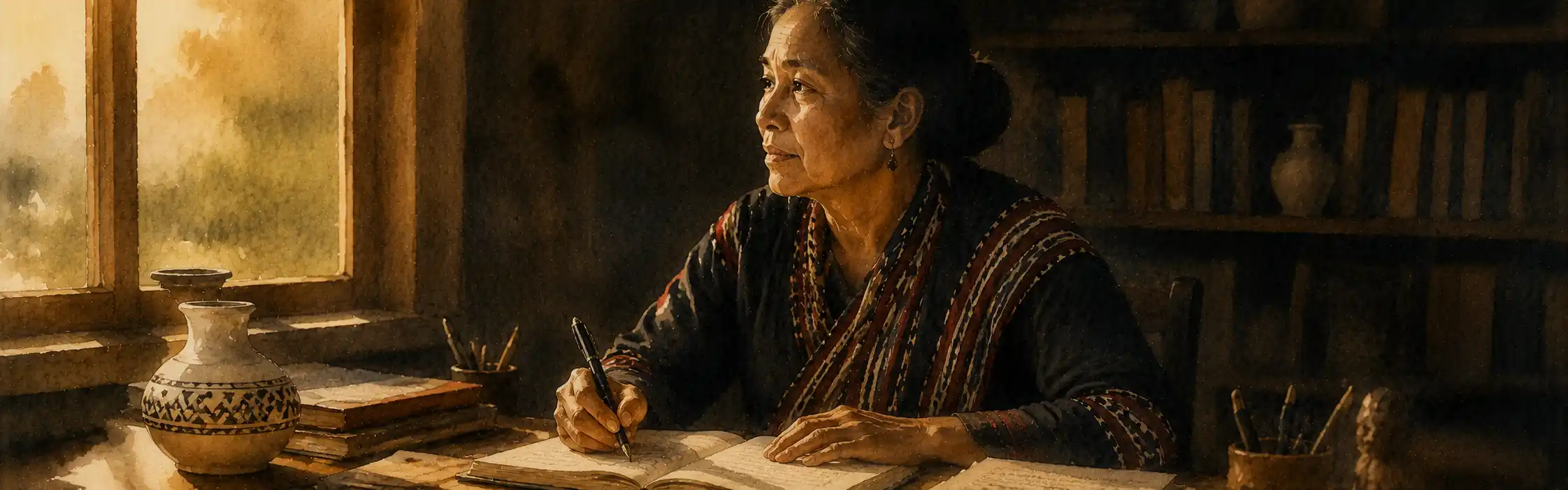
The Pot Maker did not come from nowhere. It came from a writer who spent her life making sure the stories, crafts, and memory of the Naga people were not lost — the very thing the village council in her story was fighting for.
The literature of India's north-east
For a long time, the voices of India's north-eastern states — Nagaland, Manipur, Mizoram, Assam, and others — were rarely heard in mainstream Indian English writing. Writers like Temsula Ao, Easterine Kire (also from Nagaland), and Mamang Dai (from Arunachal Pradesh) changed that, bringing the hills, the oral traditions, the crafts, and the recent history of their peoples into English literature read across the country. When you read The Pot Maker, you are reading a part of India that the rest of India is only recently learning to listen to.
A craft with no wheel
The pottery in this story is real Naga hand-built pottery — made without a potter's wheel, the technology most of India has used for thousands of years. Naga potters beat and shape the clay entirely by hand and spatula, coiling and paddling it into form. It is one of the oldest surviving pottery methods in the world. Communities like the Pochury and the potters of villages such as Longsa kept it alive — but, exactly as the story warns, it is now endangered, with very few young people learning it. Sentila's struggle is not just fiction; it is the live situation of a real craft.
Q1.Where was Temsula Ao from, and what did she write about?
The Pot Maker did not come from nowhere. It came from a writer who spent her life making sure the stories, crafts, and memory of the Naga people were not lost — the very thing the village council in her story was fighting for.
The literature of India's north-east
For a long time, the voices of India's north-eastern states — Nagaland, Manipur, Mizoram, Assam, and others — were rarely heard in mainstream Indian English writing. Writers like Temsula Ao, Easterine Kire (also from Nagaland), and Mamang Dai (from Arunachal Pradesh) changed that, bringing the hills, the oral traditions, the crafts, and the recent history of their peoples into English literature read across the country. When you read The Pot Maker, you are reading a part of India that the rest of India is only recently learning to listen to.
A craft with no wheel
The pottery in this story is real Naga hand-built pottery — made without a potter's wheel, the technology most of India has used for thousands of years. Naga potters beat and shape the clay entirely by hand and spatula, coiling and paddling it into form. It is one of the oldest surviving pottery methods in the world. Communities like the Pochury and the potters of villages such as Longsa kept it alive — but, exactly as the story warns, it is now endangered, with very few young people learning it. Sentila's struggle is not just fiction; it is the live situation of a real craft.
Q1.Where was Temsula Ao from, and what did she write about?