The Words and Bones of the Story
Craft words, money words, and the clauses that build sentences
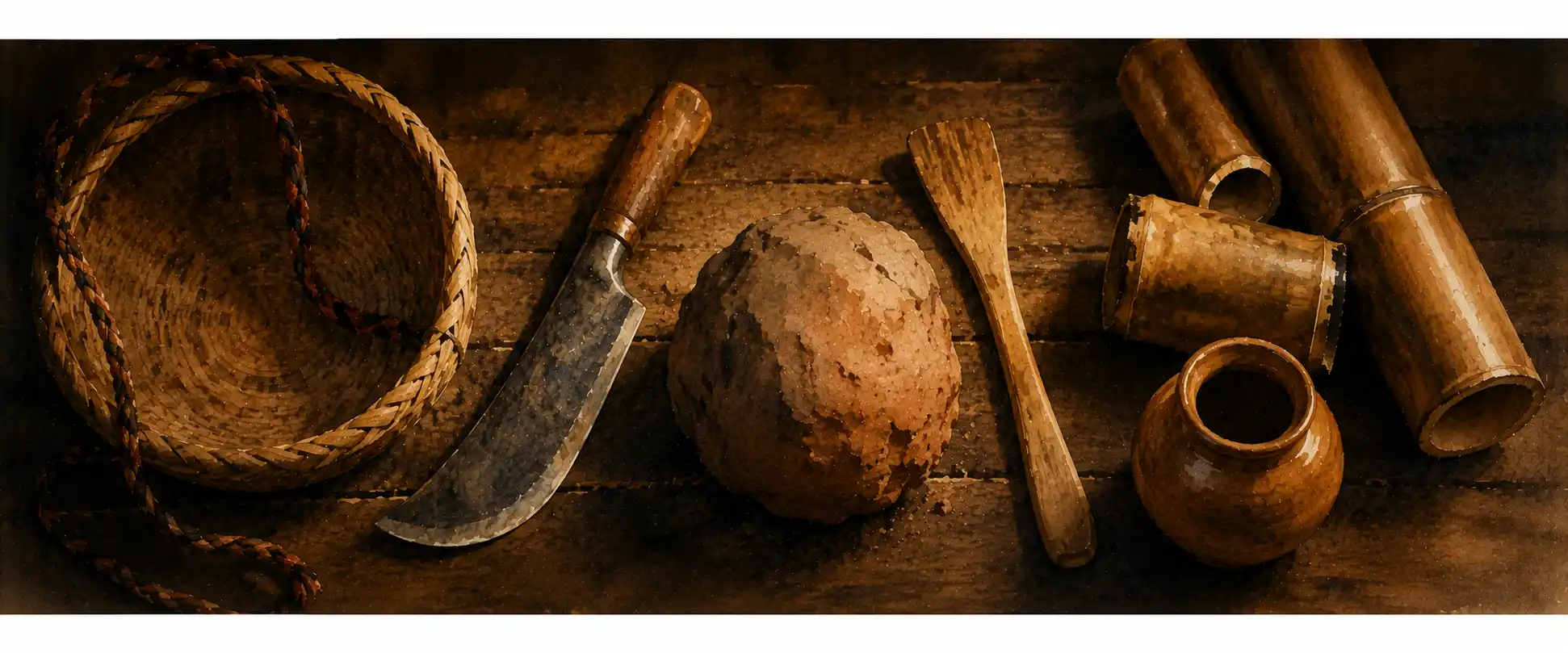
The story gave you two families of words — the craft of pot making and the economics of a vocation. Then we'll look at how sentences are built from clauses.
Craft words — tools, materials, and process
The vocabulary of pot making, sorted in your mind into tools, materials, and the steps of the process.
Q1.Which group is correctly sorted?
Money words — the economics of a vocation
The story uses pittance, rupees, reward, return — words about earning a living. Here are more economy words worth owning.
The bones of a sentence — clauses
A clause is a group of words with its own subject and verb. A main clause can stand alone as a sentence. A subordinate clause cannot — it leans on the main clause. Two kinds matter here:
- A noun clause does the job of a noun (a subject or object). In 'She realised that the pot was ready,' the underlined clause is the thing she realised — it acts like an object.
- A relative (adjectival) clause describes a noun, usually starting with who, which, that, where, whose. In 'Arenla took Sentila to the riverbank where the grey and red clay was found,' the clause describes the riverbank.
Spot the clause type.
In 'She intuitively sensed that something momentous had happened,' the underlined part is a:
In 'the skill that was handed down from generation to generation,' the underlined part is a:
Which determiner correctly fills the blank? 'Onula helped ______ girl who was struggling.' (the girl is a specific one already mentioned)
Q1.Sort correctly: kiln, clay, firing.
The story gave you two families of words — the craft of pot making and the economics of a vocation. Then we'll look at how sentences are built from clauses.
Craft words — tools, materials, and process
The vocabulary of pot making, sorted in your mind into tools, materials, and the steps of the process.
Q1.Which group is correctly sorted?
Money words — the economics of a vocation
The story uses pittance, rupees, reward, return — words about earning a living. Here are more economy words worth owning.
The bones of a sentence — clauses
A clause is a group of words with its own subject and verb. A main clause can stand alone as a sentence. A subordinate clause cannot — it leans on the main clause. Two kinds matter here:
- A noun clause does the job of a noun (a subject or object). In 'She realised that the pot was ready,' the underlined clause is the thing she realised — it acts like an object.
- A relative (adjectival) clause describes a noun, usually starting with who, which, that, where, whose. In 'Arenla took Sentila to the riverbank where the grey and red clay was found,' the clause describes the riverbank.
Spot the clause type.
In 'She intuitively sensed that something momentous had happened,' the underlined part is a:
In 'the skill that was handed down from generation to generation,' the underlined part is a:
Which determiner correctly fills the blank? 'Onula helped ______ girl who was struggling.' (the girl is a specific one already mentioned)
Q1.Sort correctly: kiln, clay, firing.