Part I — A Girl's Dream and a Mother's Fear
Sentila wants to make pots; Arenla wants to spare her the hardship
Part I — Where the story begins
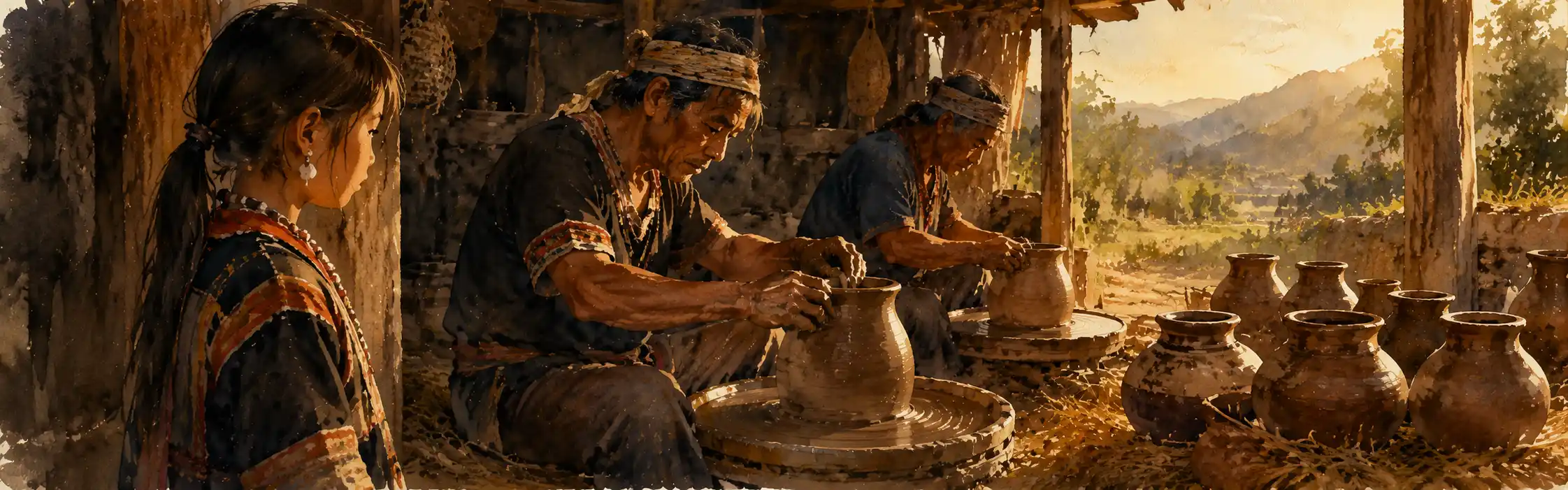
Sentila is a young girl in a Naga village. Her mother Arenla and grandmother were pot makers. Sentila dreams of nothing else — but her mother wants her to become a weaver instead. Why would a mother refuse to teach her own daughter the family craft? The answer is not cruelty. Listen to Arenla's reasons.
Two traditional crafts — but with very different rewards for the labour.
Ever since Sentila became old enough to her mother to the fields and forests, she began to dream of becoming a pot maker like her mother and grandmother. However Arenla, her mother, wanted her to become a weaver. On days when she managed to stay at home while her parents went to the fields, Sentila approached expert potters to learn the skill. They were at first amused by the little girl's as they thought that she would soon her childish passion for the craft.
Sentila did not her with pot making at home as she had overheard a conversation between her parents one night. Her mother was complaining about Sentila's to weaving. She said, "I shall not teach her pot making as it has brought no joy to me and only a for my troubles." "The riverbank, where the grey and red clay required for making pots is found, is sixteen kilometres from here." "I need to climb down a to the riverbank and my back aches from carrying the heavy load uphill all the way to the village." "Pounding the stubborn clay inside bamboo cylinders to soften it, is also ." "So many times, I've dropped the mould out of sheer exhaustion and have had to start all over again." "It takes months to bring out a batch of pots after so much labour. And the reward? A few rupees." "But if Sentila learns weaving, she can make much more money besides providing enough cloth for the family." "Weaving is not messy like pot making and can be done indoors in all seasons." "Also, the time spent on weaving one shawl is much less and the return is ."
Pause and check.
Why does Arenla NOT want to teach Sentila pot making?
In the sentence 'the return is handsome,' the word handsome means:
Sentila continued her visits to watch the potters at work. She saw how the clay was mixed with water and pounded, how careful they were when they pushed their left hand into a lump of the softened clay and how they rotated the lump as they started giving shape to the rotating clay with a held in the right hand. The regular tap, tap of the spatula on the clay was music to her ears as she watched in fascination the pot emerging out of a shapeless lump right in front of her eyes. After two or three days, the pots would be given a final touch up to retain the required shape and to test the consistency. Only then would the pots be taken out to dry in the sun before being loaded on to a in a uniform pattern on a bed of hay and dried bamboo and covered with another layer of the same materials, and then the kiln would be fired. One had to the fire carefully as over firing or under firing would ruin the entire batch.
Arenla heard of her daughter's visits but pretended to be of them. Gradually, Sentila's visits became a topic of village gossip. People wondered why Arenla was refusing to teach the skill to her daughter. They were worried that if all pot makers , then there would be no expert potters to take their place. One day, Sentila's father, Mesoba was by the village council and asked to explain why Arenla was refusing to pass on the skill to her daughter. He replied in a humble tone, "Uncles and elder brothers, Arenla has never said that she will not teach our daughter pot making; it is only that we wanted her to grow stronger after her illness." "You will soon see Sentila making the best pots in the village." After listening to Mesoba's explanation, the elders decided to let him go, cautioning him to remind Arenla that it was her duty to teach her daughter the skill that was handed down from generation to generation. They also told him that skills such as pot making, which not only catered to the needs of the people but also symbolised the tradition and history of the people, did not 'belong' to any individual. And experts were to pass on their skills not only to their own children but also to anyone who wished to learn. Mesoba went home and discussed the matter with Arenla.
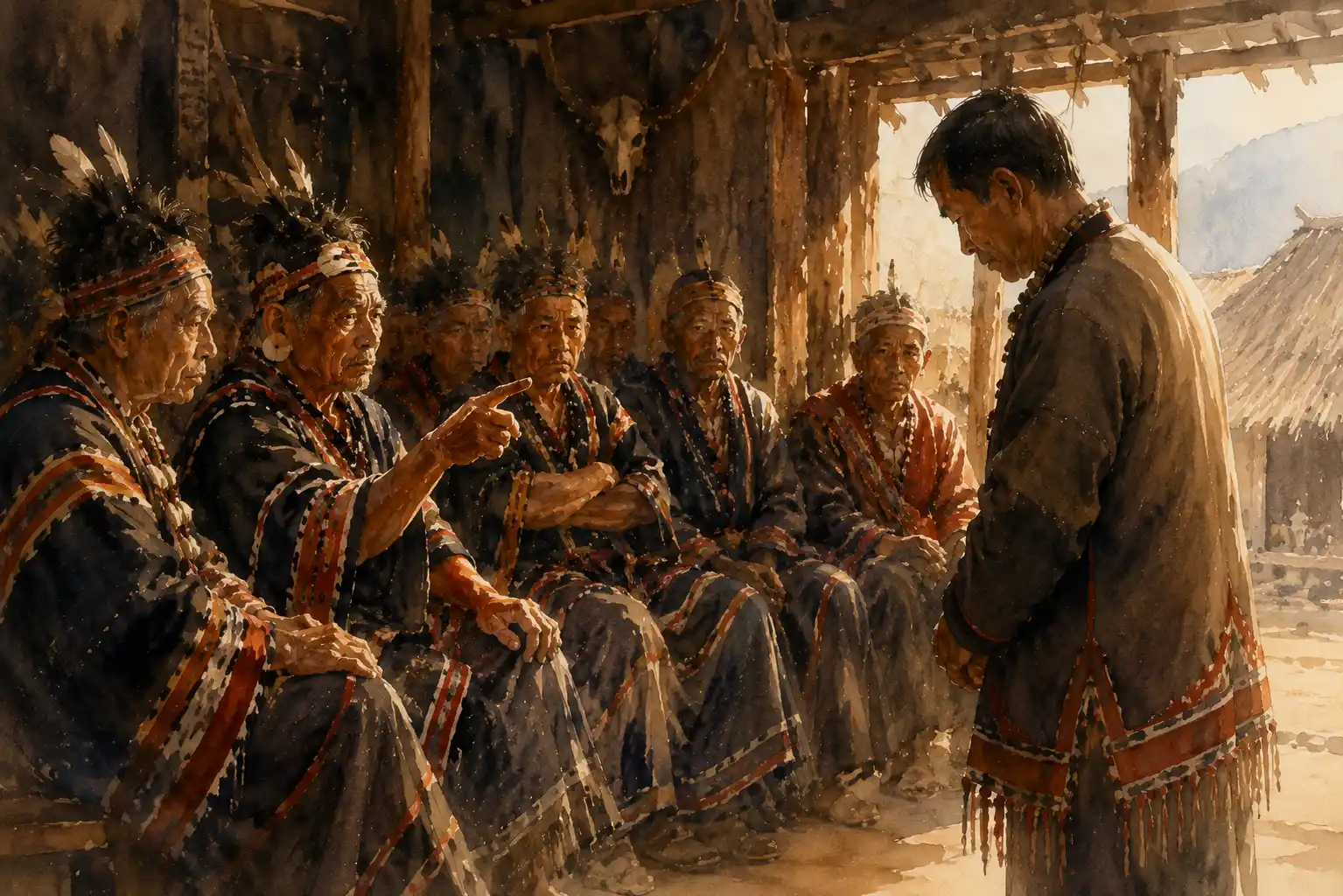
The village council tells Mesoba that a skill like pot making 'did not belong to any individual' — that experts are obliged to pass it on to anyone who wishes to learn. Why would a community make the passing-on of a craft a duty, not a personal choice? What is at risk if every expert kept their skill private?
Take a moment to form your answer before reading further.
Q1.What does Mesoba tell the village council to explain Arenla's behaviour?
Part I — Where the story begins
Sentila is a young girl in a Naga village. Her mother Arenla and grandmother were pot makers. Sentila dreams of nothing else — but her mother wants her to become a weaver instead. Why would a mother refuse to teach her own daughter the family craft? The answer is not cruelty. Listen to Arenla's reasons.
Two traditional crafts — but with very different rewards for the labour.
Ever since Sentila became old enough to her mother to the fields and forests, she began to dream of becoming a pot maker like her mother and grandmother. However Arenla, her mother, wanted her to become a weaver. On days when she managed to stay at home while her parents went to the fields, Sentila approached expert potters to learn the skill. They were at first amused by the little girl's as they thought that she would soon her childish passion for the craft.
Sentila did not her with pot making at home as she had overheard a conversation between her parents one night. Her mother was complaining about Sentila's to weaving. She said, "I shall not teach her pot making as it has brought no joy to me and only a for my troubles." "The riverbank, where the grey and red clay required for making pots is found, is sixteen kilometres from here." "I need to climb down a to the riverbank and my back aches from carrying the heavy load uphill all the way to the village." "Pounding the stubborn clay inside bamboo cylinders to soften it, is also ." "So many times, I've dropped the mould out of sheer exhaustion and have had to start all over again." "It takes months to bring out a batch of pots after so much labour. And the reward? A few rupees." "But if Sentila learns weaving, she can make much more money besides providing enough cloth for the family." "Weaving is not messy like pot making and can be done indoors in all seasons." "Also, the time spent on weaving one shawl is much less and the return is ."
Pause and check.
Why does Arenla NOT want to teach Sentila pot making?
In the sentence 'the return is handsome,' the word handsome means:
Sentila continued her visits to watch the potters at work. She saw how the clay was mixed with water and pounded, how careful they were when they pushed their left hand into a lump of the softened clay and how they rotated the lump as they started giving shape to the rotating clay with a held in the right hand. The regular tap, tap of the spatula on the clay was music to her ears as she watched in fascination the pot emerging out of a shapeless lump right in front of her eyes. After two or three days, the pots would be given a final touch up to retain the required shape and to test the consistency. Only then would the pots be taken out to dry in the sun before being loaded on to a in a uniform pattern on a bed of hay and dried bamboo and covered with another layer of the same materials, and then the kiln would be fired. One had to the fire carefully as over firing or under firing would ruin the entire batch.
Arenla heard of her daughter's visits but pretended to be of them. Gradually, Sentila's visits became a topic of village gossip. People wondered why Arenla was refusing to teach the skill to her daughter. They were worried that if all pot makers , then there would be no expert potters to take their place. One day, Sentila's father, Mesoba was by the village council and asked to explain why Arenla was refusing to pass on the skill to her daughter. He replied in a humble tone, "Uncles and elder brothers, Arenla has never said that she will not teach our daughter pot making; it is only that we wanted her to grow stronger after her illness." "You will soon see Sentila making the best pots in the village." After listening to Mesoba's explanation, the elders decided to let him go, cautioning him to remind Arenla that it was her duty to teach her daughter the skill that was handed down from generation to generation. They also told him that skills such as pot making, which not only catered to the needs of the people but also symbolised the tradition and history of the people, did not 'belong' to any individual. And experts were to pass on their skills not only to their own children but also to anyone who wished to learn. Mesoba went home and discussed the matter with Arenla.
The village council tells Mesoba that a skill like pot making 'did not belong to any individual' — that experts are obliged to pass it on to anyone who wishes to learn. Why would a community make the passing-on of a craft a duty, not a personal choice? What is at risk if every expert kept their skill private?
Take a moment to form your answer before reading further.
Q1.What does Mesoba tell the village council to explain Arenla's behaviour?