What the Story Carries
Three ideas beneath the clay
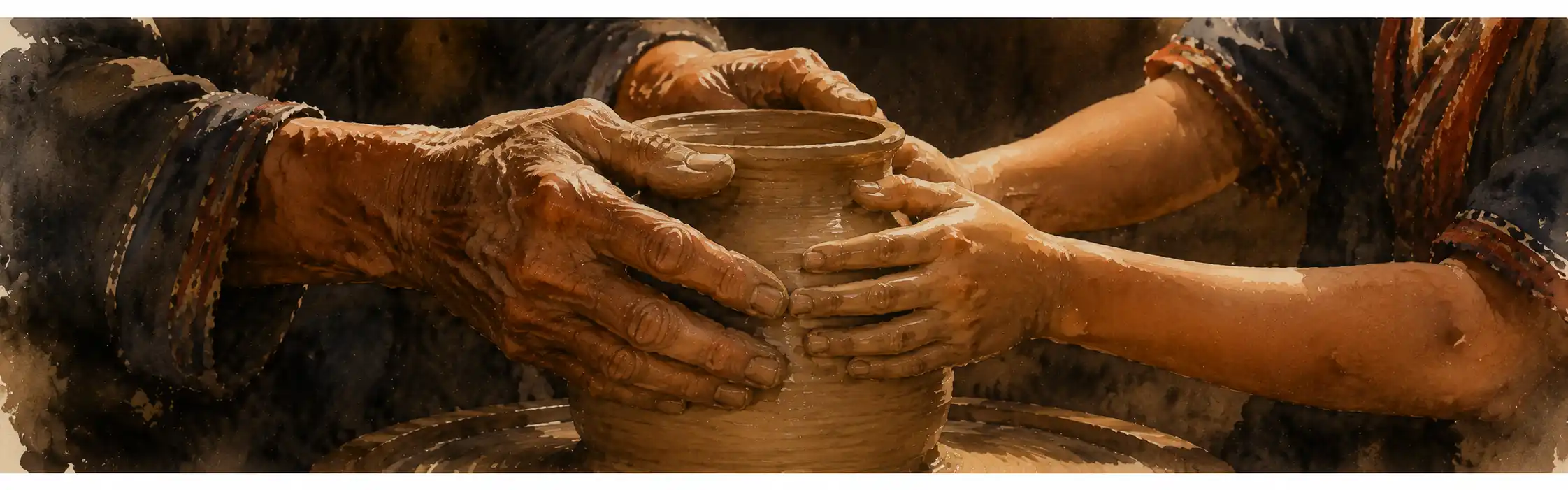
Beneath its quiet plot, The Pot Maker carries several ideas at once. Tap each theme to open the evidence and a question for yourself.
India's vanishing crafts
Across India, traditional crafts are disappearing as machine-made goods grow cheaper — Longpi black pottery of Manipur, blue pottery of Jaipur, terracotta of Bengal, countless handloom traditions. When the last expert in a craft dies without a student, a piece of a community's history dies too — exactly what the village council in this story feared. Government and craft-revival movements now race to record and teach these skills before the chain breaks. The Pot Maker is, in miniature, the story of every endangered craft in the country.
The story could have ended happily — Sentila simply learning the craft. Instead, Temsula Ao ties her triumph (her first perfect pots) to her deepest loss (her mother's death) in the same hour. Why might a writer bind a victory to a sorrow like this? What does it do to how you feel about the ending?
Take a moment to form your answer before reading further.
Q1.Which line is the strongest evidence for the theme 'a craft belongs to everyone, not one person'?
Beneath its quiet plot, The Pot Maker carries several ideas at once. Tap each theme to open the evidence and a question for yourself.
India's vanishing crafts
Across India, traditional crafts are disappearing as machine-made goods grow cheaper — Longpi black pottery of Manipur, blue pottery of Jaipur, terracotta of Bengal, countless handloom traditions. When the last expert in a craft dies without a student, a piece of a community's history dies too — exactly what the village council in this story feared. Government and craft-revival movements now race to record and teach these skills before the chain breaks. The Pot Maker is, in miniature, the story of every endangered craft in the country.
The story could have ended happily — Sentila simply learning the craft. Instead, Temsula Ao ties her triumph (her first perfect pots) to her deepest loss (her mother's death) in the same hour. Why might a writer bind a victory to a sorrow like this? What does it do to how you feel about the ending?
Take a moment to form your answer before reading further.
Q1.Which line is the strongest evidence for the theme 'a craft belongs to everyone, not one person'?