What the Poem Honours
Dignity, identity, and the music of ordinary work
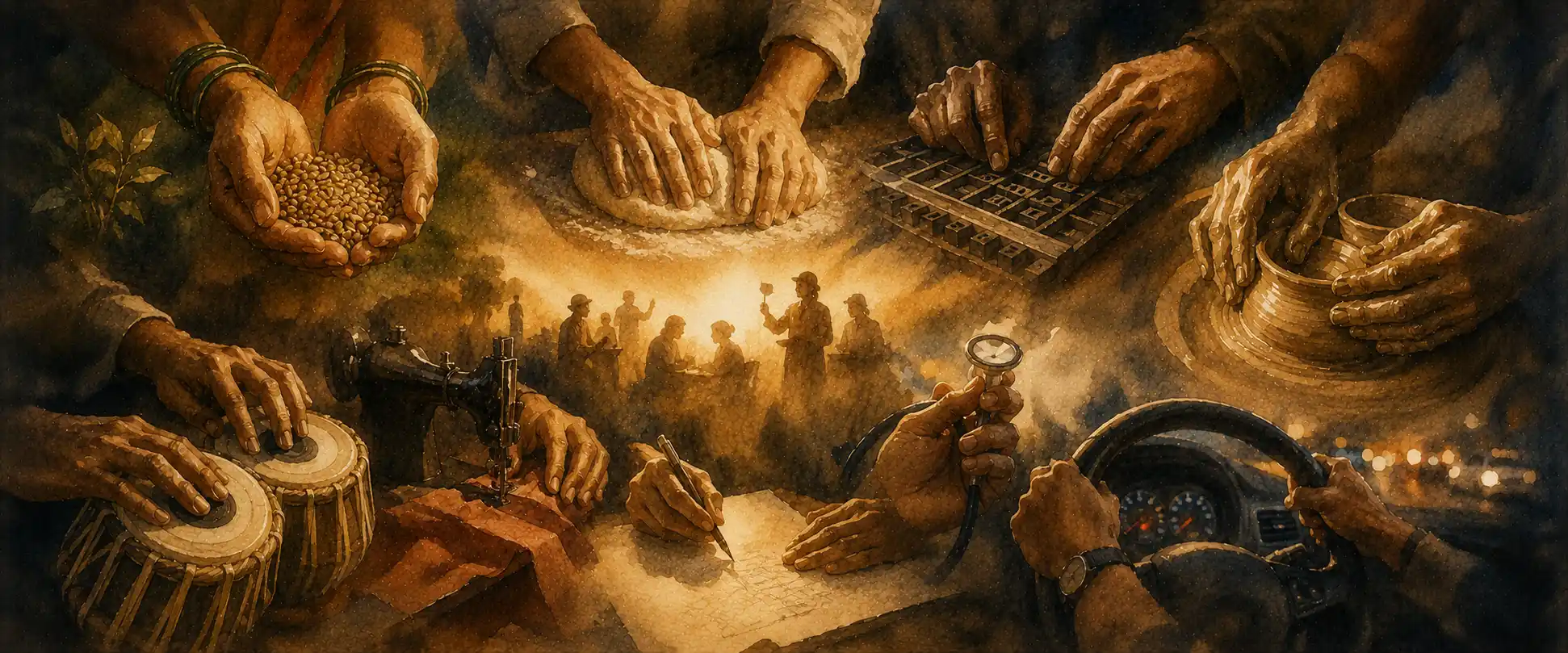
The poem does not argue that work is dignified. It simply lists worker after worker, each celebrating — and lets the chorus make the case. Tap each theme to explore it.
Three themes, drawn from the poem itself.
From craftsperson to cook to electrician to mason — the poem grants each the same celebratory tone. No work is 'lower'; all of it holds up the country.
The poem's thesis line says it outright: a person's vocation is not just a task but the very voice of who they are.
Dozens of different vocations, but one refrain: 'I hear Bharat celebrating.' The many separate voices become a single national chorus.
(i) Does the poem follow a strict rhyme scheme, or is it free verse? (ii) What is the effect of the varying line lengths? (iii) What pattern repeats in the structure of most lines?
(i) Who is the speaker and what is their role? (ii) Fill in: the tone is ____ and ____ (admiration and respect); there is a ____ mood throughout (vibrancy of culture).
Identify examples of: imagery; the 'delicious singing' metaphor; personification of vocations; the repeated opening/closing line; alliteration; and what the vocations symbolise.
The poem celebrates carpenters, boatmen, cooks, masons, electricians — but no kings, no soldiers, no famous heroes. Why might the poet choose to build a portrait of 'Bharat' entirely out of ordinary workers? What is the poet quietly arguing about who a country really is?
Take a moment to form your answer before reading further.
Q1.Is the poem in strict rhyme or free verse?
The poem does not argue that work is dignified. It simply lists worker after worker, each celebrating — and lets the chorus make the case. Tap each theme to explore it.
Three themes, drawn from the poem itself.
From craftsperson to cook to electrician to mason — the poem grants each the same celebratory tone. No work is 'lower'; all of it holds up the country.
The poem's thesis line says it outright: a person's vocation is not just a task but the very voice of who they are.
Dozens of different vocations, but one refrain: 'I hear Bharat celebrating.' The many separate voices become a single national chorus.
(i) Does the poem follow a strict rhyme scheme, or is it free verse? (ii) What is the effect of the varying line lengths? (iii) What pattern repeats in the structure of most lines?
(i) Who is the speaker and what is their role? (ii) Fill in: the tone is ____ and ____ (admiration and respect); there is a ____ mood throughout (vibrancy of culture).
Identify examples of: imagery; the 'delicious singing' metaphor; personification of vocations; the repeated opening/closing line; alliteration; and what the vocations symbolise.
The poem celebrates carpenters, boatmen, cooks, masons, electricians — but no kings, no soldiers, no famous heroes. Why might the poet choose to build a portrait of 'Bharat' entirely out of ordinary workers? What is the poet quietly arguing about who a country really is?
Take a moment to form your answer before reading further.
Q1.Is the poem in strict rhyme or free verse?