Your Fundamental Rights
What the Constitution of India guarantees every citizen — in plain language
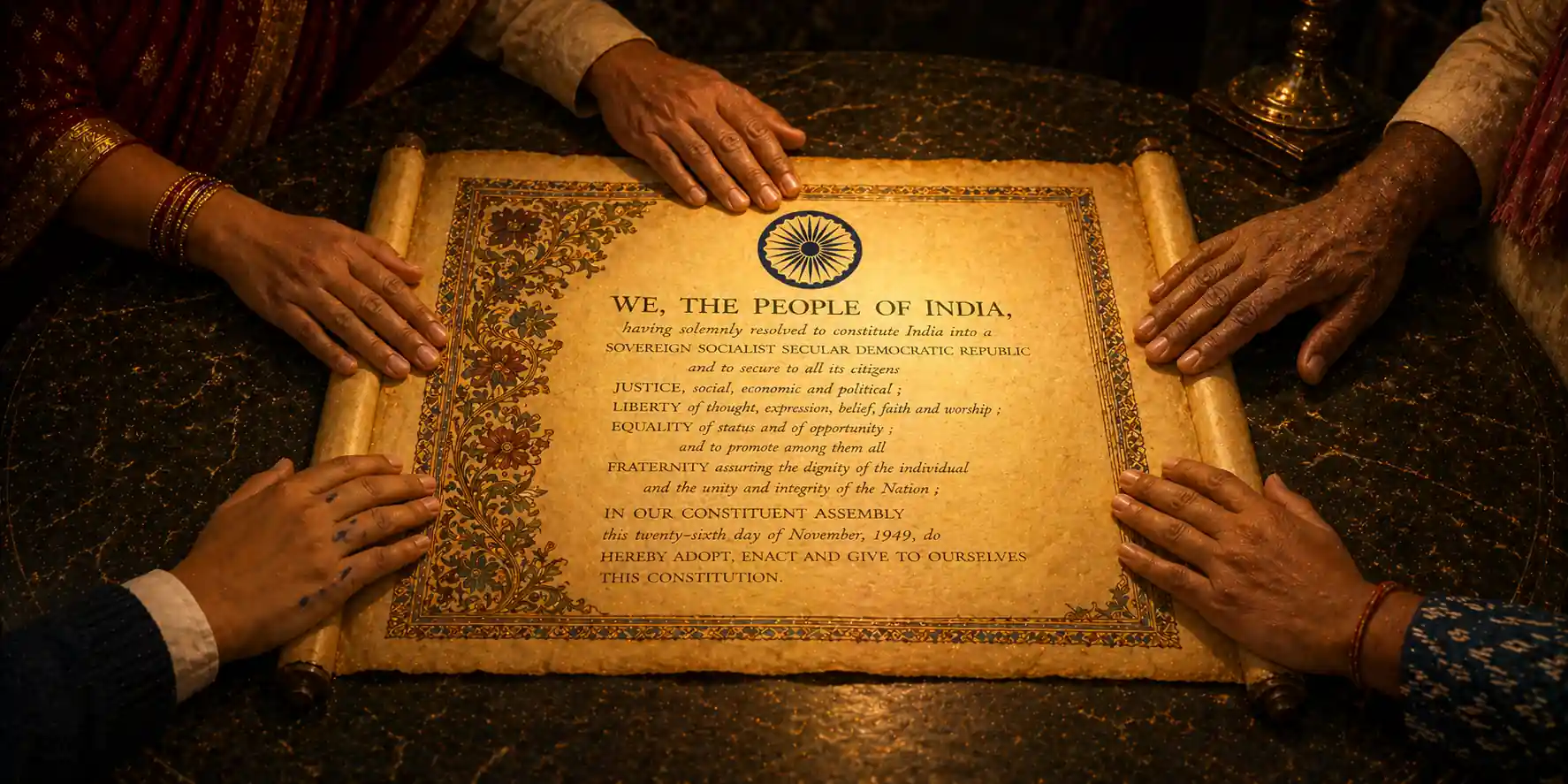
India's Constitution, under Part III (Articles 12–35), gives every citizen six Fundamental Rights. These rights exist to protect your freedom, dignity, and equality — regardless of your religion, caste, gender, or place of birth.
No government, court, institution, or person can legally take them from you. And if anyone tries, you have the right to go to the highest court in the country and demand justice.
Read these once. Know them. They belong to you.
Right to Equality
Articles 14–18
The law is the same for everyone. A minister, a judge, a wealthy person, a daily-wage worker — all equal before the law. No one stands above it.
The government cannot treat you differently because of your religion, caste, race, gender, or where you were born. This applies to government schools, hospitals, courts, and all public places.
You have an equal right to apply for government jobs. No discrimination in public employment.
Untouchability is a crime. Treating any person as inferior because of their caste is illegal and punishable under law — not just frowned upon, but legally prosecutable.
The government cannot grant hereditary titles like 'Sir' or 'Maharaja' to citizens. No inherited rank. Every citizen is equal.
Right to Freedom
Articles 19–22
You have six personal freedoms:
- To say and write what you think (freedom of speech and expression)
- To gather peacefully with others, without weapons
- To form groups, unions, or organisations
- To move freely anywhere in India
- To live and settle anywhere in India
- To choose any legal profession, trade, or business
If you are accused of a crime:
- You can only be punished under laws that existed when you acted — not laws made after the fact
- You cannot be tried twice for the same crime
- You cannot be forced to testify against yourself in court
No one can take your life or personal freedom without following due process of law. This one line — Article 21 — has been used by courts to protect the right to education, the right to health, the right to dignity, and much more.
Every child between 6 and 14 years of age has the right to free and compulsory education. A school funded by the government cannot turn a child away or charge fees for this age group.
If you are arrested, you must be told exactly why. You cannot be held for more than 24 hours without being produced before a magistrate. You have the right to consult a lawyer of your own choice.
Right against Exploitation
Articles 23–24
No one can be trafficked, sold, or forced into labour. Human trafficking and bonded labour (where a person works to 'pay off' a debt and can never escape) are crimes, not just morally wrong — legally punishable.
Children cannot be made to work in factories, mines, or any hazardous occupation. The Constitution specifically protects children from dangerous work. No family's poverty is reason enough to put a child in a dangerous job.
Right to Freedom of Religion
Articles 25–28
Every person is free to hold any religious belief — or no belief at all. You can follow, practice, and peacefully share your faith. No one, including the government, can tell you what to believe.
Every religious group can manage its own places of worship and religious affairs without government interference.
You cannot be taxed to fund a religion other than your own. Public money cannot be used to promote a specific religion.
In government-funded schools, no student can be forced to attend religious classes or participate in religious worship. Faith is a private choice, and this right protects that choice even in educational institutions.
Cultural and Educational Rights
Articles 29–31
If you belong to a community with its own distinct language, script, or culture — you have the right to preserve it. No one, including the government, can forcibly take away your cultural identity.
Minority communities — whether defined by religion or language — have the right to set up and run their own schools and colleges. The government cannot take over these institutions or deny them fair treatment in the matter of grants.
Right to Constitutional Remedies
Article 32
If any of your Fundamental Rights is violated — by a government official, a school, a police officer, or any state authority — you have the right to go directly to the Supreme Court of India (or a High Court) and demand justice. The court cannot refuse to hear you.
The court can issue orders — called writs — that immediately direct the authority to stop what they are doing and restore your rights.
Dr. B.R. Ambedkar, the chief architect of the Constitution, called this right "the heart and soul of the Constitution." Without it, every other right would be an empty promise — words on paper with no force. This right is what makes all the others real.
India's Constitution, under Part III (Articles 12–35), gives every citizen six Fundamental Rights. These rights exist to protect your freedom, dignity, and equality — regardless of your religion, caste, gender, or place of birth.
No government, court, institution, or person can legally take them from you. And if anyone tries, you have the right to go to the highest court in the country and demand justice.
Read these once. Know them. They belong to you.
Right to Equality
Articles 14–18
The law is the same for everyone. A minister, a judge, a wealthy person, a daily-wage worker — all equal before the law. No one stands above it.
The government cannot treat you differently because of your religion, caste, race, gender, or where you were born. This applies to government schools, hospitals, courts, and all public places.
You have an equal right to apply for government jobs. No discrimination in public employment.
Untouchability is a crime. Treating any person as inferior because of their caste is illegal and punishable under law — not just frowned upon, but legally prosecutable.
The government cannot grant hereditary titles like 'Sir' or 'Maharaja' to citizens. No inherited rank. Every citizen is equal.
Right to Freedom
Articles 19–22
You have six personal freedoms:
- To say and write what you think (freedom of speech and expression)
- To gather peacefully with others, without weapons
- To form groups, unions, or organisations
- To move freely anywhere in India
- To live and settle anywhere in India
- To choose any legal profession, trade, or business
If you are accused of a crime:
- You can only be punished under laws that existed when you acted — not laws made after the fact
- You cannot be tried twice for the same crime
- You cannot be forced to testify against yourself in court
No one can take your life or personal freedom without following due process of law. This one line — Article 21 — has been used by courts to protect the right to education, the right to health, the right to dignity, and much more.
Every child between 6 and 14 years of age has the right to free and compulsory education. A school funded by the government cannot turn a child away or charge fees for this age group.
If you are arrested, you must be told exactly why. You cannot be held for more than 24 hours without being produced before a magistrate. You have the right to consult a lawyer of your own choice.
Right against Exploitation
Articles 23–24
No one can be trafficked, sold, or forced into labour. Human trafficking and bonded labour (where a person works to 'pay off' a debt and can never escape) are crimes, not just morally wrong — legally punishable.
Children cannot be made to work in factories, mines, or any hazardous occupation. The Constitution specifically protects children from dangerous work. No family's poverty is reason enough to put a child in a dangerous job.
Right to Freedom of Religion
Articles 25–28
Every person is free to hold any religious belief — or no belief at all. You can follow, practice, and peacefully share your faith. No one, including the government, can tell you what to believe.
Every religious group can manage its own places of worship and religious affairs without government interference.
You cannot be taxed to fund a religion other than your own. Public money cannot be used to promote a specific religion.
In government-funded schools, no student can be forced to attend religious classes or participate in religious worship. Faith is a private choice, and this right protects that choice even in educational institutions.
Cultural and Educational Rights
Articles 29–31
If you belong to a community with its own distinct language, script, or culture — you have the right to preserve it. No one, including the government, can forcibly take away your cultural identity.
Minority communities — whether defined by religion or language — have the right to set up and run their own schools and colleges. The government cannot take over these institutions or deny them fair treatment in the matter of grants.
Right to Constitutional Remedies
Article 32
If any of your Fundamental Rights is violated — by a government official, a school, a police officer, or any state authority — you have the right to go directly to the Supreme Court of India (or a High Court) and demand justice. The court cannot refuse to hear you.
The court can issue orders — called writs — that immediately direct the authority to stop what they are doing and restore your rights.
Dr. B.R. Ambedkar, the chief architect of the Constitution, called this right "the heart and soul of the Constitution." Without it, every other right would be an empty promise — words on paper with no force. This right is what makes all the others real.