What is Science?
A way of thinking, not just a subject
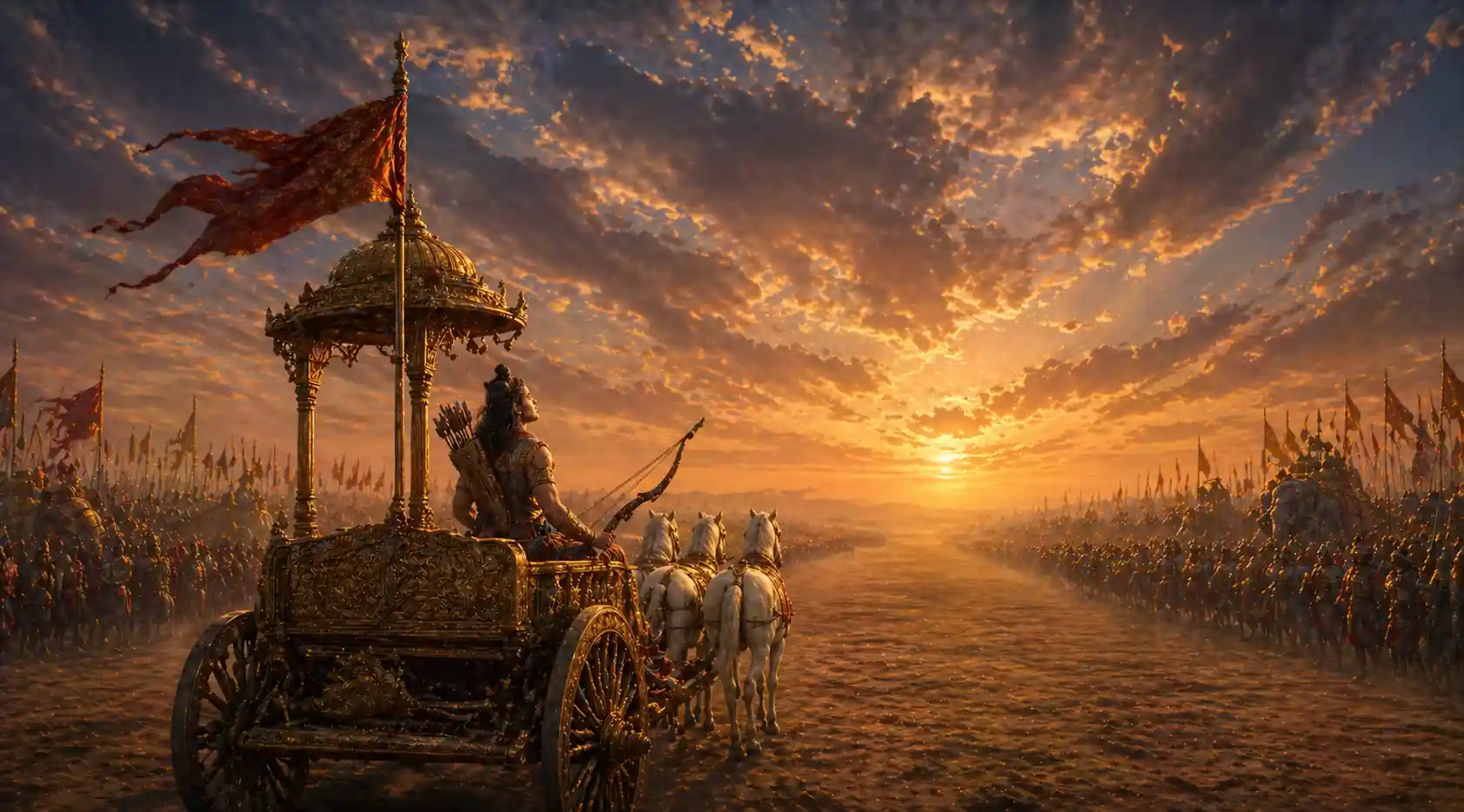
Before you read a single definition — you have probably been called a 'science student' for years. But right now, without looking anything up: what do you actually think science is? Not what your textbook says. What do you, personally, think it is?
Don't reach for a definition. Think about what science looks like, feels like — what makes something scientific.
The Verse That Started It All
कार्पण्यदोषोपहतस्वभावः पृच्छामि त्वां धर्मसम्मूढचेताः ।
यच्छ्रेयः स्यान्निश्चितं ब्रूहि तन्मे शिष्यस्तेऽहं शाधि मां त्वां प्रपन्नम् ॥
"मैं अंदर से टूटा हुआ हूँ — मेरे मन में बहुत confusion है और हिम्मत नहीं बच रही। मुझे समझ नहीं आ रहा कि सही क्या है। तुम मुझे साफ़-साफ़ बताओ कि मेरे लिए क्या सही रहेगा। मैं तुम्हारा शिष्य हूँ — मुझे रास्ता दिखाओ, मैं तुम्हारे पास आया हूँ।"
"My heart is broken — I am confused and my courage has left me. I cannot figure out what is right. Please tell me clearly what I should do. I am your student — show me the way. I have come to you."
The Opening Question
On the battlefield of Kurukshetra, at the most critical moment of his life, Arjuna — the greatest archer of his age — did not ask "How do I win?"
The Question That Changed Everything
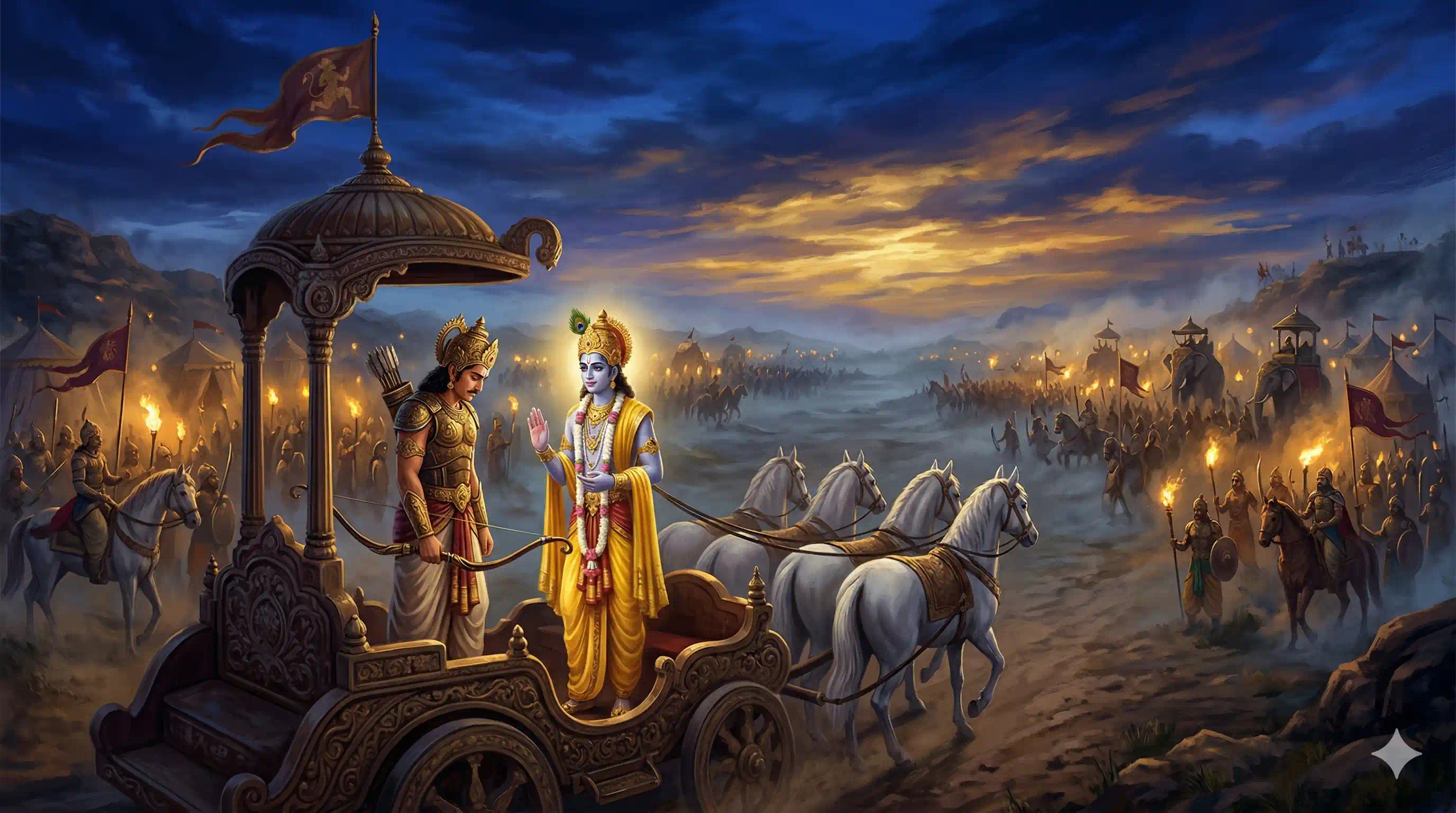
The battlefield was silent.
Two armies faced each other on the plains of Kurukshetra. Arjuna stood in his chariot, bow in hand, and looked across the field — at his teachers, his cousins, men he had grown up with. His hands went numb. His bow slipped. He sat down in the chariot.
He had the answer. He did not have the question.
Arjuna knew how to fight. He had trained his entire life for exactly this moment. But in that silence, something deeper surfaced. He did not ask Krishna for a battle strategy. He did not ask how to win. He asked something far harder: "What is right? What is dharma? Tell me what I should truly do."
This is the quality of question that changes everything. Not "how do I get the result I want?" but "what is actually true here?"
The best questions are never about winning.
History's greatest thinkers — across every culture — share one thing in common: they stopped asking convenient questions and started asking honest ones. When a question is honest, it cannot be dismissed with a pat answer. It forces you to look more carefully, think more deeply, and sometimes, to abandon what you thought you knew.
Science is born from exactly this kind of question.
When Newton asked "why does the apple fall?" rather than simply accepting that it does, he was doing what Arjuna did — refusing to accept the obvious, insisting on understanding. When Marie Curie asked "what is this strange radiation?" rather than setting it aside as unexplained, she changed our understanding of matter itself. Every scientific breakthrough begins the same way: with an honest question asked by someone willing to not know the answer yet.
Science is not a collection of facts. It is a method of questioning.
You are not here to memorise the answers. You are here to learn how to ask.
Arjuna was the greatest warrior of his age. He had trained his entire life. At the most important moment, he stopped — not out of fear — and asked not 'How do I win?' but 'What is truly right here?'
A student has studied hard and knows exactly what answer the teacher expects. But something about the explanation doesn't sit right with them. There's a gap they can't name.
Which student is thinking most like a scientist?
The Quest Continues…
Science has split atoms, sequenced the human genome, and photographed galaxies 13 billion light-years away.
Manana Moment
Contemplation before you continue
Arjuna was the most skilled person on that battlefield. And yet he stopped and said: "I am confused. I do not know what is right. Teach me."
Think of the last time you were confused — in class, in a conversation, anywhere.
Did you ask a question, or did you quietly pretend to understand?
The willingness to say "I don't know" — clearly, honestly, without embarrassment — is the first act of the scientist. It is also, according to the Gita, the first act of wisdom.
Before you move to the next page, hold this one question for a moment:
What is one thing you are genuinely curious about — right now, today — that you do not yet understand?
What This Page Teaches Us
Science and the wisdom traditions of India share the same root: a sincere, honest question, asked by someone willing to not know.
Arjuna did not pretend he understood. At the hardest possible moment — arrows ready, armies waiting — he stopped and asked. That pause, that willingness to be genuinely confused and genuinely curious, is where all real learning begins.
In this course, you will encounter many facts, formulas, and frameworks. But the deepest skill you will develop is simpler and older than any of them: the ability to ask a question you genuinely do not know the answer to, and to sit with it long enough for understanding to come.
That is what science is. That is what this page is the beginning of.
Where this chapter takes us next.
This page has held one question: what is science, really? The pages that follow will show how science actually does its work. You will see how scientists build models that deliberately simplify reality (Page 2). How they use a careful, shared language of symbols and units (Page 3). How they describe patterns, propose theories, and make predictions (Page 4). How they think carefully against hype, viral claims, and easy answers (Page 5). How real problems require many branches of knowledge working together, exactly the way Indian thinkers have always seen knowledge (Page 6). And how to use this book itself as a tool for understanding, not just information (Page 7).
The honest question opens the door. The rest of this chapter is the toolkit.
Q1.On the battlefield of Kurukshetra, what kind of question did Arjuna ask Krishna?
Before you read a single definition — you have probably been called a 'science student' for years. But right now, without looking anything up: what do you actually think science is? Not what your textbook says. What do you, personally, think it is?
Don't reach for a definition. Think about what science looks like, feels like — what makes something scientific.
The Verse That Started It All
कार्पण्यदोषोपहतस्वभावः पृच्छामि त्वां धर्मसम्मूढचेताः ।
यच्छ्रेयः स्यान्निश्चितं ब्रूहि तन्मे शिष्यस्तेऽहं शाधि मां त्वां प्रपन्नम् ॥
"मैं अंदर से टूटा हुआ हूँ — मेरे मन में बहुत confusion है और हिम्मत नहीं बच रही। मुझे समझ नहीं आ रहा कि सही क्या है। तुम मुझे साफ़-साफ़ बताओ कि मेरे लिए क्या सही रहेगा। मैं तुम्हारा शिष्य हूँ — मुझे रास्ता दिखाओ, मैं तुम्हारे पास आया हूँ।"
"My heart is broken — I am confused and my courage has left me. I cannot figure out what is right. Please tell me clearly what I should do. I am your student — show me the way. I have come to you."
The Opening Question
On the battlefield of Kurukshetra, at the most critical moment of his life, Arjuna — the greatest archer of his age — did not ask "How do I win?"
The Question That Changed Everything
The battlefield was silent.
Two armies faced each other on the plains of Kurukshetra. Arjuna stood in his chariot, bow in hand, and looked across the field — at his teachers, his cousins, men he had grown up with. His hands went numb. His bow slipped. He sat down in the chariot.
He had the answer. He did not have the question.
Arjuna knew how to fight. He had trained his entire life for exactly this moment. But in that silence, something deeper surfaced. He did not ask Krishna for a battle strategy. He did not ask how to win. He asked something far harder: "What is right? What is dharma? Tell me what I should truly do."
This is the quality of question that changes everything. Not "how do I get the result I want?" but "what is actually true here?"
The best questions are never about winning.
History's greatest thinkers — across every culture — share one thing in common: they stopped asking convenient questions and started asking honest ones. When a question is honest, it cannot be dismissed with a pat answer. It forces you to look more carefully, think more deeply, and sometimes, to abandon what you thought you knew.
Science is born from exactly this kind of question.
When Newton asked "why does the apple fall?" rather than simply accepting that it does, he was doing what Arjuna did — refusing to accept the obvious, insisting on understanding. When Marie Curie asked "what is this strange radiation?" rather than setting it aside as unexplained, she changed our understanding of matter itself. Every scientific breakthrough begins the same way: with an honest question asked by someone willing to not know the answer yet.
Science is not a collection of facts. It is a method of questioning.
You are not here to memorise the answers. You are here to learn how to ask.
Arjuna was the greatest warrior of his age. He had trained his entire life. At the most important moment, he stopped — not out of fear — and asked not 'How do I win?' but 'What is truly right here?'
A student has studied hard and knows exactly what answer the teacher expects. But something about the explanation doesn't sit right with them. There's a gap they can't name.
Which student is thinking most like a scientist?
The Quest Continues…
Science has split atoms, sequenced the human genome, and photographed galaxies 13 billion light-years away.
What This Page Teaches Us
Science and the wisdom traditions of India share the same root: a sincere, honest question, asked by someone willing to not know.
Arjuna did not pretend he understood. At the hardest possible moment — arrows ready, armies waiting — he stopped and asked. That pause, that willingness to be genuinely confused and genuinely curious, is where all real learning begins.
In this course, you will encounter many facts, formulas, and frameworks. But the deepest skill you will develop is simpler and older than any of them: the ability to ask a question you genuinely do not know the answer to, and to sit with it long enough for understanding to come.
That is what science is. That is what this page is the beginning of.
Where this chapter takes us next.
This page has held one question: what is science, really? The pages that follow will show how science actually does its work. You will see how scientists build models that deliberately simplify reality (Page 2). How they use a careful, shared language of symbols and units (Page 3). How they describe patterns, propose theories, and make predictions (Page 4). How they think carefully against hype, viral claims, and easy answers (Page 5). How real problems require many branches of knowledge working together, exactly the way Indian thinkers have always seen knowledge (Page 6). And how to use this book itself as a tool for understanding, not just information (Page 7).
The honest question opens the door. The rest of this chapter is the toolkit.
Q1.On the battlefield of Kurukshetra, what kind of question did Arjuna ask Krishna?