India’s Scientific Heritage — The Web of Knowledge
How Indian thinkers practiced what modern science is rediscovering: that all knowledge is connected
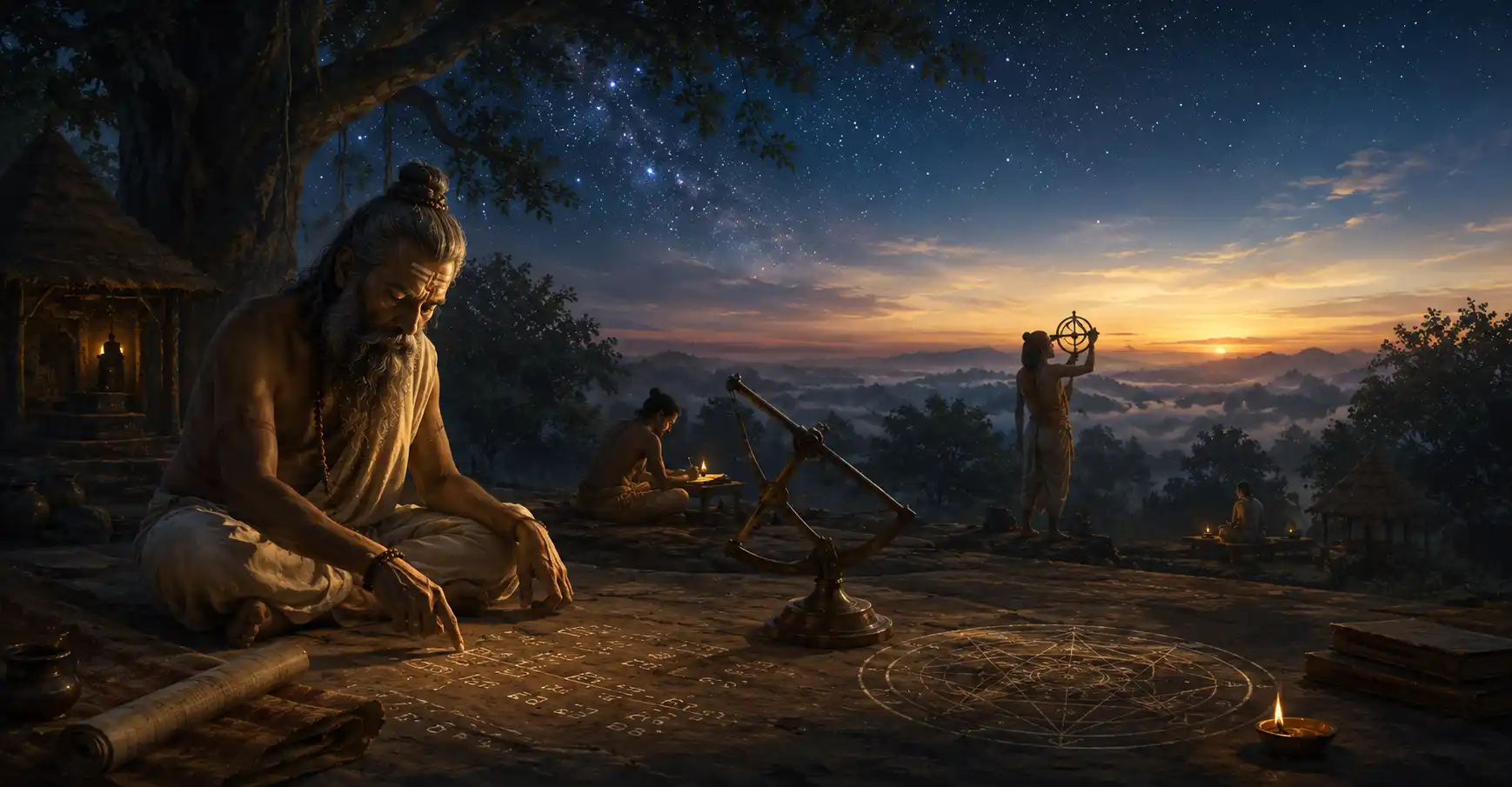
If someone told you that thousands of years ago, an Indian thinker had already proposed that matter is made of tiny indivisible particles — centuries before Dalton — what would your first reaction be? Curiosity? Scepticism? A mix of both?
And if you found out that the same tradition that produced this thinker also produced careful astronomers, mathematicians, physicians, and philosophers — all working with connected ideas across subjects we now keep separate — would that surprise you?
There's no wrong answer. Your first reaction tells you something about how you approach claims about the past.
The Verse of the Tattvadarshi
तद्विद्धि प्रणिपातेन परिप्रश्नेन सेवया ।
उपदेक्ष्यन्ति ते ज्ञानं ज्ञानिनस्तत्त्वदर्शिनः ॥
"इस ज्ञान को समझने के लिए — विनम्र जिज्ञासा से, सच्चे प्रश्नों से, और समर्पित ध्यान से — उनके पास जाओ जिन्होंने सत्य को सीधे देखा है। वे तत्त्वदर्शी तुम्हें वह ज्ञान देंगे जो उन्होंने स्वयं जाना है।"
"Seek to understand this through humble inquiry, through sincere questioning, through devoted attention. Those who have seen the truth directly — the tattvadarshis — will share their knowledge with you."
Tattvadarshi — one who has directly seen the nature of things. Not one who was told. Not one who memorized. One who saw. This is the empirical standard that both Vedic tradition and modern science demand.
The Opening Question
"If someone spent forty years in uninterrupted, focused observation of the natural world — no phone, no distraction, no obligation except understanding — how much do you think they might discover?"
What Does the Word "Rishi" Actually Mean?
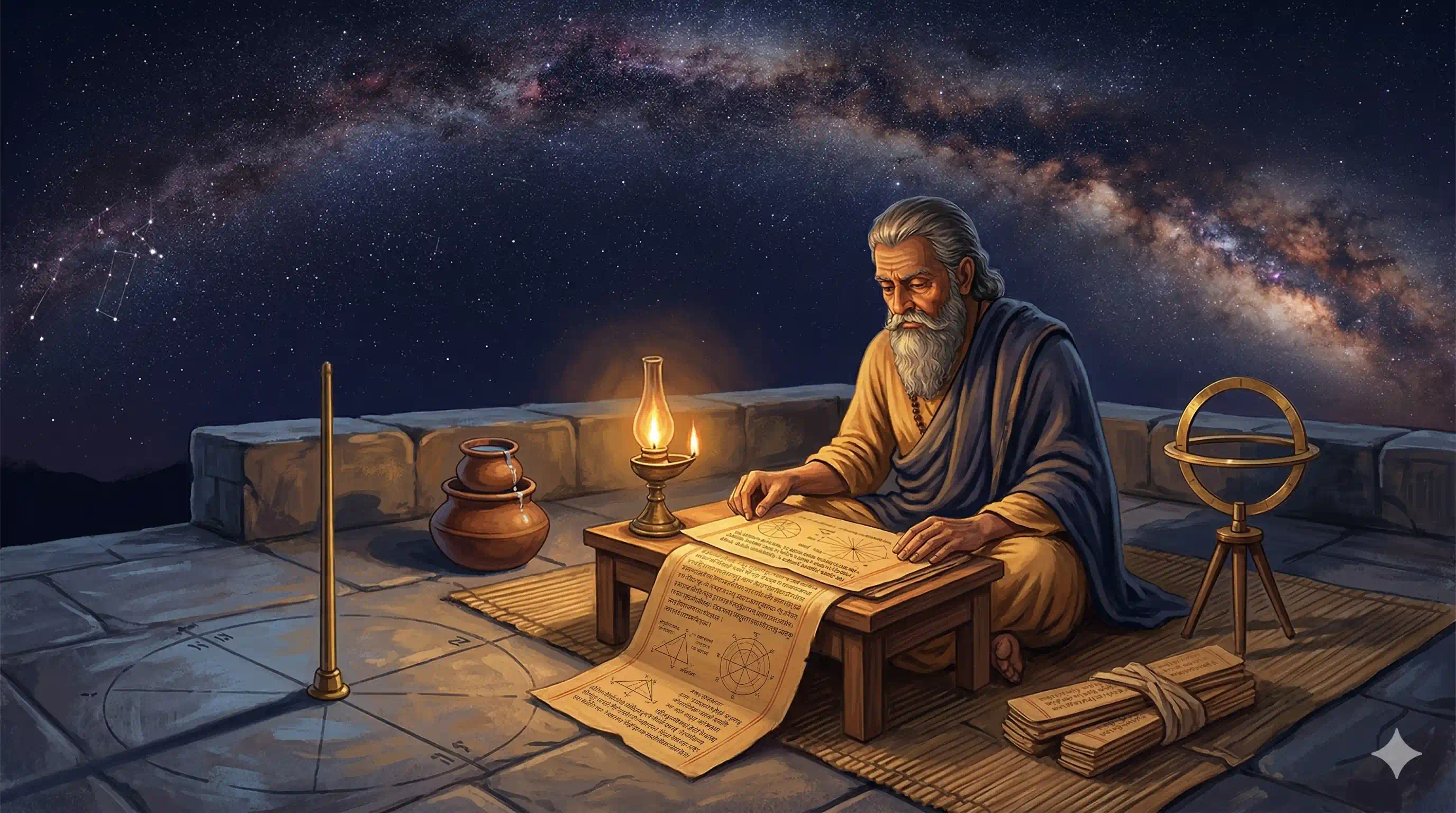
The word Rishi comes from the Sanskrit root meaning to see. A Rishi is literally one who sees — not one who believes, not one who worships, but one who sees directly and clearly. For thousands of years, the Indian tradition produced people who dedicated their entire lives to understanding reality. They lived simply — not as self-denial, but because simplicity cleared the noise. They observed nature with extraordinary patience: years, sometimes lifetimes, focused on a single domain of inquiry.
They understood something modern neuroscience is only now confirming: the quality of your observation depends entirely on the quality of your attention, and the quality of your attention depends on your inner state. This is why Rishis practiced yoga and meditation — not as religious ritual but as instrument calibration. A distracted, anxious mind is like a blurred lens. It cannot see clearly. The inner practices were how Rishis sharpened their most fundamental scientific instrument — their own awareness.
They knew that inner and outer are not separate domains. The cosmos and consciousness are part of the same whole. You cannot truly understand one while ignoring the other. This is not mysticism — it is a sophisticated epistemological position that modern science is slowly arriving at through fields like cognitive science and neurophenomenology.
The word Rishi means 'one who sees' — not one who believes or memorises, but one who directly observes and investigates. For thousands of years, Rishis studied nature, the cosmos, matter, and the human body through sustained, rigorous inquiry.
A modern scientist forms hypotheses, tests them against data, submits to peer review, and revises when new evidence demands it.
Which statement best describes the relationship between these two traditions?
The Evidence — Rishis as Scientists
आर्यभट्ट (Aryabhata) · 476–550 CE · Astronomy & Mathematics
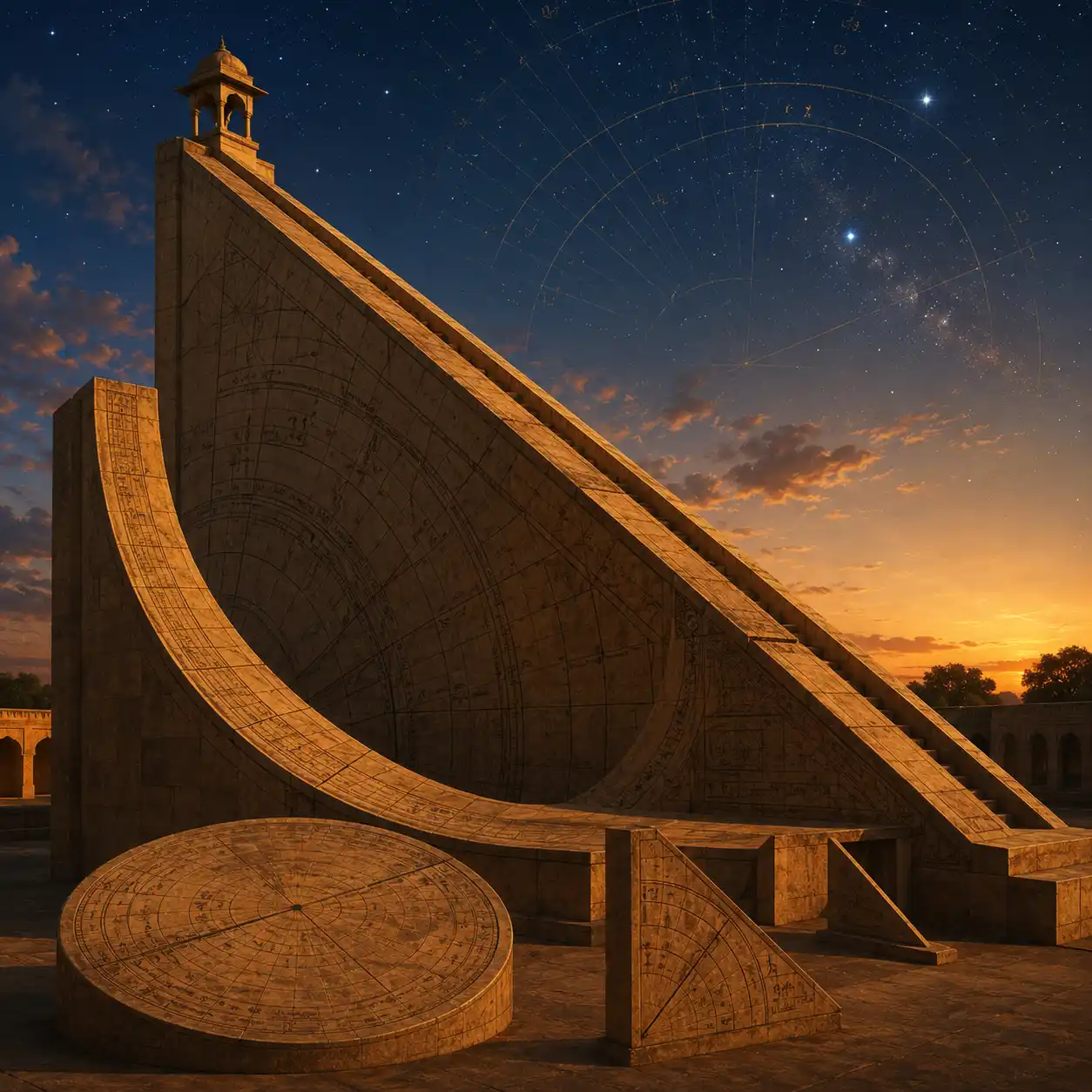
The astronomer who knew the Earth rotates — a thousand years before Europe accepted it.
ब्रह्मगुप्त (Brahmagupta) · 598–668 CE · Mathematics
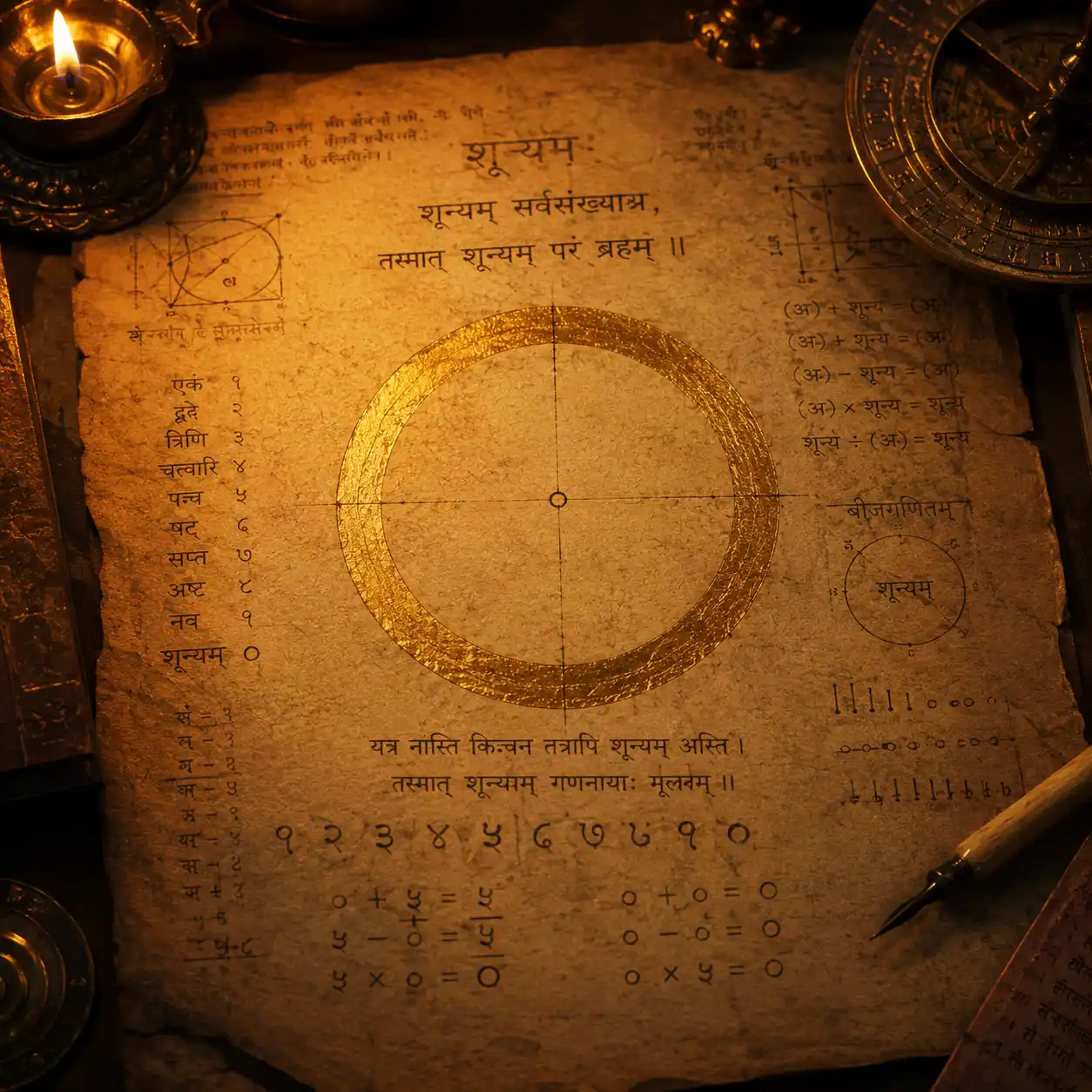
The mathematician who gave the world rules for zero — and described gravity before Newton.
चरक और सुश्रुत (Charaka & Sushruta) · c. 600–400 BCE · Medicine
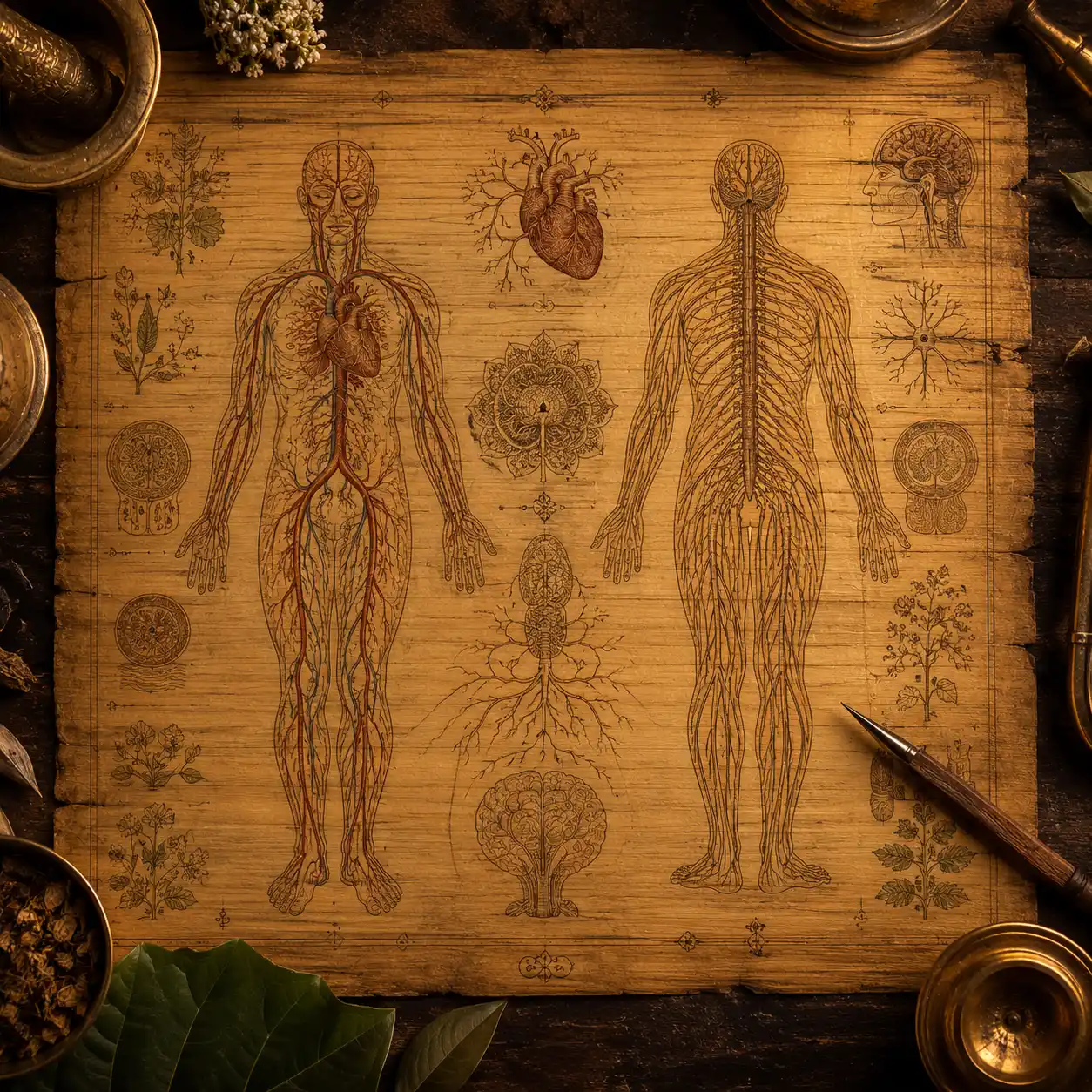
The physicians who described human body systems and performed surgery while Europe was still in the ancient world.
आचार्य कणाद (Acharya Kanad) · c. 600 BCE · Atomic Theory
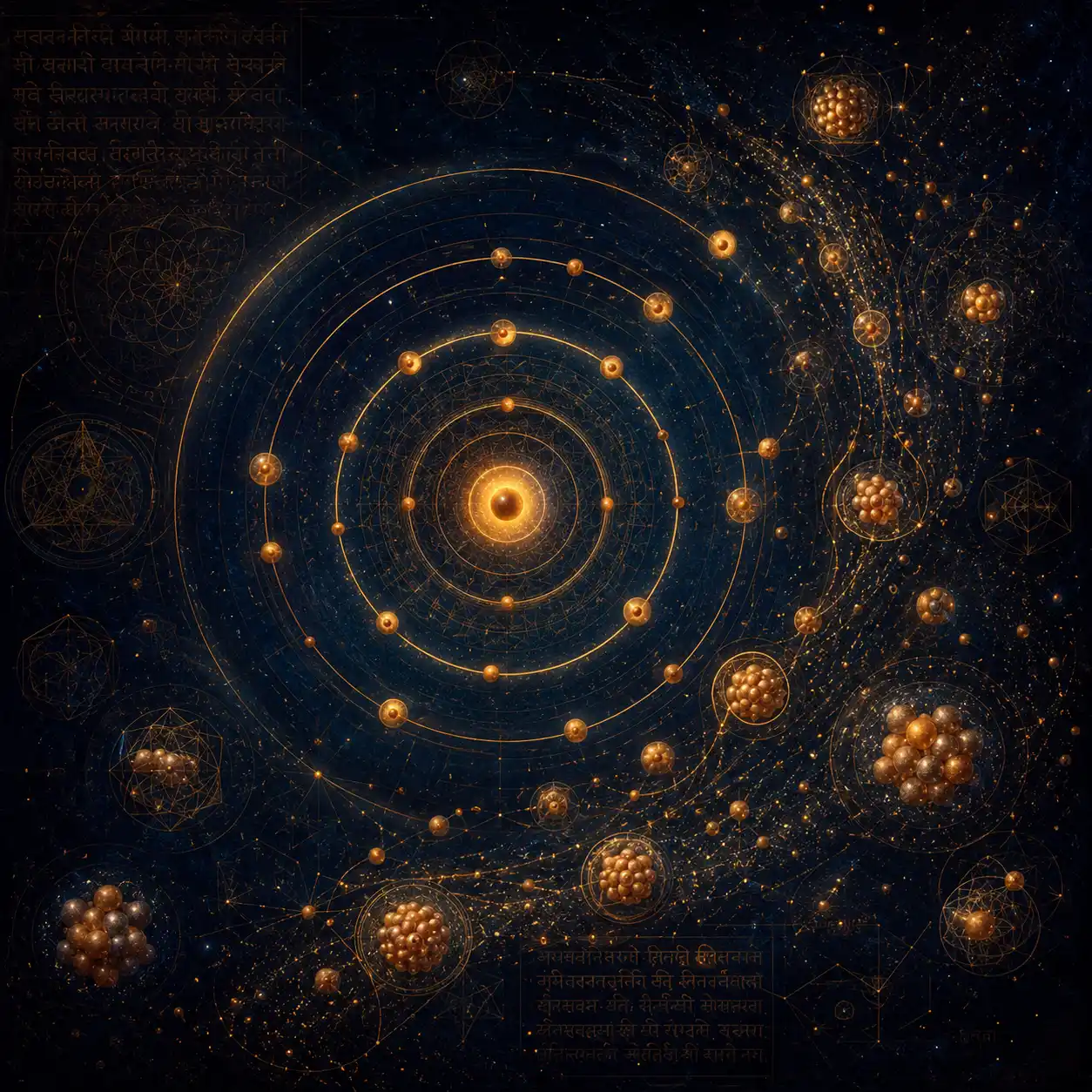
The philosopher who proposed atomic theory twenty-five centuries before it was confirmed in a laboratory.
पिंगल (Pingala) · c. 300–200 BCE · Mathematics & Linguistics
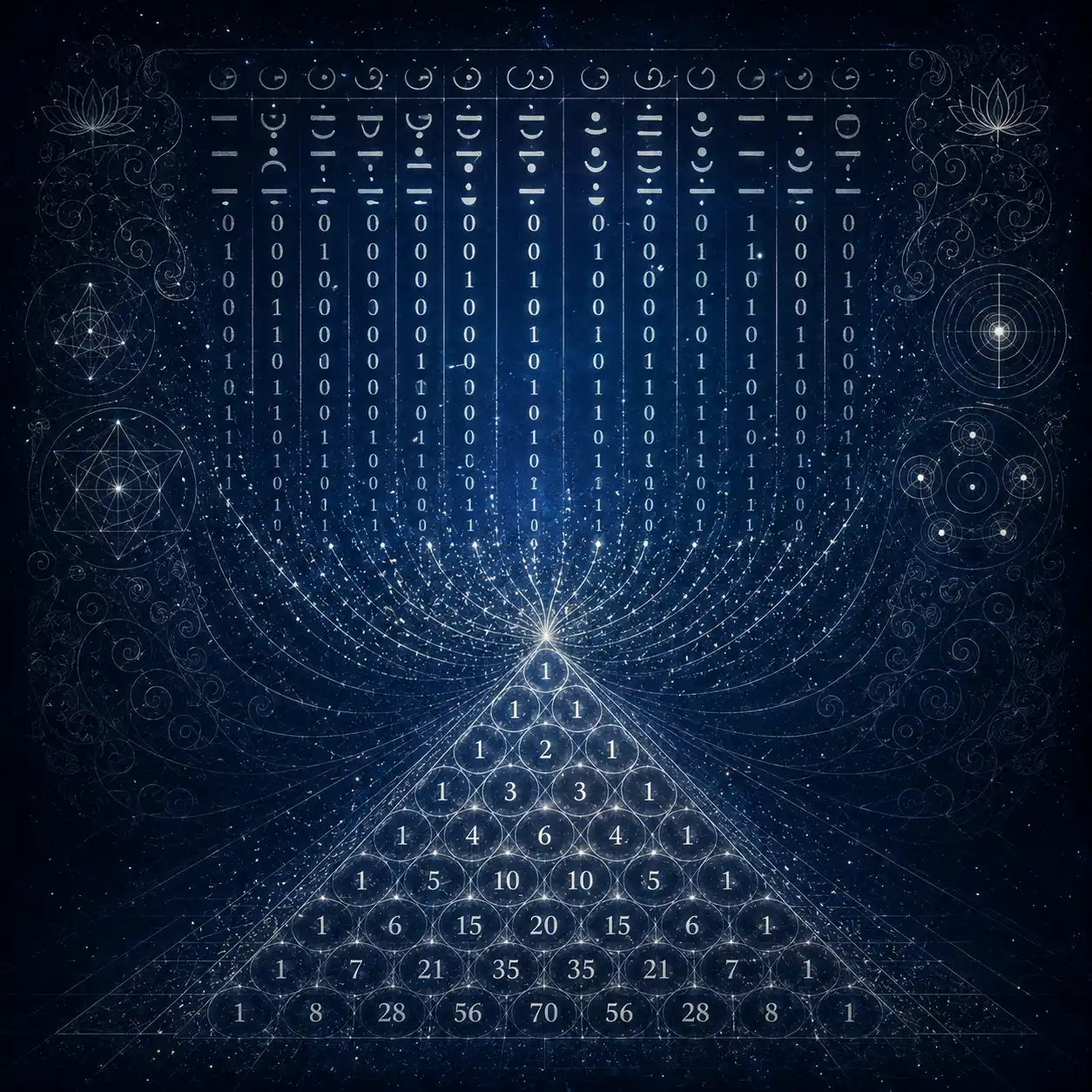
The poet-mathematician who discovered binary numbers while studying the rhythm of Sanskrit verse.
पतञ्जलि (Patanjali) · c. 200 BCE · Science of Mind
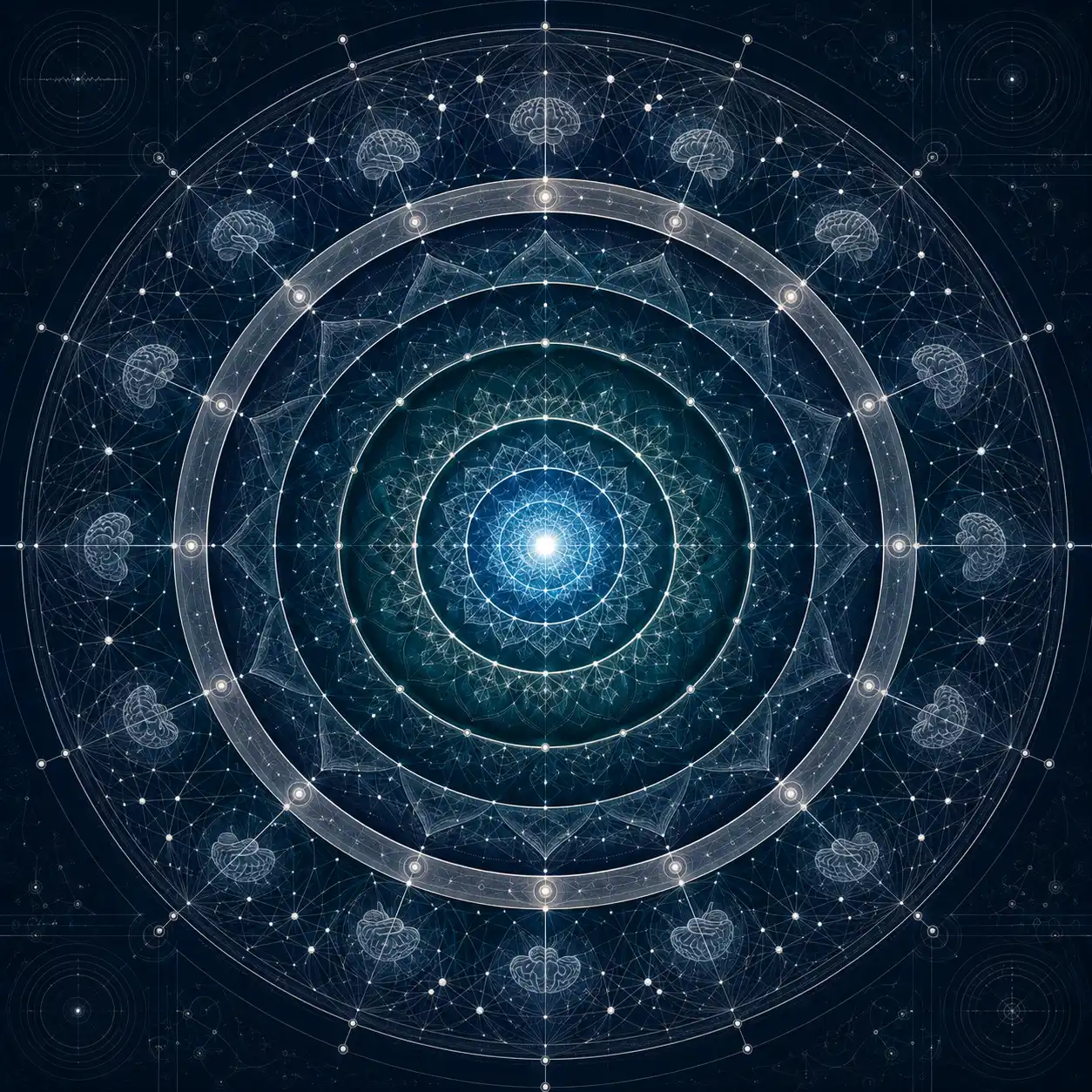
The scientist of the inner world — who mapped attention and consciousness with the same rigor astronomers used to map the stars.
One Continuous Story of Human Curiosity
What unites all of these figures is not religion. It is a commitment to direct investigation, systematic reasoning, and honest reporting of what was found — the same commitments that define scientific practice in any tradition, in any era. The difference between the Vedic tradition and later European science is not in the quality of the inquiry but in the scope of what was considered a legitimate object of investigation.
The Rishis studied the outer world and the inner world simultaneously, understanding them as aspects of a single reality. Modern science is now slowly arriving at the same position. The Rishis were simply there first.
The Web of Knowledge — Today as in Ancient Times
What the Rishis understood — and what modern science is steadily rediscovering — is that the natural world has no boundaries between subjects.
When you study science in school, the curriculum divides knowledge into separate subjects: physics, chemistry, biology, earth science. These divisions are useful for teaching. They let us focus on one set of ideas at a time. But the divisions are made by us — they are not features of nature itself.
Real-world problems almost always require multiple branches working together.
- Climate change requires atmospheric physics, ocean chemistry, ecosystem biology, and statistical mathematics — together.
- Designing a new medicine requires organic chemistry, human biology, computer modelling, and statistics — together.
- Building a sustainable city requires materials science, urban biology, social science, and earth science — together.
Aryabhata was both an astronomer and a mathematician. Charaka was both a physician and a careful empirical observer of nature. Patanjali studied the mind and the body together. The Indian tradition never artificially split jnana — knowledge — into rigid silos. And the most exciting science today is the science that is putting those silos back together.
How Does a Mask Really Work?
During the COVID-19 pandemic, billions of people wore surgical masks. Understanding how a simple mask works requires bringing together at least four branches of science:
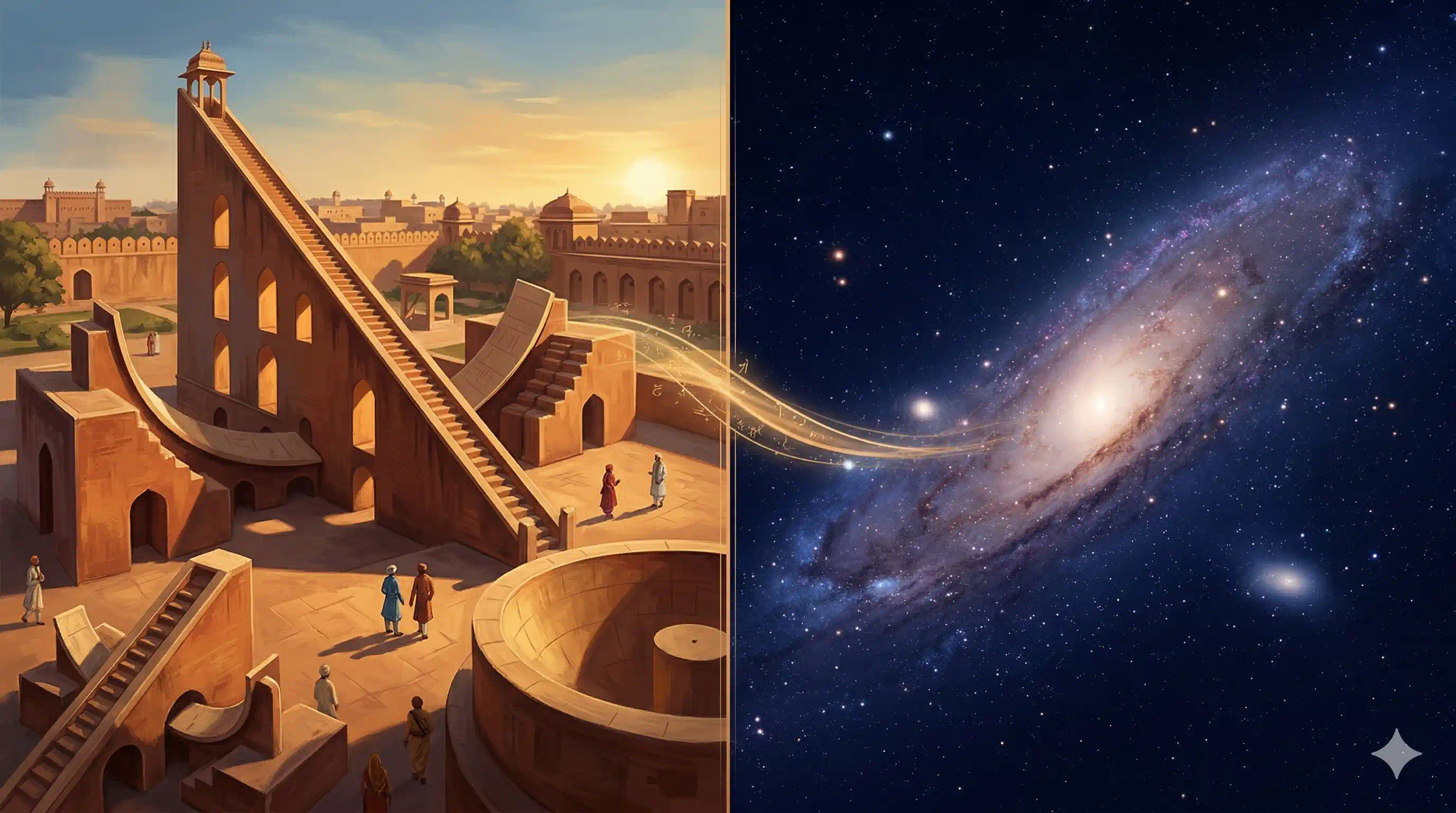
The Quest Continues…
Thousands of manuscripts from ancient India remain untranslated and largely unstudied. Many sit in private libraries, temple archives, and regional collections — written in forms of Sanskrit, Pali, or regional scripts that only a handful of scholars alive today can fully read.
Manana Moment
Contemplation before you continue
The Rishis believed that to understand the world clearly, you must first understand the instrument you use to observe it — your own mind.
Before you continue: sit still for one minute. Watch your own thoughts without following any of them. Don't analyze. Don't judge. Just observe.
This is the beginning of what they practiced. And modern neuroscience confirms it changes the brain — measurably, structurally, permanently.
What This Page Teaches Us
The Rishis of ancient India were not religious figures in the narrow sense. They were investigators of total reality — outer and inner — who understood that genuine knowledge requires both the discipline of external observation and the refinement of internal attention. Their discoveries in mathematics, astronomy, medicine, linguistics, and atomic theory place them among the greatest scientific minds in human history.
This book honors their legacy not by treating their knowledge as sacred and untouchable — but by doing exactly what they did: asking hard questions, investigating honestly, and going wherever the evidence leads.
Q1.What does the Sanskrit word 'Rishi' literally mean?
If someone told you that thousands of years ago, an Indian thinker had already proposed that matter is made of tiny indivisible particles — centuries before Dalton — what would your first reaction be? Curiosity? Scepticism? A mix of both?
And if you found out that the same tradition that produced this thinker also produced careful astronomers, mathematicians, physicians, and philosophers — all working with connected ideas across subjects we now keep separate — would that surprise you?
There's no wrong answer. Your first reaction tells you something about how you approach claims about the past.
The Verse of the Tattvadarshi
तद्विद्धि प्रणिपातेन परिप्रश्नेन सेवया ।
उपदेक्ष्यन्ति ते ज्ञानं ज्ञानिनस्तत्त्वदर्शिनः ॥
"इस ज्ञान को समझने के लिए — विनम्र जिज्ञासा से, सच्चे प्रश्नों से, और समर्पित ध्यान से — उनके पास जाओ जिन्होंने सत्य को सीधे देखा है। वे तत्त्वदर्शी तुम्हें वह ज्ञान देंगे जो उन्होंने स्वयं जाना है।"
"Seek to understand this through humble inquiry, through sincere questioning, through devoted attention. Those who have seen the truth directly — the tattvadarshis — will share their knowledge with you."
Tattvadarshi — one who has directly seen the nature of things. Not one who was told. Not one who memorized. One who saw. This is the empirical standard that both Vedic tradition and modern science demand.
The Opening Question
"If someone spent forty years in uninterrupted, focused observation of the natural world — no phone, no distraction, no obligation except understanding — how much do you think they might discover?"
What Does the Word "Rishi" Actually Mean?
The word Rishi comes from the Sanskrit root meaning to see. A Rishi is literally one who sees — not one who believes, not one who worships, but one who sees directly and clearly. For thousands of years, the Indian tradition produced people who dedicated their entire lives to understanding reality. They lived simply — not as self-denial, but because simplicity cleared the noise. They observed nature with extraordinary patience: years, sometimes lifetimes, focused on a single domain of inquiry.
They understood something modern neuroscience is only now confirming: the quality of your observation depends entirely on the quality of your attention, and the quality of your attention depends on your inner state. This is why Rishis practiced yoga and meditation — not as religious ritual but as instrument calibration. A distracted, anxious mind is like a blurred lens. It cannot see clearly. The inner practices were how Rishis sharpened their most fundamental scientific instrument — their own awareness.
They knew that inner and outer are not separate domains. The cosmos and consciousness are part of the same whole. You cannot truly understand one while ignoring the other. This is not mysticism — it is a sophisticated epistemological position that modern science is slowly arriving at through fields like cognitive science and neurophenomenology.
The word Rishi means 'one who sees' — not one who believes or memorises, but one who directly observes and investigates. For thousands of years, Rishis studied nature, the cosmos, matter, and the human body through sustained, rigorous inquiry.
A modern scientist forms hypotheses, tests them against data, submits to peer review, and revises when new evidence demands it.
Which statement best describes the relationship between these two traditions?
The Evidence — Rishis as Scientists
आर्यभट्ट (Aryabhata) · 476–550 CE · Astronomy & Mathematics
The astronomer who knew the Earth rotates — a thousand years before Europe accepted it.
ब्रह्मगुप्त (Brahmagupta) · 598–668 CE · Mathematics
The mathematician who gave the world rules for zero — and described gravity before Newton.
चरक और सुश्रुत (Charaka & Sushruta) · c. 600–400 BCE · Medicine
The physicians who described human body systems and performed surgery while Europe was still in the ancient world.
आचार्य कणाद (Acharya Kanad) · c. 600 BCE · Atomic Theory
The philosopher who proposed atomic theory twenty-five centuries before it was confirmed in a laboratory.
पिंगल (Pingala) · c. 300–200 BCE · Mathematics & Linguistics
The poet-mathematician who discovered binary numbers while studying the rhythm of Sanskrit verse.
पतञ्जलि (Patanjali) · c. 200 BCE · Science of Mind
The scientist of the inner world — who mapped attention and consciousness with the same rigor astronomers used to map the stars.
One Continuous Story of Human Curiosity
What unites all of these figures is not religion. It is a commitment to direct investigation, systematic reasoning, and honest reporting of what was found — the same commitments that define scientific practice in any tradition, in any era. The difference between the Vedic tradition and later European science is not in the quality of the inquiry but in the scope of what was considered a legitimate object of investigation.
The Rishis studied the outer world and the inner world simultaneously, understanding them as aspects of a single reality. Modern science is now slowly arriving at the same position. The Rishis were simply there first.
The Web of Knowledge — Today as in Ancient Times
What the Rishis understood — and what modern science is steadily rediscovering — is that the natural world has no boundaries between subjects.
When you study science in school, the curriculum divides knowledge into separate subjects: physics, chemistry, biology, earth science. These divisions are useful for teaching. They let us focus on one set of ideas at a time. But the divisions are made by us — they are not features of nature itself.
Real-world problems almost always require multiple branches working together.
- Climate change requires atmospheric physics, ocean chemistry, ecosystem biology, and statistical mathematics — together.
- Designing a new medicine requires organic chemistry, human biology, computer modelling, and statistics — together.
- Building a sustainable city requires materials science, urban biology, social science, and earth science — together.
Aryabhata was both an astronomer and a mathematician. Charaka was both a physician and a careful empirical observer of nature. Patanjali studied the mind and the body together. The Indian tradition never artificially split jnana — knowledge — into rigid silos. And the most exciting science today is the science that is putting those silos back together.
How Does a Mask Really Work?
During the COVID-19 pandemic, billions of people wore surgical masks. Understanding how a simple mask works requires bringing together at least four branches of science:
The Quest Continues…
Thousands of manuscripts from ancient India remain untranslated and largely unstudied. Many sit in private libraries, temple archives, and regional collections — written in forms of Sanskrit, Pali, or regional scripts that only a handful of scholars alive today can fully read.
What This Page Teaches Us
The Rishis of ancient India were not religious figures in the narrow sense. They were investigators of total reality — outer and inner — who understood that genuine knowledge requires both the discipline of external observation and the refinement of internal attention. Their discoveries in mathematics, astronomy, medicine, linguistics, and atomic theory place them among the greatest scientific minds in human history.
This book honors their legacy not by treating their knowledge as sacred and untouchable — but by doing exactly what they did: asking hard questions, investigating honestly, and going wherever the evidence leads.
Q1.What does the Sanskrit word 'Rishi' literally mean?