Science and You
Why science matters in everyday Indian life
On the Self as Its Own Greatest Ally
उद्धरेदात्मनात्मानं नात्मानमवसादयेत् |
आत्मैव ह्यात्मनो बन्धुरात्मैव रिपुरात्मनः ||
अपने आप से अपना उद्धार करो — अपने को अधोगति में मत डालो। स्वयं ही अपना मित्र है, और स्वयं ही अपना शत्रु।
"Lift yourself by the power of your own mind; do not let yourself sink. For the self alone is the friend of the self, and the self alone is its own enemy."
In science, and in all serious learning, no one can generate your curiosity for you. The questions that will carry your understanding forward are the ones you learn to ask yourself.
The Opening Question
You didn't choose to be born at this moment in human history — but you were.
Science is Already in Your Life
Science is not something that happens in laboratories and gets reported in textbooks years later. It is the operating system of the world you wake up into every morning.
The toothpaste you use contains fluoride compounds whose decay-prevention mechanism was studied by dentists and chemists over decades. The electricity in your home is produced and distributed by systems built on electromagnetic principles that Faraday and Maxwell first described in the 19th century — and Indian engineers expanded in the 20th. The food on your plate — its yield, its shelf life, its nutritional profile — is shaped by agricultural science, soil chemistry, and plant genetics refined through thousands of field experiments. The antibiotic a doctor prescribes when you have a severe infection exists because of a discovery made in 1928 that, before then, simply didn't exist. People died of infections we now cure in three days.
This isn't a list of interesting facts. It is a map of your dependence on scientific knowledge.
The critical shift happens when you move from being a passive consumer of science's outputs to someone who can evaluate scientific claims, use scientific methods, and participate in the conversations that determine how that knowledge gets applied.
That shift begins with understanding how science works — which is what this chapter is about.
Scientific Literacy is a Civic Skill
India in the coming decades will face challenges that are fundamentally scientific in character.
Climate change will alter the monsoon patterns that Indian agriculture depends on — and the scientific models that explain how, and the policy responses that might help, will require scientifically literate citizens to evaluate and demand. Antibiotic resistance — accelerated by the overuse of antibiotics in livestock and inadequately regulated medical practice — is a slow-building public health emergency. Water scarcity is already a present reality across Rajasthan, Maharashtra, Tamil Nadu, and large parts of peninsular India. New technologies — artificial intelligence, gene editing, synthetic biology, nuclear energy — will create possibilities and risks that someone will have to evaluate and decide upon.
Who decides? Policy makers. But policy makers respond to an informed public. Citizens who understand the science of vaccines make different choices than citizens who don't. Voters who understand climate models vote differently. Communities that understand water chemistry can demand better from their municipalities.
Scientific literacy is not just a professional skill. It is a civic one. The quality of collective decisions a society makes is directly related to how many of its members can think scientifically — even about topics far outside any formal curriculum.
The Story That Saved 70 Million Lives
In the 1960s and 70s, millions of children died annually from diarrhea-related dehydration across the developing world, including India.
You as a Scientist — Right Now, Today
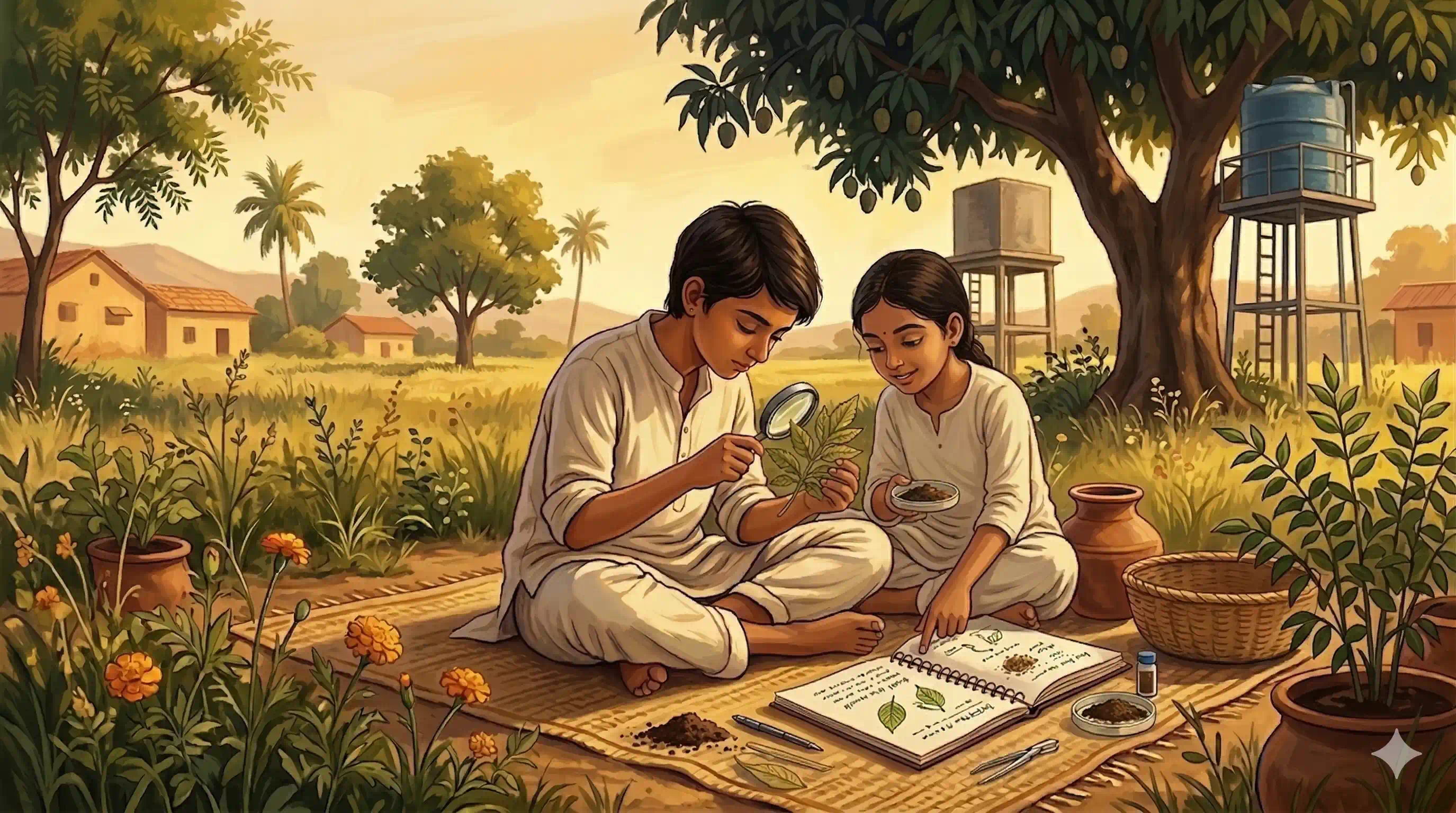
You don't need a laboratory to practice science. The scientific method — observe, question, hypothesize, test, revise — is a way of thinking that can be applied to almost anything.
When you notice that your phone battery drains faster in cold weather, you are observing. When you ask why, you are beginning the scientific process. When you look for a mechanism (cold slows electrochemical reactions in lithium-ion batteries), test it (check whether the battery percentage recovers slightly when you bring the phone to room temperature), and it holds up — you have moved from ignorance to understanding. No laboratory required.
The difference between a person who practices scientific thinking and one who doesn't is not intelligence. It is one habit: asking why instead of accepting the first comfortable explanation.
This habit matters far beyond chemistry class. It matters when evaluating a news headline, assessing a health claim, understanding a political argument, or making a decision about your own life.
You are already curious — or you wouldn't be reading this. This book is designed to turn that curiosity into a disciplined skill. Not a skill that turns you into a scientist by profession, but a skill that makes you a more careful, more accurate, more capable thinker in every domain you enter.
Manana Moment
Contemplation before you continue
In the past week, how many times did you accept something as true without asking why?
A news headline. A teacher's explanation. A piece of advice from family. A health claim on packaging.
This is not a criticism. It is a description of how most people operate most of the time. The brain is optimized for efficiency, not accuracy — it conserves cognitive energy by defaulting to "close enough" rather than "rigorously verified."
What distinguishes scientific thinking is not constant skepticism about everything. It is knowing which claims deserve scrutiny, and then having the tools and discipline to actually apply it.
Before you continue: Identify one thing you currently believe that you have never personally verified. What would it actually take to test it?
What This Page Teaches Us
-
Science is not confined to laboratories. It is present in every material, every medication, every technology that shapes your daily life — from the fluoride in your toothpaste to the grid that powers your city.
-
Scientific literacy is a civic skill, not just a professional one. Citizens who understand science make better collective decisions about health, environment, technology, and governance.
-
India's coming generations will face challenges — climate adaptation, antibiotic resistance, water scarcity, emerging technologies — that are fundamentally scientific in character. Understanding science is not optional for this generation.
-
The ORS story demonstrates that scientific knowledge only changes the world when it reaches people who understand it enough to trust and use it. Literacy, distributed widely, is a force multiplier.
-
You don't need a laboratory to practice scientific thinking. The method — observe, question, hypothesize, test, revise — can be applied to anything. The most important scientific instrument you have is the habit of asking why.
On the Self as Its Own Greatest Ally
उद्धरेदात्मनात्मानं नात्मानमवसादयेत् |
आत्मैव ह्यात्मनो बन्धुरात्मैव रिपुरात्मनः ||
अपने आप से अपना उद्धार करो — अपने को अधोगति में मत डालो। स्वयं ही अपना मित्र है, और स्वयं ही अपना शत्रु।
"Lift yourself by the power of your own mind; do not let yourself sink. For the self alone is the friend of the self, and the self alone is its own enemy."
In science, and in all serious learning, no one can generate your curiosity for you. The questions that will carry your understanding forward are the ones you learn to ask yourself.
The Opening Question
You didn't choose to be born at this moment in human history — but you were.
Science is Already in Your Life
Science is not something that happens in laboratories and gets reported in textbooks years later. It is the operating system of the world you wake up into every morning.
The toothpaste you use contains fluoride compounds whose decay-prevention mechanism was studied by dentists and chemists over decades. The electricity in your home is produced and distributed by systems built on electromagnetic principles that Faraday and Maxwell first described in the 19th century — and Indian engineers expanded in the 20th. The food on your plate — its yield, its shelf life, its nutritional profile — is shaped by agricultural science, soil chemistry, and plant genetics refined through thousands of field experiments. The antibiotic a doctor prescribes when you have a severe infection exists because of a discovery made in 1928 that, before then, simply didn't exist. People died of infections we now cure in three days.
This isn't a list of interesting facts. It is a map of your dependence on scientific knowledge.
The critical shift happens when you move from being a passive consumer of science's outputs to someone who can evaluate scientific claims, use scientific methods, and participate in the conversations that determine how that knowledge gets applied.
That shift begins with understanding how science works — which is what this chapter is about.
Scientific Literacy is a Civic Skill
India in the coming decades will face challenges that are fundamentally scientific in character.
Climate change will alter the monsoon patterns that Indian agriculture depends on — and the scientific models that explain how, and the policy responses that might help, will require scientifically literate citizens to evaluate and demand. Antibiotic resistance — accelerated by the overuse of antibiotics in livestock and inadequately regulated medical practice — is a slow-building public health emergency. Water scarcity is already a present reality across Rajasthan, Maharashtra, Tamil Nadu, and large parts of peninsular India. New technologies — artificial intelligence, gene editing, synthetic biology, nuclear energy — will create possibilities and risks that someone will have to evaluate and decide upon.
Who decides? Policy makers. But policy makers respond to an informed public. Citizens who understand the science of vaccines make different choices than citizens who don't. Voters who understand climate models vote differently. Communities that understand water chemistry can demand better from their municipalities.
Scientific literacy is not just a professional skill. It is a civic one. The quality of collective decisions a society makes is directly related to how many of its members can think scientifically — even about topics far outside any formal curriculum.
The Story That Saved 70 Million Lives
In the 1960s and 70s, millions of children died annually from diarrhea-related dehydration across the developing world, including India.
You as a Scientist — Right Now, Today
You don't need a laboratory to practice science. The scientific method — observe, question, hypothesize, test, revise — is a way of thinking that can be applied to almost anything.
When you notice that your phone battery drains faster in cold weather, you are observing. When you ask why, you are beginning the scientific process. When you look for a mechanism (cold slows electrochemical reactions in lithium-ion batteries), test it (check whether the battery percentage recovers slightly when you bring the phone to room temperature), and it holds up — you have moved from ignorance to understanding. No laboratory required.
The difference between a person who practices scientific thinking and one who doesn't is not intelligence. It is one habit: asking why instead of accepting the first comfortable explanation.
This habit matters far beyond chemistry class. It matters when evaluating a news headline, assessing a health claim, understanding a political argument, or making a decision about your own life.
You are already curious — or you wouldn't be reading this. This book is designed to turn that curiosity into a disciplined skill. Not a skill that turns you into a scientist by profession, but a skill that makes you a more careful, more accurate, more capable thinker in every domain you enter.
What This Page Teaches Us
-
Science is not confined to laboratories. It is present in every material, every medication, every technology that shapes your daily life — from the fluoride in your toothpaste to the grid that powers your city.
-
Scientific literacy is a civic skill, not just a professional one. Citizens who understand science make better collective decisions about health, environment, technology, and governance.
-
India's coming generations will face challenges — climate adaptation, antibiotic resistance, water scarcity, emerging technologies — that are fundamentally scientific in character. Understanding science is not optional for this generation.
-
The ORS story demonstrates that scientific knowledge only changes the world when it reaches people who understand it enough to trust and use it. Literacy, distributed widely, is a force multiplier.
-
You don't need a laboratory to practice scientific thinking. The method — observe, question, hypothesize, test, revise — can be applied to anything. The most important scientific instrument you have is the habit of asking why.