Centrifugation
The spinning science
Fresh milk is white and uniform. Leave it overnight and a cream layer floats to the top. What force causes the heavier part to separate from the lighter — and could you speed this up somehow?
An ultracentrifuge spins at up to 150,000 RPM — generating forces 1,000,000 times gravity. At these speeds, even molecules like proteins and viruses separate by weight. Scientists used ultracentrifuges to prove that DNA replication is "semi-conservative" (each new DNA molecule keeps one original strand) — one of the most important experiments in biology.
How Centrifugation Works
Centrifugation uses centrifugal force (apparent force experienced during rotation) to separate substances of different densities in a mixture.
When a mixture is spun at high speed:
- Denser particles experience greater centrifugal force and move to the outside (bottom of the tube)
- Less dense particles or liquids remain on the inside (top of the tube)
Effectively, centrifugation is like greatly accelerated settling — what would take days to settle under gravity can happen in minutes under centrifugal force.
*Phugadi* and *Kikli* — A Folk-Dance Lesson in Centrifugal Force
Have you ever played a game where you and a friend hold each other's hands, lean back, and spin around in a circle? In Maharashtra it's called phugadi, in Punjab it's called kikli. As you spin faster, you feel a strong pull outwards — as if something is trying to throw both of you out of the circle. Your hands tighten on each other so you don't fly away.
The Paperfuge — A Centrifuge for Villages Without Power
A laboratory centrifuge needs electricity, costs lakhs of rupees, and is heavy. None of that helps a health worker walking into a remote village to test for malaria or anaemia.
Activity 5.8 — Make Your Own Mini Centrifuge
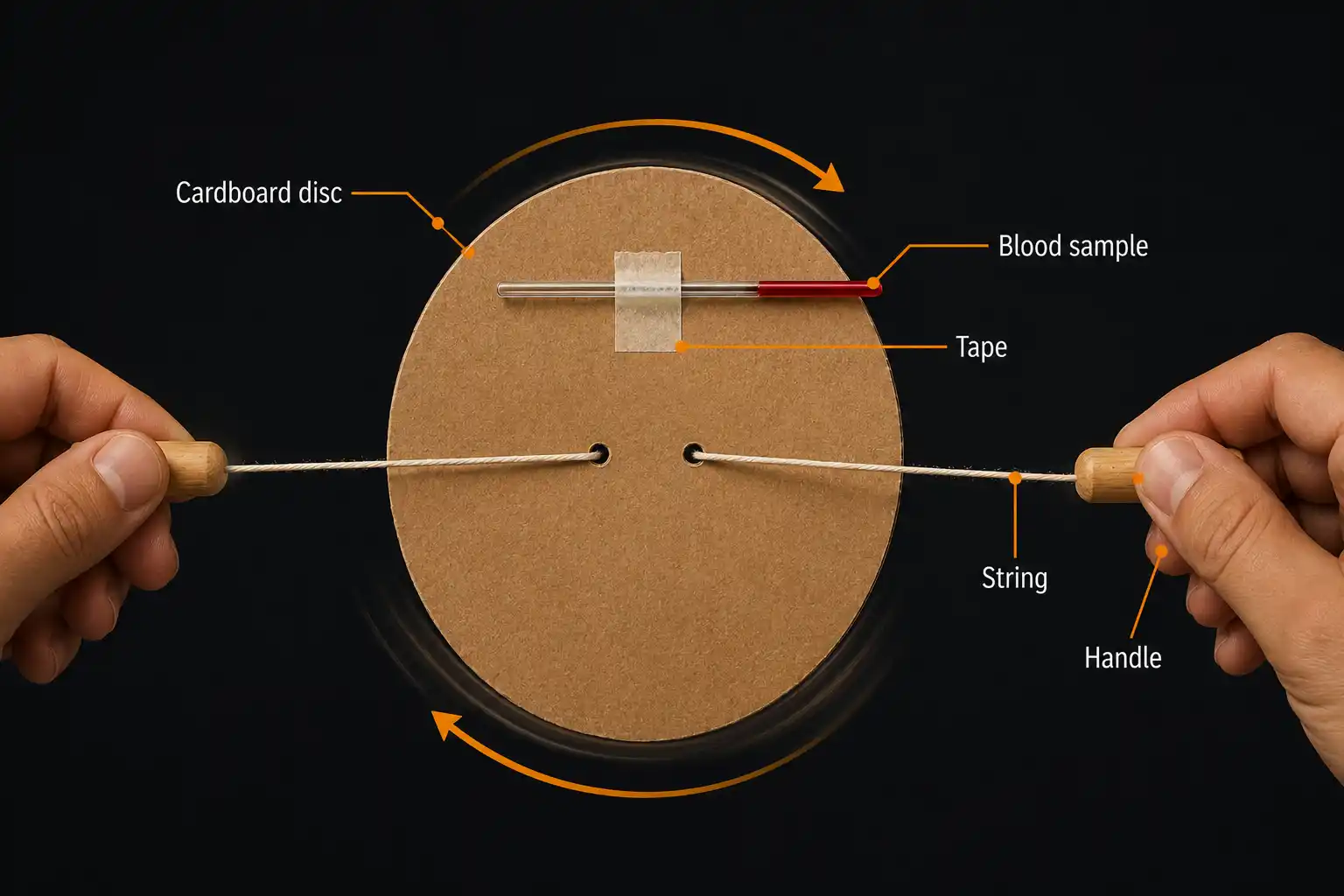
Try it at home. Take a small cardboard disc and pass thick thread through two holes near its centre. Tie loops at the end of the thread to fit your fingers. Tape a small bottle (containing a teaspoon of muddy water) to the side of the disc.
Applications:
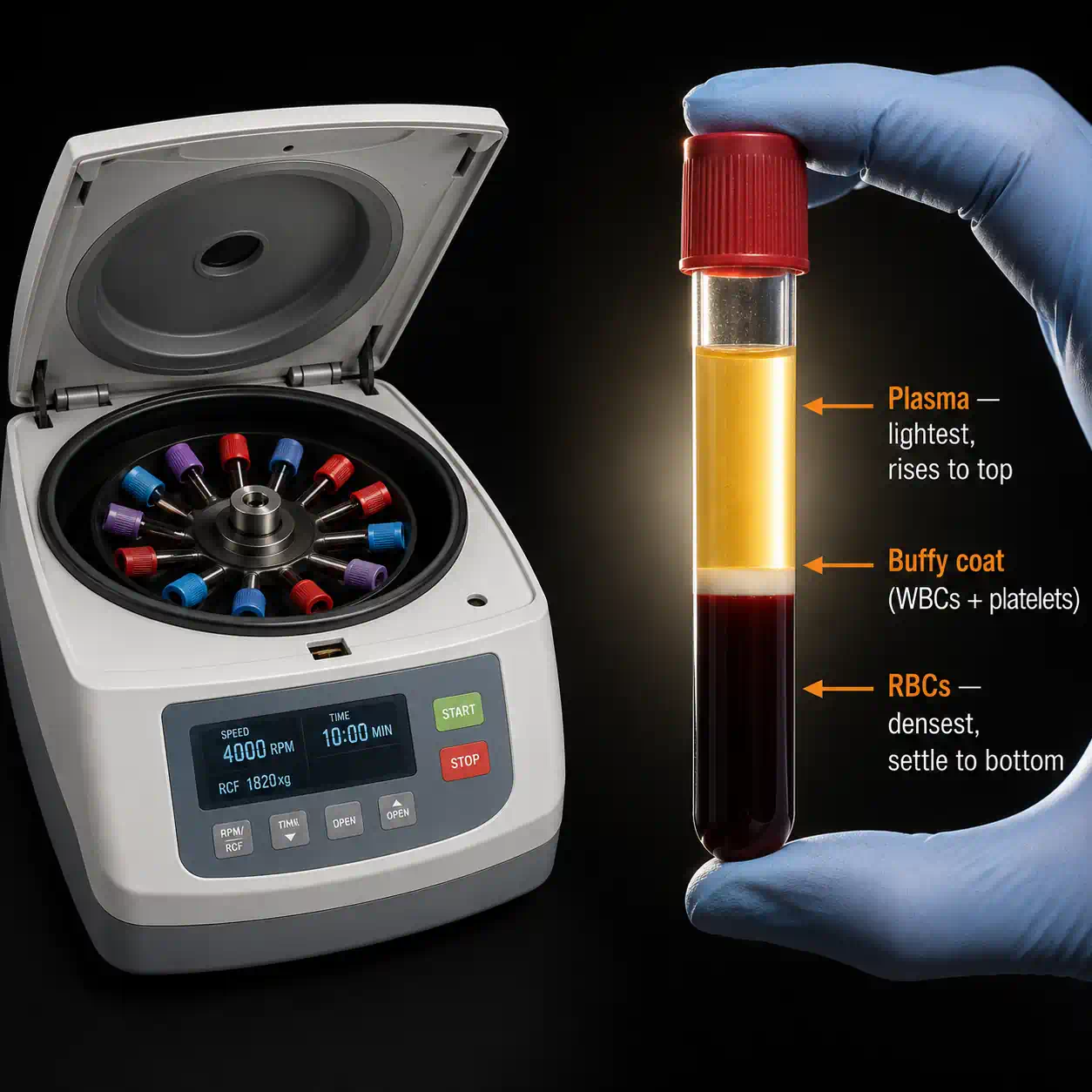
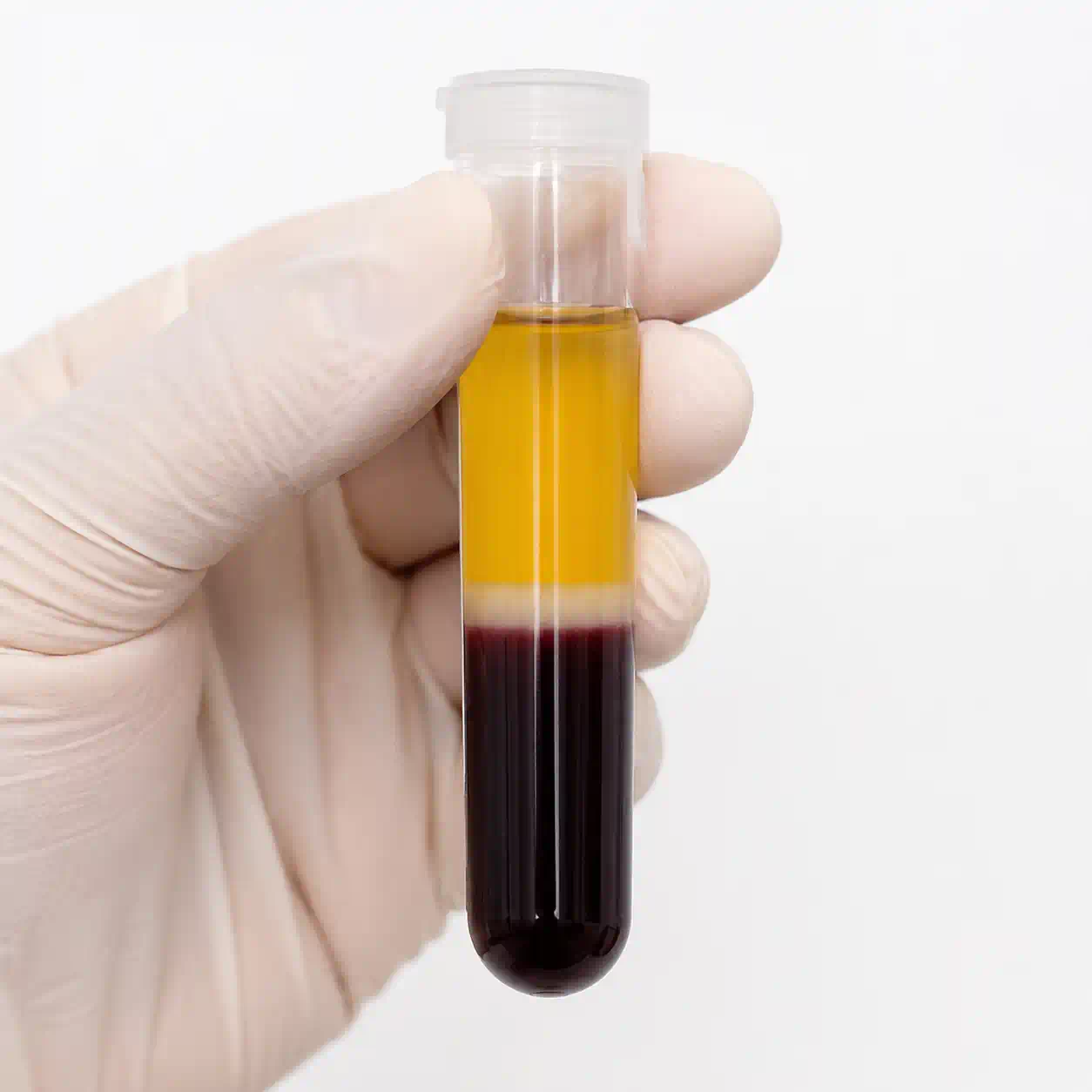
- Blood separation: In hospitals, blood is centrifuged to separate plasma (top), white blood cells (middle), and red blood cells (bottom) — for blood tests and transfusions
- Cream from milk: Cream (less dense fat) rises to the top; skimmed milk remains below. Industrial dairies use centrifuges to separate cream from milk in minutes
- Washing machines: Spin cycle uses centrifugation to force water out of wet clothes
- Uranium enrichment: Centrifuges separate U-235 from U-238 for nuclear fuel — used by India's Department of Atomic Energy
- Urine analysis: Hospital labs spin urine to concentrate cells for microscopic examination
When a washing machine spins wet clothes at high speed, water flies outward and drains away. A centrifuge separates blood cells from plasma in the same way. What principle makes both work?
Where You See This Every Day
Centrifugation is essential wherever gravity-based settling is too slow or impractical:
- Blood Banks — Every unit of donated blood is immediately centrifuged to separate red blood cells, platelets, and plasma. Each component is transfused to a different patient — one donation saves up to three lives. Blood banks process hundreds of samples daily using centrifuges.
- Dairy Industry — The cream layer on raw milk is separated from skimmed milk using industrial centrifuges (cream separators) at 6,000–9,000 rpm. Amul, Mother Dairy, and Nandini all use centrifugation at scale.
- Washing Machine Spin Cycle — The spin cycle of a washing machine is centrifugation. The drum spins at 800–1600 rpm, and water (less dense than the fibres) is flung outward and expelled through holes in the drum wall — the same principle as separating denser blood cells from plasma.
- Uranium Enrichment — Nuclear power plants require enriched uranium (higher U-235 concentration). Gas centrifuges spin uranium hexafluoride (UF₆) at 50,000+ rpm. The slightly heavier U-238 moves outward; the lighter U-235 concentrates at the centre. India's nuclear programme at BARC relies on this.
- Urine Analysis — Urine is centrifuged before microscopy to concentrate cells and casts. The sediment (if any) reveals kidney disease, infection, or blood in urine that would be invisible to the naked eye.
🩸 Real-World Impact
During the COVID-19 pandemic, plasma therapy required centrifuging blood from recovered patients to extract antibody-rich plasma for critically ill patients. Every hospital that ran a plasma programme was running a centrifuge-based separation operation 24 hours a day. The technique you are studying was at the centre of India's pandemic response.
Q1.Centrifugation is used to separate which type of mixture?
Fresh milk is white and uniform. Leave it overnight and a cream layer floats to the top. What force causes the heavier part to separate from the lighter — and could you speed this up somehow?
An ultracentrifuge spins at up to 150,000 RPM — generating forces 1,000,000 times gravity. At these speeds, even molecules like proteins and viruses separate by weight. Scientists used ultracentrifuges to prove that DNA replication is "semi-conservative" (each new DNA molecule keeps one original strand) — one of the most important experiments in biology.
How Centrifugation Works
Centrifugation uses centrifugal force (apparent force experienced during rotation) to separate substances of different densities in a mixture.
When a mixture is spun at high speed:
- Denser particles experience greater centrifugal force and move to the outside (bottom of the tube)
- Less dense particles or liquids remain on the inside (top of the tube)
Effectively, centrifugation is like greatly accelerated settling — what would take days to settle under gravity can happen in minutes under centrifugal force.
*Phugadi* and *Kikli* — A Folk-Dance Lesson in Centrifugal Force
Have you ever played a game where you and a friend hold each other's hands, lean back, and spin around in a circle? In Maharashtra it's called phugadi, in Punjab it's called kikli. As you spin faster, you feel a strong pull outwards — as if something is trying to throw both of you out of the circle. Your hands tighten on each other so you don't fly away.
The Paperfuge — A Centrifuge for Villages Without Power
A laboratory centrifuge needs electricity, costs lakhs of rupees, and is heavy. None of that helps a health worker walking into a remote village to test for malaria or anaemia.
Activity 5.8 — Make Your Own Mini Centrifuge
Try it at home. Take a small cardboard disc and pass thick thread through two holes near its centre. Tie loops at the end of the thread to fit your fingers. Tape a small bottle (containing a teaspoon of muddy water) to the side of the disc.
Applications:
- Blood separation: In hospitals, blood is centrifuged to separate plasma (top), white blood cells (middle), and red blood cells (bottom) — for blood tests and transfusions
- Cream from milk: Cream (less dense fat) rises to the top; skimmed milk remains below. Industrial dairies use centrifuges to separate cream from milk in minutes
- Washing machines: Spin cycle uses centrifugation to force water out of wet clothes
- Uranium enrichment: Centrifuges separate U-235 from U-238 for nuclear fuel — used by India's Department of Atomic Energy
- Urine analysis: Hospital labs spin urine to concentrate cells for microscopic examination
When a washing machine spins wet clothes at high speed, water flies outward and drains away. A centrifuge separates blood cells from plasma in the same way. What principle makes both work?
Where You See This Every Day
Centrifugation is essential wherever gravity-based settling is too slow or impractical:
- Blood Banks — Every unit of donated blood is immediately centrifuged to separate red blood cells, platelets, and plasma. Each component is transfused to a different patient — one donation saves up to three lives. Blood banks process hundreds of samples daily using centrifuges.
- Dairy Industry — The cream layer on raw milk is separated from skimmed milk using industrial centrifuges (cream separators) at 6,000–9,000 rpm. Amul, Mother Dairy, and Nandini all use centrifugation at scale.
- Washing Machine Spin Cycle — The spin cycle of a washing machine is centrifugation. The drum spins at 800–1600 rpm, and water (less dense than the fibres) is flung outward and expelled through holes in the drum wall — the same principle as separating denser blood cells from plasma.
- Uranium Enrichment — Nuclear power plants require enriched uranium (higher U-235 concentration). Gas centrifuges spin uranium hexafluoride (UF₆) at 50,000+ rpm. The slightly heavier U-238 moves outward; the lighter U-235 concentrates at the centre. India's nuclear programme at BARC relies on this.
- Urine Analysis — Urine is centrifuged before microscopy to concentrate cells and casts. The sediment (if any) reveals kidney disease, infection, or blood in urine that would be invisible to the naked eye.
Q1.Centrifugation is used to separate which type of mixture?