Sublimation
When solids become gases directly
Dry ice (solid CO₂) warms up and disappears — no puddle, no liquid, just gone. Naphthalene balls (mothballs) do the same thing slowly over weeks. What do you think is happening to the solid?
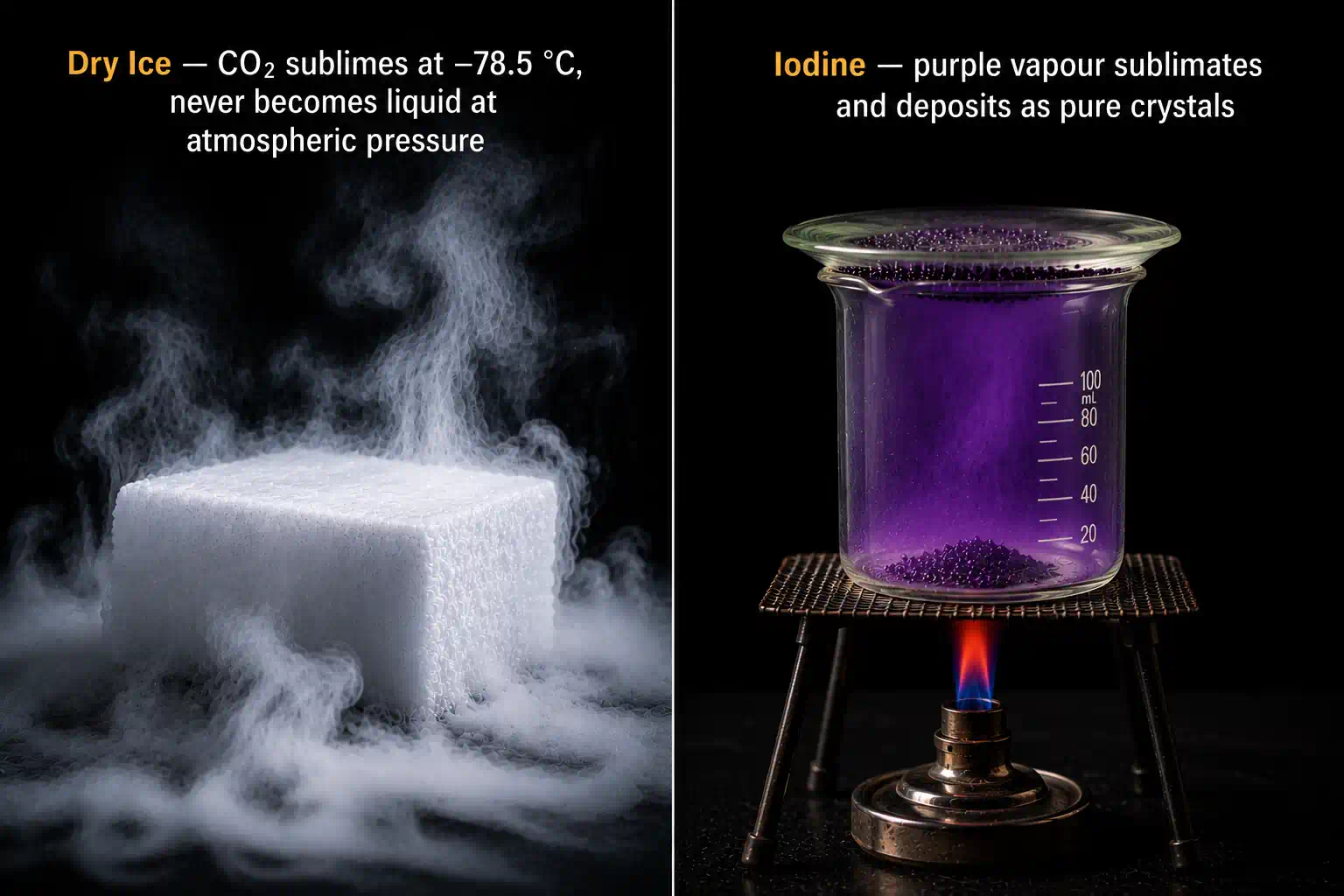
Dry ice is solid carbon dioxide at −78.5 °C. When you place it in water, it doesn't melt to liquid CO₂ — it goes directly from solid to gas (sublimation), creating the dramatic white fog seen at concerts and in horror movies. At normal atmospheric pressure, liquid CO₂ cannot exist — it skips the liquid phase entirely.
What is Sublimation?
Sublimation is the direct conversion of a solid into its vapour without passing through the liquid phase. The reverse process (vapour → solid directly) is called deposition or desublimation.
Substances that sublime:
- Iodine (): Purple solid → purple vapour when heated; condenses back as crystalline iodine
- Camphor (): White solid → colourless vapour; used in temples and medicine
- Ammonium chloride (): Sublimes on heating — used in dry cell batteries
- Naphthalene: Mothballs slowly sublime at room temperature
- Carbon dioxide (): Only sublimes at atmospheric pressure — dry ice
Using sublimation for separation:
If a mixture contains a substance that sublimes and one that does not, you can separate them by gentle heating:
- Heat the mixture gently
- The sublimable substance vaporises
- Place a cold surface (inverted funnel with ice) above — the vapour desublimes back to solid on the cold surface
- Collect the pure sublimed substance
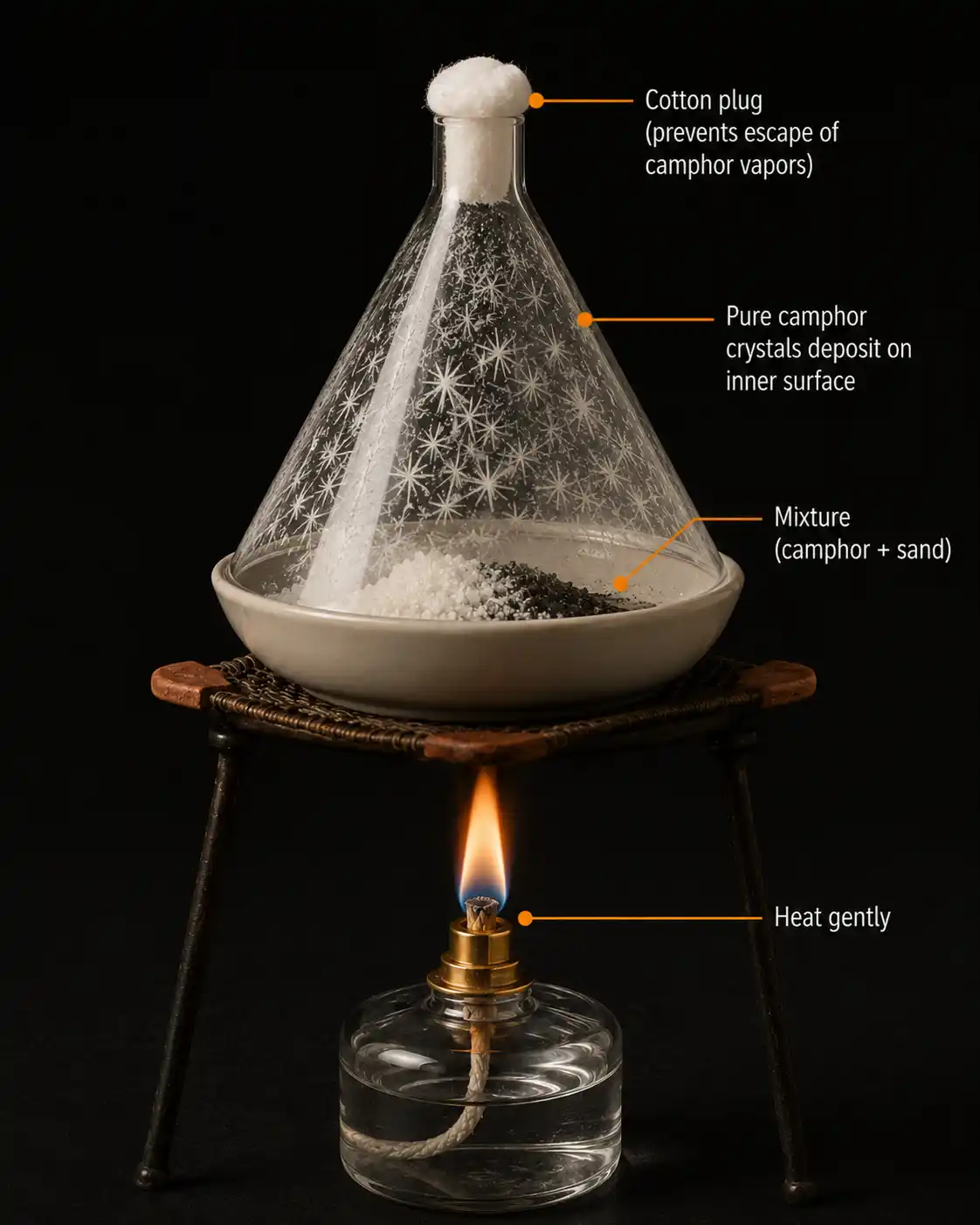
Example: Separating camphor from sand — camphor sublimes and collects on the cool funnel; sand stays behind.
You put naphthalene (mothball) tablets in a wooden wardrobe to keep insects away. After six months, the tablets are completely gone — but the wardrobe floor is perfectly dry. Your younger sibling asks: "Where did they go? Did they melt away?" How would you explain what happened?
Activity 5.7 — Get Pure Camphor Out of Sand
Here is a separation problem that doesn't fit any of the methods you have learnt so far. You are given a mixture of crushed camphor and sand. How do you get pure camphor out without leaving any sand behind?
Camphor doesn't dissolve well in water. You can't filter it out — both grains look similar in size. You can't melt it cleanly because it goes from solid to vapour too easily. That last fact is the hint we need.
You will need: a spatula of crushed camphor + sand mixture, a clean dry china dish, a clean dry glass funnel, a small wad of cotton wool, a tripod stand with wire gauze, a burner.
Steps:
- Put the camphor + sand mixture into the china dish. Place the dish on the wire gauze on top of the tripod.
- Take the glass funnel and plug its narrow nozzle with cotton. (This will trap the vapour from escaping.)
- Invert the funnel — wide mouth down — and place it over the china dish like a hat covering the mixture.
- Light the burner under the wire gauze and heat the dish gently for a few minutes.
- Watch the inner walls of the funnel carefully. Slowly, white solid camphor begins to appear there as if by magic, while the sand stays behind in the dish.
What is going on? When you heat camphor below its melting point, it skips the liquid stage entirely and turns directly into a vapour — that's sublimation. The vapour rises, hits the cool inner wall of the funnel, and turns straight back into solid camphor — that reverse process is called deposition. The cotton plug at the top stops the vapour from escaping into the room.
Sand cannot sublime, so it has nowhere to go. It just sits there. Sublimation has cleanly separated camphor from sand — the same idea works for naphthalene (the white mothballs that keep your wool sweaters safe), and for ammonium chloride in many lab demonstrations.
The Other Direction — Deposition
Sublimation is the journey solid → vapour without stopping at liquid. The reverse trip — vapour → solid without stopping at liquid — has a special name too: deposition.
A Note on Mixing Solids — Alloys
Most solid–solid mixtures can be separated by some physical method — sieving, magnets, sublimation, hand-picking. But there is one important exception: an alloy like brass or stainless steel. Inside an alloy, the metal atoms are already mixed at the level of individual atoms — like sugar and salt completely dissolved in water, but in solid form. No physical method can pull copper and zinc back out of brass. You met this idea on the Immiscible Liquids and Alloys page just before this one — and it's worth remembering: not every separation problem has a happy ending.
Where You See This Every Day
Sublimation is used across industries that require pure, residue-free products:
- Camphor in Indian Homes — The camphor tablets used in puja lamps and as mosquito repellent work by sublimation. They shrink over days and disappear completely — leaving no liquid mess — because camphor sublimates directly from solid to vapour. This also means it can be purified by sublimation (impurities remain solid).
- Naphthalene Mothballs — Stored in woollen wardrobes across India to repel moths. Naphthalene sublimates slowly at room temperature, filling the space with vapour that repels insects. The balls disappear over months without melting.
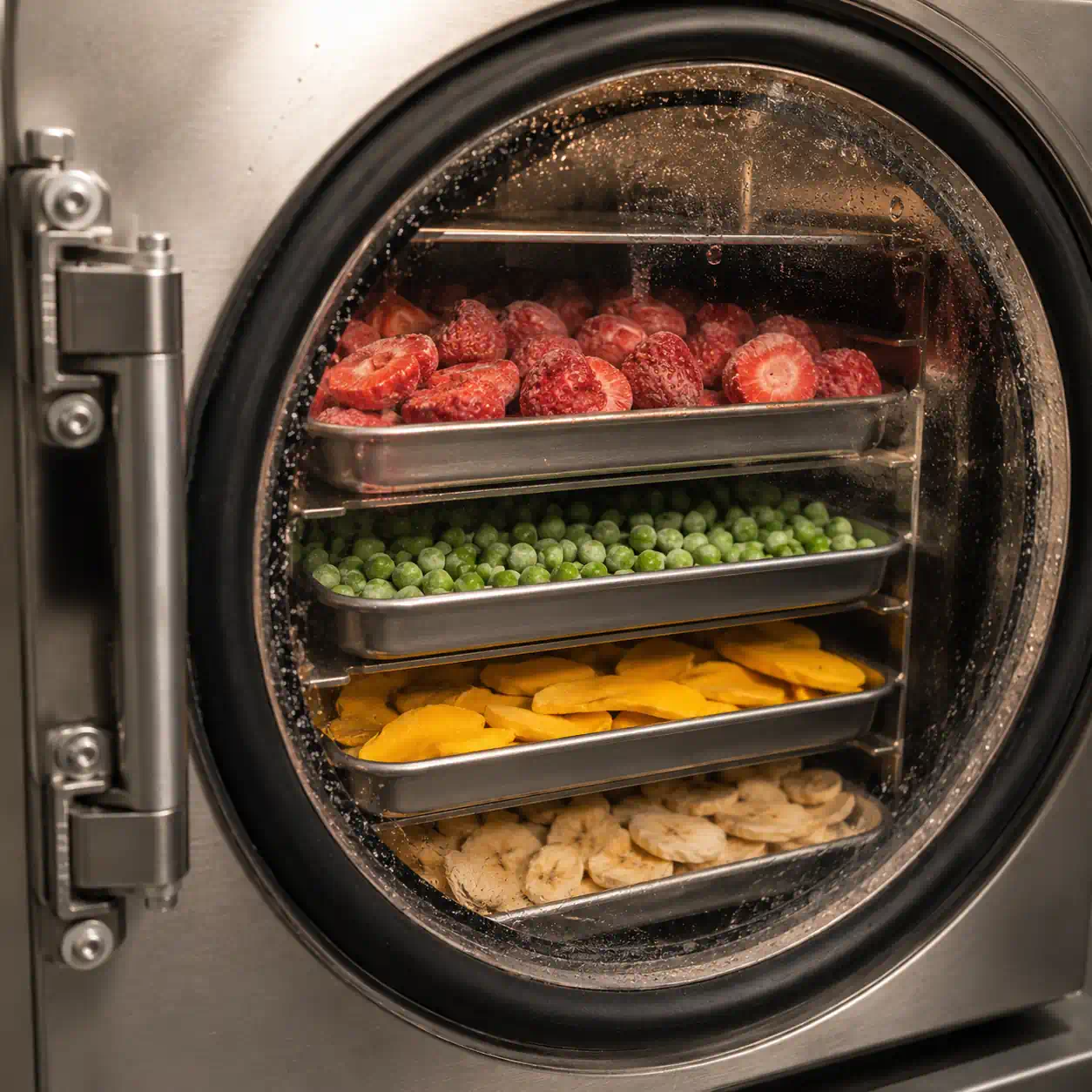
- Freeze-Drying (Lyophilisation) — Used to make instant coffee, space food, and emergency military rations. Food is first frozen, then placed in a vacuum — water sublimates (ice → vapour directly) without the cell-damaging liquid phase. This preserves flavour and nutrition far better than conventional drying.
- Iodine Purification — In pharmaceutical-grade iodine production (used for skin antiseptics like Betadine), crude iodine is purified by sublimation. The iodine vapour re-deposits as pure crystals on a cold surface, leaving mineral impurities behind.
- Dry Ice in Food Transport — Indian ice cream brands use dry ice to keep products frozen during transport in regions without reliable electricity. It sublimates cleanly with no water damage to packaging.
❄️ Real-World Impact
Freeze-drying by sublimation preserves food and medicine for years without refrigeration. India's DRDO (Defence Research and Development Organisation) has developed freeze-dried rations for soldiers in Siachen glacier — the world's highest battlefield — where conventional food freezes and becomes inedible. Sublimation chemistry feeds our army.
Q1.Sublimation is the process where a substance changes directly from:
Dry ice (solid CO₂) warms up and disappears — no puddle, no liquid, just gone. Naphthalene balls (mothballs) do the same thing slowly over weeks. What do you think is happening to the solid?
Dry ice is solid carbon dioxide at −78.5 °C. When you place it in water, it doesn't melt to liquid CO₂ — it goes directly from solid to gas (sublimation), creating the dramatic white fog seen at concerts and in horror movies. At normal atmospheric pressure, liquid CO₂ cannot exist — it skips the liquid phase entirely.
What is Sublimation?
Sublimation is the direct conversion of a solid into its vapour without passing through the liquid phase. The reverse process (vapour → solid directly) is called deposition or desublimation.
Substances that sublime:
- Iodine (): Purple solid → purple vapour when heated; condenses back as crystalline iodine
- Camphor (): White solid → colourless vapour; used in temples and medicine
- Ammonium chloride (): Sublimes on heating — used in dry cell batteries
- Naphthalene: Mothballs slowly sublime at room temperature
- Carbon dioxide (): Only sublimes at atmospheric pressure — dry ice
Using sublimation for separation:
If a mixture contains a substance that sublimes and one that does not, you can separate them by gentle heating:
- Heat the mixture gently
- The sublimable substance vaporises
- Place a cold surface (inverted funnel with ice) above — the vapour desublimes back to solid on the cold surface
- Collect the pure sublimed substance
Example: Separating camphor from sand — camphor sublimes and collects on the cool funnel; sand stays behind.
You put naphthalene (mothball) tablets in a wooden wardrobe to keep insects away. After six months, the tablets are completely gone — but the wardrobe floor is perfectly dry. Your younger sibling asks: "Where did they go? Did they melt away?" How would you explain what happened?
Activity 5.7 — Get Pure Camphor Out of Sand
Here is a separation problem that doesn't fit any of the methods you have learnt so far. You are given a mixture of crushed camphor and sand. How do you get pure camphor out without leaving any sand behind?
Camphor doesn't dissolve well in water. You can't filter it out — both grains look similar in size. You can't melt it cleanly because it goes from solid to vapour too easily. That last fact is the hint we need.
You will need: a spatula of crushed camphor + sand mixture, a clean dry china dish, a clean dry glass funnel, a small wad of cotton wool, a tripod stand with wire gauze, a burner.
Steps:
- Put the camphor + sand mixture into the china dish. Place the dish on the wire gauze on top of the tripod.
- Take the glass funnel and plug its narrow nozzle with cotton. (This will trap the vapour from escaping.)
- Invert the funnel — wide mouth down — and place it over the china dish like a hat covering the mixture.
- Light the burner under the wire gauze and heat the dish gently for a few minutes.
- Watch the inner walls of the funnel carefully. Slowly, white solid camphor begins to appear there as if by magic, while the sand stays behind in the dish.
What is going on? When you heat camphor below its melting point, it skips the liquid stage entirely and turns directly into a vapour — that's sublimation. The vapour rises, hits the cool inner wall of the funnel, and turns straight back into solid camphor — that reverse process is called deposition. The cotton plug at the top stops the vapour from escaping into the room.
Sand cannot sublime, so it has nowhere to go. It just sits there. Sublimation has cleanly separated camphor from sand — the same idea works for naphthalene (the white mothballs that keep your wool sweaters safe), and for ammonium chloride in many lab demonstrations.
The Other Direction — Deposition
Sublimation is the journey solid → vapour without stopping at liquid. The reverse trip — vapour → solid without stopping at liquid — has a special name too: deposition.
A Note on Mixing Solids — Alloys
Most solid–solid mixtures can be separated by some physical method — sieving, magnets, sublimation, hand-picking. But there is one important exception: an alloy like brass or stainless steel. Inside an alloy, the metal atoms are already mixed at the level of individual atoms — like sugar and salt completely dissolved in water, but in solid form. No physical method can pull copper and zinc back out of brass. You met this idea on the Immiscible Liquids and Alloys page just before this one — and it's worth remembering: not every separation problem has a happy ending.
Where You See This Every Day
Sublimation is used across industries that require pure, residue-free products:
- Camphor in Indian Homes — The camphor tablets used in puja lamps and as mosquito repellent work by sublimation. They shrink over days and disappear completely — leaving no liquid mess — because camphor sublimates directly from solid to vapour. This also means it can be purified by sublimation (impurities remain solid).
- Naphthalene Mothballs — Stored in woollen wardrobes across India to repel moths. Naphthalene sublimates slowly at room temperature, filling the space with vapour that repels insects. The balls disappear over months without melting.
- Freeze-Drying (Lyophilisation) — Used to make instant coffee, space food, and emergency military rations. Food is first frozen, then placed in a vacuum — water sublimates (ice → vapour directly) without the cell-damaging liquid phase. This preserves flavour and nutrition far better than conventional drying.
- Iodine Purification — In pharmaceutical-grade iodine production (used for skin antiseptics like Betadine), crude iodine is purified by sublimation. The iodine vapour re-deposits as pure crystals on a cold surface, leaving mineral impurities behind.
- Dry Ice in Food Transport — Indian ice cream brands use dry ice to keep products frozen during transport in regions without reliable electricity. It sublimates cleanly with no water damage to packaging.
Q1.Sublimation is the process where a substance changes directly from: