Bone, Cartilage, Tendon, Ligament — The Solid Connectors
Four connective tissues that hold the body up and let it move
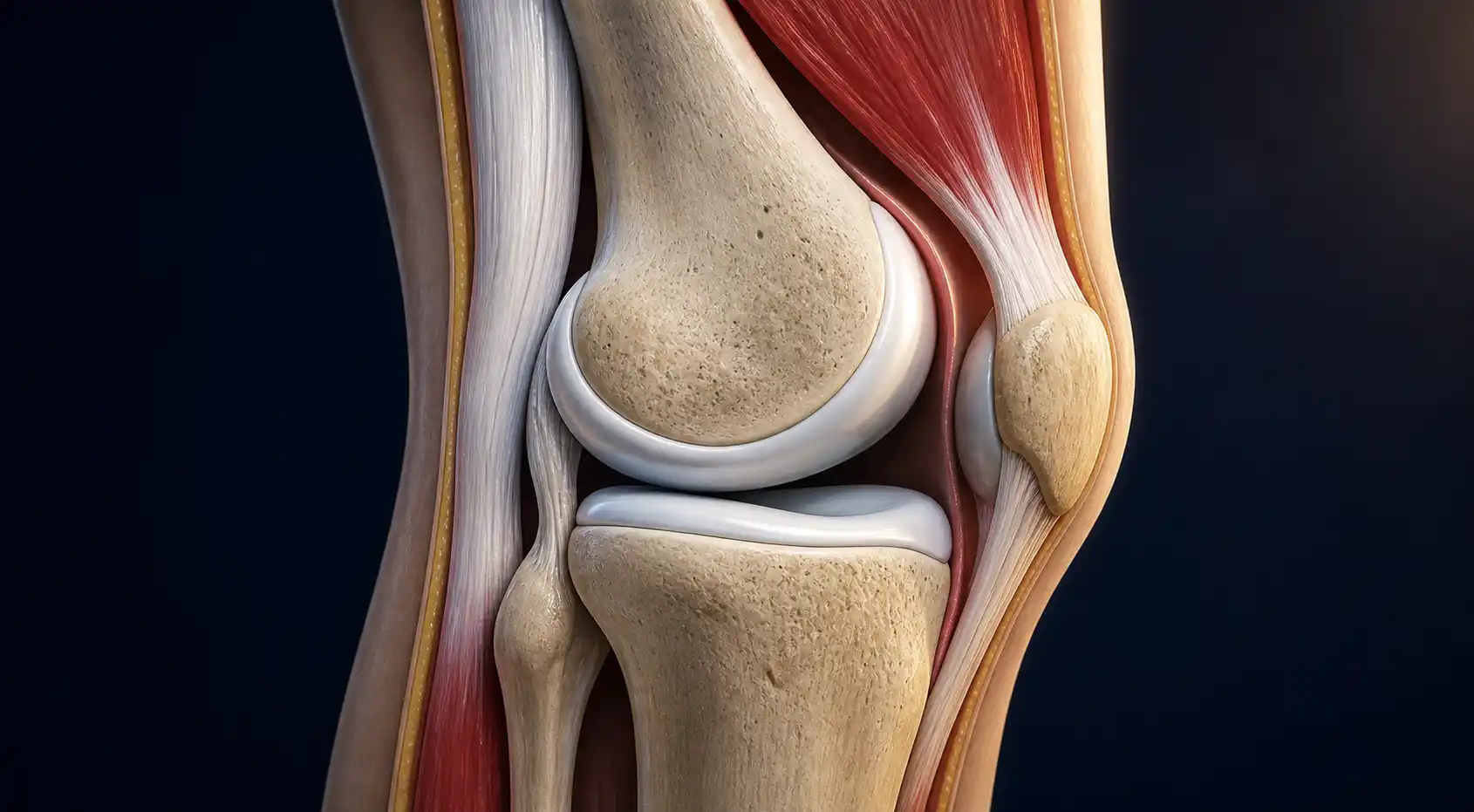
Touch your elbow gently — it's hard. Touch your earlobe — it's soft and bendy. Press the tip of your nose — it's firm but flexible. All three are made of connective tissue, but each behaves completely differently. How does the same kind of tissue produce three such different textures?
What holds the body together is invisible
अदृश्यं तत्त्वं देहं धरति।
Hindi: Jo cheez body ko thaame hue hai woh nazar nahi aati — par har angg uss par tika hua hai.
English: What holds the body together is unseen — yet every limb depends on it.
Bones, cartilage, tendons, and ligaments are mostly matrix, not cells. The cells are scattered, almost lonely. The structure that holds you up is largely the silent material between them — minerals, jelly, and fibres. Most of you, structurally, is the in-between.
Bone — The Hard Frame
Bone is the most rigid connective tissue in your body. Its cells are scattered throughout a hard matrix made mostly of calcium and phosphorus compounds (especially calcium phosphate). The matrix is laid down in concentric layers around tiny canals that carry blood vessels and nerves — yes, bones have living cells inside, even though the matrix is rock-hard.
Bones do four big jobs:
- Support — they form the framework that holds the body upright. Without bones, you'd be a soft heap.
- Protection — the skull protects the brain, the rib cage protects the heart and lungs, the vertebral column protects the spinal cord.
- Movement — muscles pull on bones (via tendons) to move limbs and the whole body.
- Blood production — inside many bones is bone marrow, which produces new red and white blood cells. So bone is not just structural; it's a factory.
An adult human skeleton has 206 bones of different sizes — from tiny bones in your inner ear to the long thigh bone (femur), the longest in your body. The skeleton makes up about 12–15% of your body weight.
Cartilage — The Cushion
Cartilage is the soft, flexible cousin of bone. Its cells are embedded in a matrix made of flexible protein fibres in a jelly-like ground substance. No mineral hardening. The result: a tissue that's strong, slightly bendy, and shock-absorbing.
Where do you find cartilage?
- At the ends of bones in joints — covers the bone surfaces so they don't grind against each other when you move.
- The pinna of your ear — the entire shape of your outer ear is cartilage. That's why you can fold it without it breaking.
- The tip of your nose — flexible cartilage, not bone.
- Between the vertebrae of your spine — discs of cartilage that absorb shock when you walk, run, or jump.
- The rings inside your windpipe — keep the airway from collapsing.
Cartilage is a beautiful design compromise: not as rigid as bone, but flexible enough to bend without breaking, and tough enough to take repeated impact for decades. Without cartilage at your knee joint, the bones would scrape directly against each other every step you take. The pain would be unbearable.
Tendons and Ligaments — The Connectors
When you contract a muscle, that muscle has to be attached to a bone to actually move it. The attachment is done by a tendon — a tough, fibrous, rope-like connective tissue made mostly of collagen (a protein) packed in dense parallel bundles. Tendons have very few cells; they are mostly fibre.
Tendons connect muscle to bone. When you flex your bicep, the muscle pulls on the tendon, which pulls on the bone of your forearm, and your hand rises. The tendon transmits force without stretching much itself — it has to be stiff to do its job.
Ligaments are similar but with a different job. Ligaments connect bone to bone, especially across joints. They hold the joint together and limit how far it can move. Ligaments contain a bit of elastic protein (elastin) along with collagen, so they can stretch slightly when the joint moves and snap back to shape.
A simple memory rule: Tendon = Tomus (muscle to bone). Ligament = Limit (bone to bone, limits motion). Or: 'm and t' for muscle-tendon, 'b and l' for bone-ligament.
Sports injuries often involve these tissues. A 'pulled muscle' usually means a torn muscle or tendon. A 'sprained ankle' is a torn or stretched ligament. Recovery takes weeks because tendons and ligaments have very little blood supply — they heal slowly.
Tap to Explore — A Joint
A footballer twists his knee badly during a match. He can still walk afterward (bones unbroken), but the knee feels unstable — it gives way at certain angles, especially when he tries to change direction quickly. Which tissue is most likely damaged?
Why Children's Bones Heal Fast and Adults' Don't
A child who fractures a bone often heals completely within 4–6 weeks. The same fracture in an adult can take months — and may need surgery to align properly. Why?
Bone Marrow — A Stem Cell Factory
Inside the long bones of your body lies bone marrow — a soft tissue that produces nearly all of your blood cells. Inside the marrow are stem cells that can divide and turn into red blood cells, white blood cells, and platelets as needed.
Q1.What makes bone tissue rigid?
Touch your elbow gently — it's hard. Touch your earlobe — it's soft and bendy. Press the tip of your nose — it's firm but flexible. All three are made of connective tissue, but each behaves completely differently. How does the same kind of tissue produce three such different textures?
What holds the body together is invisible
अदृश्यं तत्त्वं देहं धरति।
Hindi: Jo cheez body ko thaame hue hai woh nazar nahi aati — par har angg uss par tika hua hai.
English: What holds the body together is unseen — yet every limb depends on it.
Bones, cartilage, tendons, and ligaments are mostly matrix, not cells. The cells are scattered, almost lonely. The structure that holds you up is largely the silent material between them — minerals, jelly, and fibres. Most of you, structurally, is the in-between.
Bone — The Hard Frame
Bone is the most rigid connective tissue in your body. Its cells are scattered throughout a hard matrix made mostly of calcium and phosphorus compounds (especially calcium phosphate). The matrix is laid down in concentric layers around tiny canals that carry blood vessels and nerves — yes, bones have living cells inside, even though the matrix is rock-hard.
Bones do four big jobs:
- Support — they form the framework that holds the body upright. Without bones, you'd be a soft heap.
- Protection — the skull protects the brain, the rib cage protects the heart and lungs, the vertebral column protects the spinal cord.
- Movement — muscles pull on bones (via tendons) to move limbs and the whole body.
- Blood production — inside many bones is bone marrow, which produces new red and white blood cells. So bone is not just structural; it's a factory.
An adult human skeleton has 206 bones of different sizes — from tiny bones in your inner ear to the long thigh bone (femur), the longest in your body. The skeleton makes up about 12–15% of your body weight.
Cartilage — The Cushion
Cartilage is the soft, flexible cousin of bone. Its cells are embedded in a matrix made of flexible protein fibres in a jelly-like ground substance. No mineral hardening. The result: a tissue that's strong, slightly bendy, and shock-absorbing.
Where do you find cartilage?
- At the ends of bones in joints — covers the bone surfaces so they don't grind against each other when you move.
- The pinna of your ear — the entire shape of your outer ear is cartilage. That's why you can fold it without it breaking.
- The tip of your nose — flexible cartilage, not bone.
- Between the vertebrae of your spine — discs of cartilage that absorb shock when you walk, run, or jump.
- The rings inside your windpipe — keep the airway from collapsing.
Cartilage is a beautiful design compromise: not as rigid as bone, but flexible enough to bend without breaking, and tough enough to take repeated impact for decades. Without cartilage at your knee joint, the bones would scrape directly against each other every step you take. The pain would be unbearable.
Tendons and Ligaments — The Connectors
When you contract a muscle, that muscle has to be attached to a bone to actually move it. The attachment is done by a tendon — a tough, fibrous, rope-like connective tissue made mostly of collagen (a protein) packed in dense parallel bundles. Tendons have very few cells; they are mostly fibre.
Tendons connect muscle to bone. When you flex your bicep, the muscle pulls on the tendon, which pulls on the bone of your forearm, and your hand rises. The tendon transmits force without stretching much itself — it has to be stiff to do its job.
Ligaments are similar but with a different job. Ligaments connect bone to bone, especially across joints. They hold the joint together and limit how far it can move. Ligaments contain a bit of elastic protein (elastin) along with collagen, so they can stretch slightly when the joint moves and snap back to shape.
A simple memory rule: Tendon = Tomus (muscle to bone). Ligament = Limit (bone to bone, limits motion). Or: 'm and t' for muscle-tendon, 'b and l' for bone-ligament.
Sports injuries often involve these tissues. A 'pulled muscle' usually means a torn muscle or tendon. A 'sprained ankle' is a torn or stretched ligament. Recovery takes weeks because tendons and ligaments have very little blood supply — they heal slowly.
Tap to Explore — A Joint
A footballer twists his knee badly during a match. He can still walk afterward (bones unbroken), but the knee feels unstable — it gives way at certain angles, especially when he tries to change direction quickly. Which tissue is most likely damaged?
Why Children's Bones Heal Fast and Adults' Don't
A child who fractures a bone often heals completely within 4–6 weeks. The same fracture in an adult can take months — and may need surgery to align properly. Why?
Bone Marrow — A Stem Cell Factory
Inside the long bones of your body lies bone marrow — a soft tissue that produces nearly all of your blood cells. Inside the marrow are stem cells that can divide and turn into red blood cells, white blood cells, and platelets as needed.
Q1.What makes bone tissue rigid?