Nervous Tissue — The Body's Electrical Network
Neurons, signals, and how the body sends a message in 30 milliseconds
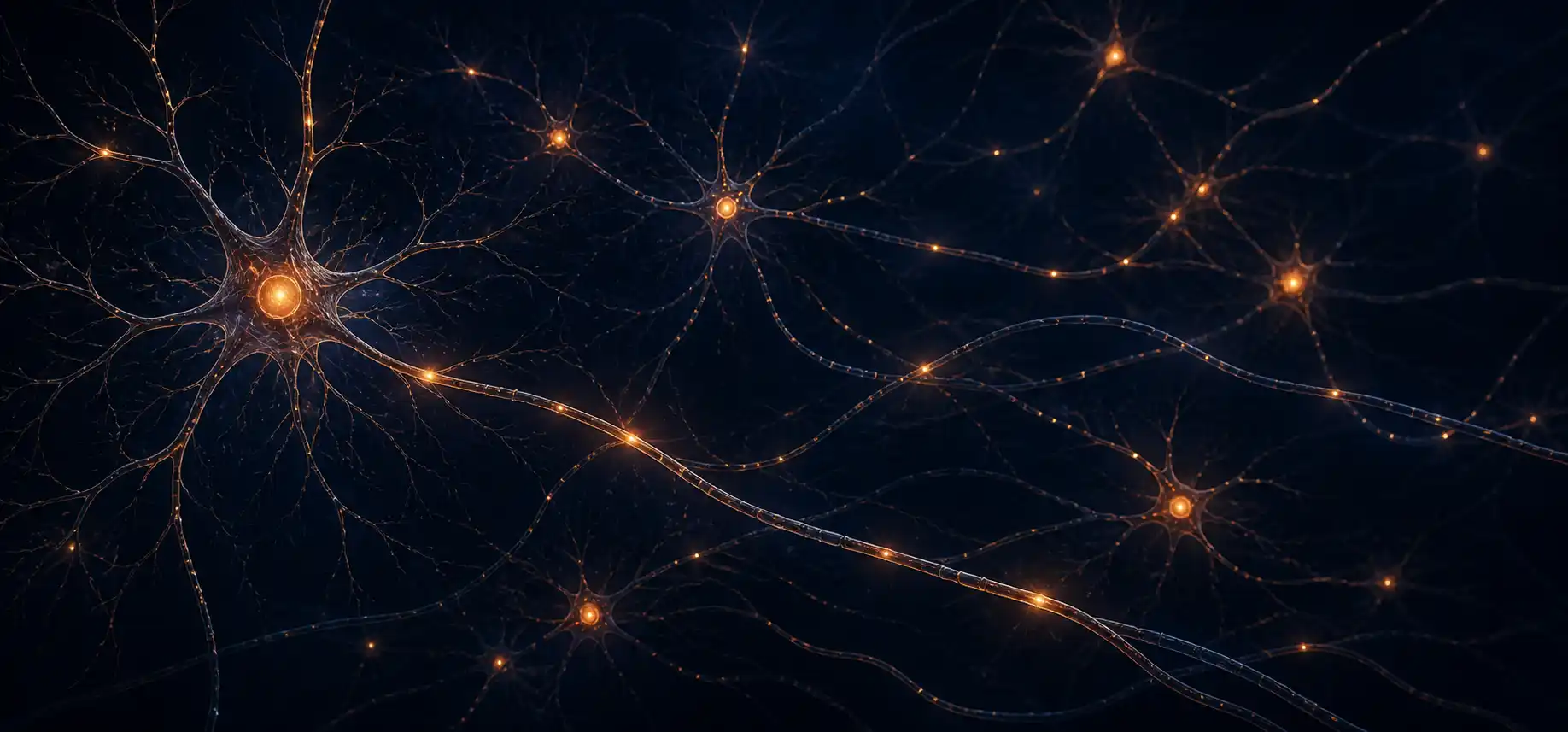
Touch a hot pan. Your hand pulls back before you've even thought 'that's hot'. From the moment your skin felt the heat to the moment your muscle contracted — less than half a second. Yet the signal had to travel from your fingertip, all the way up your arm, into your spinal cord, and back down to your hand. How does the body send a message that fast?
The unseen messenger inside
इन्द्रियेभ्यः परा ह्यर्था अर्थेभ्यश्च परं मनः। मनसस्तु परा बुद्धिर्बुद्धेरात्मा महान्परः॥
Hindi: Indriyon se pare cheezein hain, cheezon se pare mann hai, mann se pare buddhi hai — har level ek doosre ko message bhejta hai.
English: Beyond the senses are their objects, beyond objects is the mind, and beyond the mind is the intellect — each carrying messages to the next.
Modern biology gives this messaging system a name: nervous tissue. A web of cells called neurons connects the senses to the brain, the brain to the muscles, and lets you do everything from blinking at dust to remembering a poem you learnt in Class 5.
Nervous Tissue — The Body's Electrical Network
Nervous tissue is the fourth and final major animal tissue. Its job is to sense, signal, and decide — to carry information from one part of the body to another at high speed, to coordinate responses, and to enable everything from reflexes to memory to thought.
Three things make nervous tissue special:
1. Speed. A nerve signal can travel from your toe to your brain in under 30 milliseconds — faster than a blink. Compare this to how long it takes a hormone (released into blood) to reach the same place: minutes. Nervous tissue is the body's emergency channel.
2. Specificity. Each neuron sends signals to specific other neurons — not to everyone in earshot. This means the body can have millions of separate, simultaneous conversations going on at once.
3. Memory and learning. Connections between neurons can be strengthened or weakened based on how often they're used. This is the biological basis of memory and learning — why you remember the way home, why you can recognise your mother's voice in a crowd, why you got better at cricket the more you practised.
All of this is done by one type of cell: the neuron.
The Neuron — A Cell Built Like a Wire
A neuron (also called a nerve cell) is one of the strangest-looking cells in your body. Most cells are roughly round or square. A neuron is a long, branching, thread-like structure with three main parts:
- Cell body (soma) — the main rounded portion containing the nucleus and most of the cell machinery. This is where decisions are made: if enough incoming signals arrive, the neuron 'fires' a signal of its own.
- Dendrites — many short branched extensions sprouting from the cell body. They are the neuron's input antennae — they receive signals from other neurons.
- Axon — a single long fibre that extends from the cell body and carries the outgoing signal away. The axon is the output cable. Some axons in your spinal cord are over a metre long. Each axon ends in many tiny axon terminals that pass the signal to the next cell — another neuron, a muscle fibre, or a gland cell.
The signal itself is electrical — a pulse called an action potential that races down the axon at 1 to 120 metres per second, depending on the type of nerve. When the pulse reaches the axon terminals, it triggers the release of chemical messengers into a tiny gap between this neuron and the next. The messengers cross the gap, bind to the next neuron's dendrites, and trigger the next pulse. The signal hops from cell to cell across millions of these little gaps, all the way to its destination.
Your brain alone has about 86 billion neurons, with roughly a thousand connections each — more connections than there are stars in our galaxy. Every thought, sensation, and memory is some pattern of pulses moving through this network.
Tap to Explore — A Neuron
Why the Body Has Both Hormones AND Nerves
You might wonder: if the body already has a chemical messaging system (hormones travelling through blood), why also build this expensive, complex nervous tissue?
Two reasons:
1. Speed. Hormones travel through blood, which is slow. A signal from brain to muscle through hormones would take minutes — too slow to pull your hand from a hot pan, too slow to react to a falling object, too slow for any predator-prey interaction. Nerves are millisecond-fast.
2. Precision. Hormones are released into blood and reach EVERY cell that has the matching receptor — they go everywhere. Nerves go exactly to one spot — the specific muscle, the specific organ. If you want only your right hand to move and not your left, you need a nerve, not a hormone.
So the body uses both. Hormones for slow, broad, sustained signals — like growth, sleep cycles, body temperature, hunger. Nerves for fast, targeted, brief signals — like a flick of an eyelid, a finger pulling away from heat, a thought connecting to a word.
Together, the two systems coordinate everything you do.
When you accidentally touch a hot pan, your hand pulls back almost instantly — within about 30 milliseconds. Curiously, this happens BEFORE your brain consciously realises the pan was hot. (You feel the heat consciously a fraction of a second LATER.) Why does the body separate the rapid reflex from the conscious feeling?
Why Nerve Damage Is So Hard to Repair
When a person damages their spinal cord (in an accident, for example), the nerves below the damage may stop working — leading to paralysis. Despite decades of research, repairing damaged nervous tissue is one of medicine's hardest problems.
How does memory actually get stored?
Right now, somewhere in the 86 billion neurons of your brain, the memory of the last birthday you celebrated is stored. Where exactly? Scientists know that memories are stored in patterns of strengthened connections between neurons — but they don't know how a specific memory ends up in a specific group of cells, or how that group manages to keep the memory stable for decades.
Q1.The cells that make up nervous tissue are called:
Touch a hot pan. Your hand pulls back before you've even thought 'that's hot'. From the moment your skin felt the heat to the moment your muscle contracted — less than half a second. Yet the signal had to travel from your fingertip, all the way up your arm, into your spinal cord, and back down to your hand. How does the body send a message that fast?
The unseen messenger inside
इन्द्रियेभ्यः परा ह्यर्था अर्थेभ्यश्च परं मनः। मनसस्तु परा बुद्धिर्बुद्धेरात्मा महान्परः॥
Hindi: Indriyon se pare cheezein hain, cheezon se pare mann hai, mann se pare buddhi hai — har level ek doosre ko message bhejta hai.
English: Beyond the senses are their objects, beyond objects is the mind, and beyond the mind is the intellect — each carrying messages to the next.
Modern biology gives this messaging system a name: nervous tissue. A web of cells called neurons connects the senses to the brain, the brain to the muscles, and lets you do everything from blinking at dust to remembering a poem you learnt in Class 5.
Nervous Tissue — The Body's Electrical Network
Nervous tissue is the fourth and final major animal tissue. Its job is to sense, signal, and decide — to carry information from one part of the body to another at high speed, to coordinate responses, and to enable everything from reflexes to memory to thought.
Three things make nervous tissue special:
1. Speed. A nerve signal can travel from your toe to your brain in under 30 milliseconds — faster than a blink. Compare this to how long it takes a hormone (released into blood) to reach the same place: minutes. Nervous tissue is the body's emergency channel.
2. Specificity. Each neuron sends signals to specific other neurons — not to everyone in earshot. This means the body can have millions of separate, simultaneous conversations going on at once.
3. Memory and learning. Connections between neurons can be strengthened or weakened based on how often they're used. This is the biological basis of memory and learning — why you remember the way home, why you can recognise your mother's voice in a crowd, why you got better at cricket the more you practised.
All of this is done by one type of cell: the neuron.
The Neuron — A Cell Built Like a Wire
A neuron (also called a nerve cell) is one of the strangest-looking cells in your body. Most cells are roughly round or square. A neuron is a long, branching, thread-like structure with three main parts:
- Cell body (soma) — the main rounded portion containing the nucleus and most of the cell machinery. This is where decisions are made: if enough incoming signals arrive, the neuron 'fires' a signal of its own.
- Dendrites — many short branched extensions sprouting from the cell body. They are the neuron's input antennae — they receive signals from other neurons.
- Axon — a single long fibre that extends from the cell body and carries the outgoing signal away. The axon is the output cable. Some axons in your spinal cord are over a metre long. Each axon ends in many tiny axon terminals that pass the signal to the next cell — another neuron, a muscle fibre, or a gland cell.
The signal itself is electrical — a pulse called an action potential that races down the axon at 1 to 120 metres per second, depending on the type of nerve. When the pulse reaches the axon terminals, it triggers the release of chemical messengers into a tiny gap between this neuron and the next. The messengers cross the gap, bind to the next neuron's dendrites, and trigger the next pulse. The signal hops from cell to cell across millions of these little gaps, all the way to its destination.
Your brain alone has about 86 billion neurons, with roughly a thousand connections each — more connections than there are stars in our galaxy. Every thought, sensation, and memory is some pattern of pulses moving through this network.
Tap to Explore — A Neuron
Why the Body Has Both Hormones AND Nerves
You might wonder: if the body already has a chemical messaging system (hormones travelling through blood), why also build this expensive, complex nervous tissue?
Two reasons:
1. Speed. Hormones travel through blood, which is slow. A signal from brain to muscle through hormones would take minutes — too slow to pull your hand from a hot pan, too slow to react to a falling object, too slow for any predator-prey interaction. Nerves are millisecond-fast.
2. Precision. Hormones are released into blood and reach EVERY cell that has the matching receptor — they go everywhere. Nerves go exactly to one spot — the specific muscle, the specific organ. If you want only your right hand to move and not your left, you need a nerve, not a hormone.
So the body uses both. Hormones for slow, broad, sustained signals — like growth, sleep cycles, body temperature, hunger. Nerves for fast, targeted, brief signals — like a flick of an eyelid, a finger pulling away from heat, a thought connecting to a word.
Together, the two systems coordinate everything you do.
When you accidentally touch a hot pan, your hand pulls back almost instantly — within about 30 milliseconds. Curiously, this happens BEFORE your brain consciously realises the pan was hot. (You feel the heat consciously a fraction of a second LATER.) Why does the body separate the rapid reflex from the conscious feeling?
Why Nerve Damage Is So Hard to Repair
When a person damages their spinal cord (in an accident, for example), the nerves below the damage may stop working — leading to paralysis. Despite decades of research, repairing damaged nervous tissue is one of medicine's hardest problems.
How does memory actually get stored?
Right now, somewhere in the 86 billion neurons of your brain, the memory of the last birthday you celebrated is stored. Where exactly? Scientists know that memories are stored in patterns of strengthened connections between neurons — but they don't know how a specific memory ends up in a specific group of cells, or how that group manages to keep the memory stable for decades.
Q1.The cells that make up nervous tissue are called: